

A buyer with four suppliers across Guangdong and Zhejiang holds four cargo-ready dates, four document sets and, if nothing is combined, four departures to watch. Cargo consolidation turns that into one shipment. What the quotation will not say is what the arrangement costs: the four dates become one cut-off, and from the moment the first carton is received, every supplier's goods move at the speed of the slowest one.
That trade is worth making often, but not always, and not for the reason most pages give. Consolidation is sold as a saving on freight. Mostly it is a saving on repetition — and the price is paid in schedule, in documents and, at the far end, in risk.
This article treats cargo consolidation as a decision with three tests: can the cargo be released together, can it be declared together, and does combining it change the mode of carriage.
Nothing on this page is a quotation, and nothing on it is a rate, a tax figure, a percentage or a promised transit time. The examples are hypothetical: they are not client cases and not quotations. What a given arrangement is allowed to do for your entity and your goods is decided by the customs authorities at each end, not by this page.
What consolidation collapses, and what it leaves standing
Two arrangements share the name. In seller consolidation, the forwarder fills a container with cargo from unrelated shippers and you buy space inside it; you have no say over what travels beside your goods. In buyer consolidation — the subject here — you or your forwarder collect several suppliers' cargo at one point in China and export it as a single shipment that you control. The difference matters at the declaration, which is where this article spends most of its time.
The mechanics are easiest to see as a list of steps that either repeat per shipment or happen once:
Step | Four separate shipments | One consolidated lot |
|---|---|---|
Collection from each supplier | four pickups, or four deliveries to four ports | four deliveries into one receiving point |
Receiving and counting | four records, four moments | one record, taken supplier by supplier |
Export declaration | one per shipment | one, if the lot travels under a single transport document |
Main carriage | four bookings, four departure dates | one booking, one departure |
Destination handling and clearance | four entries | one entry, covering everything inside |
Inland delivery | four deliveries | one, if the receivers are the same |
Document set | four invoices, four packing lists | four supplier invoices, one consolidated packing list |
Collection from each supplier
Four separate shipments
four pickups, or four deliveries to four ports
One consolidated lot
four deliveries into one receiving point
Receiving and counting
Four separate shipments
four records, four moments
One consolidated lot
one record, taken supplier by supplier
Export declaration
Four separate shipments
one per shipment
One consolidated lot
one, if the lot travels under a single transport document
Main carriage
Four separate shipments
four bookings, four departure dates
One consolidated lot
one booking, one departure
Destination handling and clearance
Four separate shipments
four entries
One consolidated lot
one entry, covering everything inside
Inland delivery
Four separate shipments
four deliveries
One consolidated lot
one, if the receivers are the same
Document set
Four separate shipments
four invoices, four packing lists
One consolidated lot
four supplier invoices, one consolidated packing list
Read the right-hand column for what you are buying. All seven steps still happen; what disappears is doing each of them four times. The saving is therefore real but bounded: it comes from fixed steps you were paying for four times — a pickup, a receiving record, a destination entry and, where the lot travels under one transport document, a single declaration — not from the carriage, which still moves the same cubic meters.
It also explains why a quote built on freight alone overstates the saving: a door-to-door price contains the same handoffs whether it covers one lot or four, and only the number of times you buy them changes (what a door-to-door quote actually prices). Consolidation divides those handoffs by the number of suppliers; it does not remove them.
Test one: can the cargo be released together?
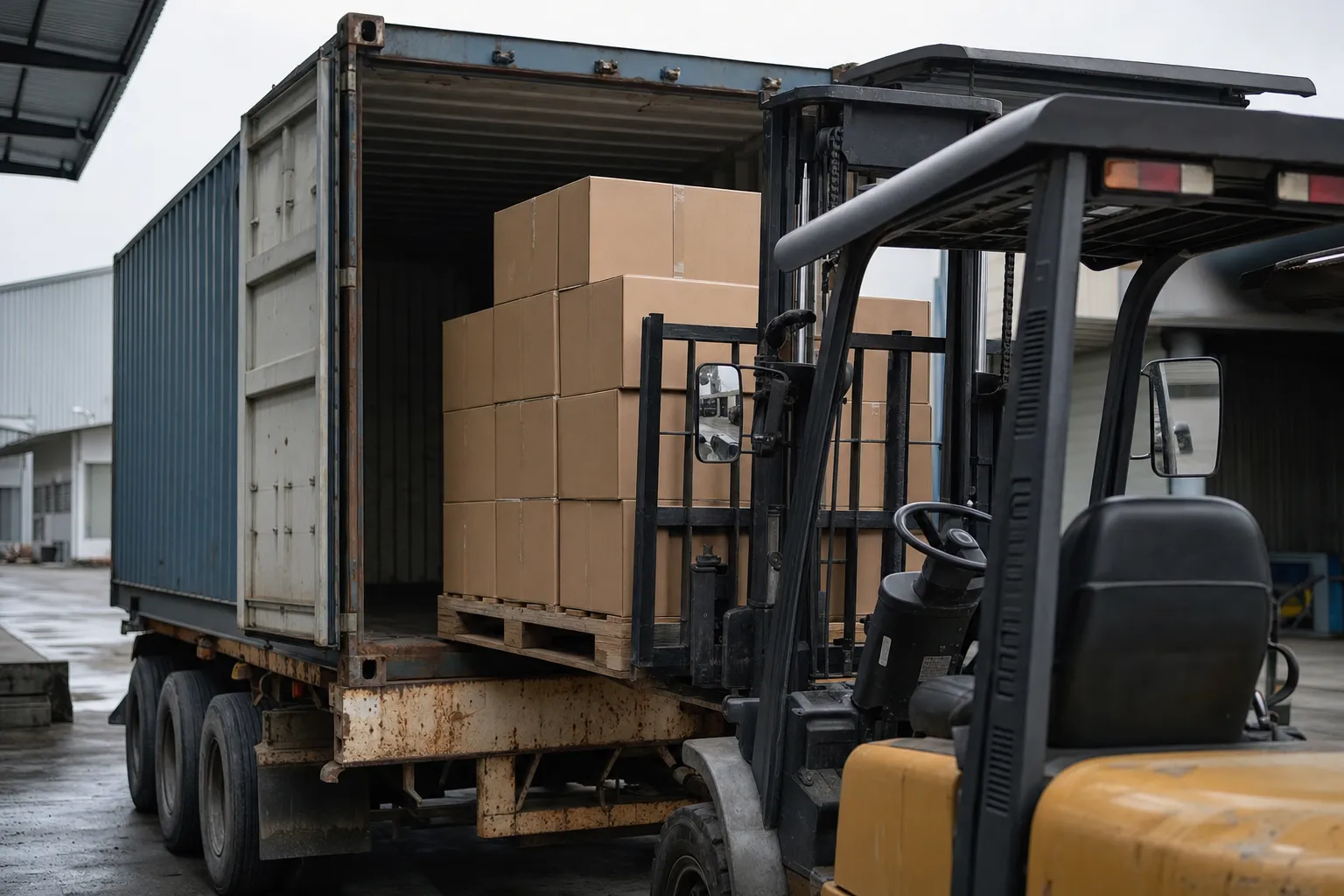
The first test is not commercial. It is whether the goods can physically leave on the same day.
Factories report two different dates and rarely label them clearly. Production complete means the last unit came off the line. Cargo ready means the goods are packed for export, labeled to your standard, documented, and released against whatever commercial terms you agreed with that supplier. Between those two dates sit packing, marking, inspection, invoicing and, often, a payment milestone. A supplier who says "finished next Friday" has told you nothing about when cartons can move.
So the input to a consolidation plan is one row per supplier with a cargo-ready date and a carton count — not an expected production finish. Then compare the earliest and the latest.
The spread is the decision. If every supplier is ready within the same window, consolidation costs you almost nothing in time. If the spread is wide, the early cargo waits, and waiting cargo is stored cargo: someone is paying for the space, and the clock on it starts the day the first pallet is put down.
Set the cut-off — the last date cargo can arrive at the collection point and still make the departure — before you send any supplier the delivery address. Once a supplier has the address, the address is a promise, and a supplier who delivers after the cut-off has not broken a rule you gave them, because you never gave one.
When a supplier misses it, there are three outcomes and no fourth:
- Hold the lot. Everyone's goods wait for the departure that was moved, and the earliest arrivals age in storage. Cheapest in handling, most expensive in time.
- Ship what is ready. The late cargo follows separately. You have paid for consolidation and still bought a second shipment — which is sometimes exactly right, and sometimes the moment the whole exercise stops being worth it.
- Push the booking. Usually the worst of the three: the goods already received sit in storage, the departure moves, and the delay applies to cargo that was on time.
Which one is correct depends on the late supplier's share of the volume and on what the early cargo is for. If the goods that are ready are what starts a production line or fills a shelf, waiting for a small remainder is buying a large delay to avoid a small second shipment — and splitting the lot is the better answer (when splitting a lot into shipments is the right call).

Test two: can the cargo be declared together?
Packing compatibility is the easy half. Declaration compatibility is the half that stops shipments, and it is the part no warehouse can fix on the day the containers are loaded.
How many export declarations a consolidated lot produces depends on how many transport documents it travels under — not on how many suppliers contributed to it. One export declaration carries one bill of lading or waybill number, so the lot that can be declared on a single form is the lot that leaves under a single transport document. Where each supplier's cargo keeps its own bill — the normal shape when no consolidator issues a house bill covering the whole box — each supplier declares separately, and each is the exporter on its own declaration, the master bill number carrying a suffix that tells the parts apart. A single declaration covering every supplier's lines exists only where one party books the lot and takes the transport document for the whole container. That choice is made in China, weeks before anything is loaded, by whoever books the space. Three conditions have to hold either way, and each one is checkable weeks earlier.
Every line has to be classifiable. Mixed products can share a declaration, but they cannot share a line: classification runs per product, per material and per function, and a consolidated lot concentrates a dozen classification judgements into one document that a customs officer reads as a whole (how classification works line by line). The World Customs Organization's Harmonized System is the nomenclature every one of those lines resolves into, and a wrong code on one line is not corrected by the other lines being right.
No line may need its own permission process. If one SKU is a restricted item, sits under an import license regime, or needs a registration before it can be imported at all, that SKU is not a candidate for a shared declaration — it is a candidate for its own shipment. The practical version of this test: sort your lines by what each one needs, and the ones that need something nobody else needs go out on their own (restricted goods and the permits that follow them). The same logic applies to a brand that requires written authorization, or to goods whose registration is still in progress while the shipment is not.
The documents have to agree with the physical lot. Four supplier invoices and four packing lists have to describe the same cartons, quantities and values as the consolidated list. Mixed lots fail here most often — not because anyone lied, but because a supplier re-packed after issuing its documents, or counted in a different unit. Paperwork that disagrees with itself is the most reliable way to be sent for inspection.
There is one question in this section that is commercial rather than logistical, and it is usually left until too late: who is the exporter of record on the export declaration? On four separate shipments the answer is normally each supplier. In a consolidated lot it follows the structure above: where every supplier keeps its own transport document, every supplier stays exporter of record on its own declaration; where one party takes the whole container under a single document, that party is the domestic consignor on the one declaration. That is where the question stops being clerical. The consignor named on the declaration is the party the export refund normally attaches to, and the party whose own export records the shipment appears in. That holds where each supplier exports in its own name. It does not hold under an entrusted export, where one party declares on another's behalf under a double-header arrangement: there the refund attaches to the principal who supplied the goods, not to the consignor named on the form, so the two positions have to be read off the documents rather than assumed from the header. Where each supplier exports in its own name, the producer recorded in a separate field does not displace the consignor as the refund party. The foreign-currency payment collects against the same name. So a supplier asked to step out of that position is being asked to give something up, and will either price it or refuse. It is not a warehouse decision and not a forwarder's preference; it should be agreed in writing with your suppliers before the first carton moves, because changing it later means reissuing documents that have already traveled.
Two physical constraints also belong to this test, because they decide what can share a container at all. Dangerous or regulated items set the standard for the whole lot: a lithium battery, an aerosol or a liquid can put an otherwise ordinary booking under a different acceptance regime, and the mixed lot is judged by its strictest item, not its average. And wood packaging travels with the goods: crates, pallets and dunnage entering Indonesia need to meet ISPM 15 and carry the mark that says so, which is covered under the receiving checkpoint below.
Test three: does the combined lot change the mode?
This is the only one of the three tests a spreadsheet can settle, and it is the one most often settled with the wrong number — the supplier's estimate.
Measure first. Per carton: length, width, height, gross weight. Multiply by carton count, add the pallet height if the cargo is palletized, and you have the volume the carrier will actually charge on, which is not the volume the supplier quoted you. For air cargo the chargeable figure is the greater of volume-derived and actual weight, so a light bulky lot is priced on space, not on kilos.
Then compare the two shapes of carriage. Less-than-container pricing is built per cubic meter or per tonne with minimums, so the charge rises with volume. A full container is a flat charge for the box, whatever you put in it. The combined lot changes the mode at the volume where the container becomes the cheaper way to move the same goods — and that crossover moves with destination, season and the carrier's own space position, so it has to be quoted rather than assumed. What you control is the volume side of the comparison, and getting it wrong by a carton's worth of guesswork is enough to flip the answer (how the LCL and FCL crossover actually works).
There is a second question underneath this one, and it is the one that decides whether consolidation was worth doing at all. Ask what happens to the last supplier's cargo:
- If adding it changes nothing about the mode, it rides at the margin. The fixed steps are already paid for, and the cargo costs what its own volume costs. That is consolidation working.
- If adding it tips the lot from shared space into a container, that supplier is carrying a decision nobody attributed to them — and if the cargo would have moved at shared-space pricing on its own, the rest of the lot has just subsidized the change.
- If the lot is already a container, extra cartons are close to free up to whichever limit binds first: volume, or payload. A container filled with light bulky goods reaches its volume limit with payload unused, and no amount of extra cartons changes that.
Repacking belongs here too, because it is where volume is won or lost. Removing air — a carton that is half empty, a pallet built to a footprint the container cannot use — reduces what you pay for. Restacking that only moves the air around does not.
At the far end, one shipment is one risk
Every guide to consolidation stops when the container is loaded. The importer's exposure does not.
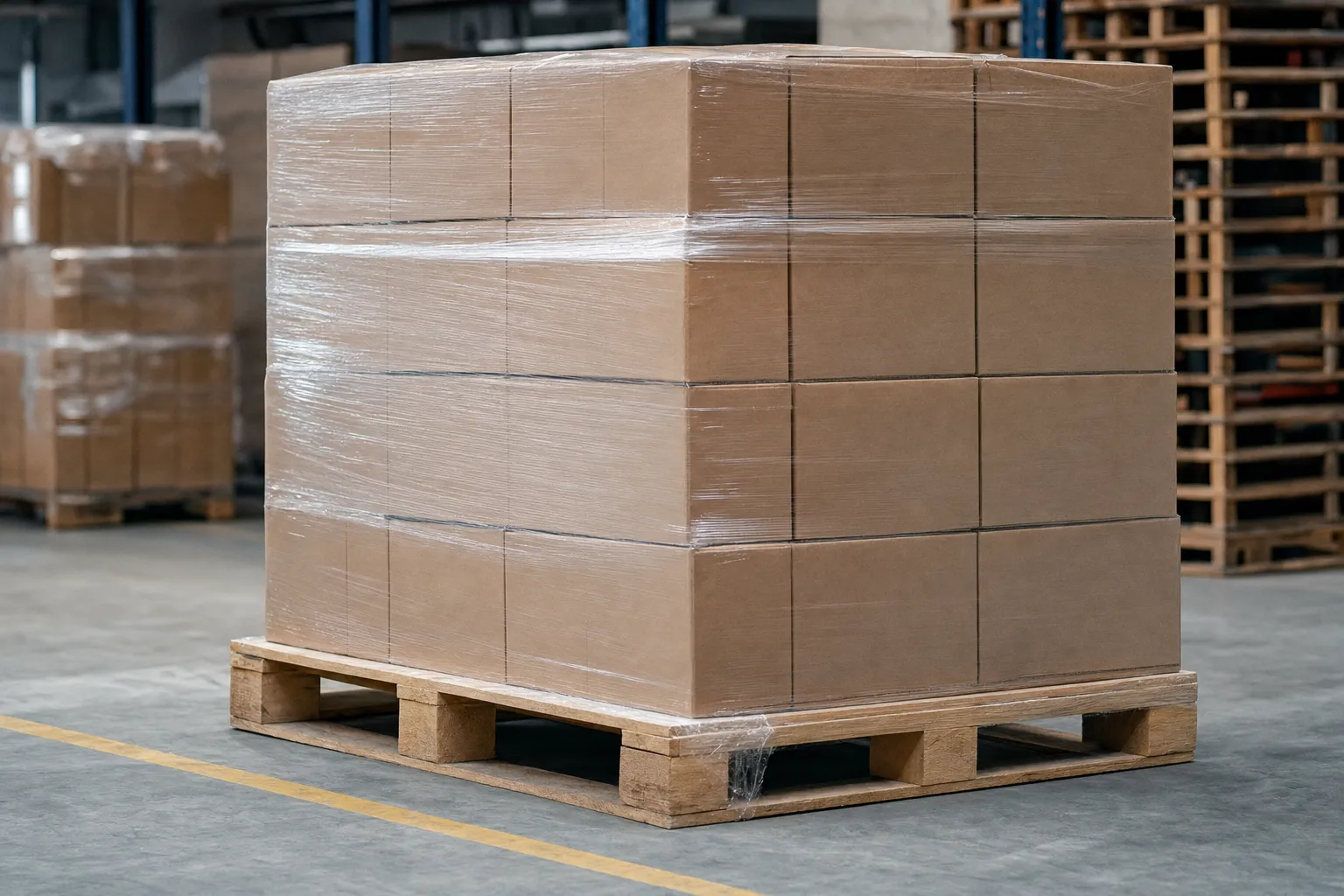
The consolidated lot arrives as one declaration at destination. One importer of record, one assessment, one decision on whether the shipment is released or inspected (what the import declaration actually is). That concentration is the part of the trade that never appears in a China-side quotation, and it runs in the opposite direction to the saving: the more suppliers you combine, the more goods sit behind a single decision.
If one line is queried — a value that does not match the invoice, a permit that should be attached, a classification read differently — the hold attaches to the declaration, not the line. The other suppliers' cargo waits with it, and storage accrues on all of it: one supplier's paperwork problem has become four suppliers' inventory problem.
Two consequences follow. The importer has to be able to import every line, not just the largest: an importer of record whose licenses cover the main product but not the accessory is a consolidation stopped by its smallest component. And deconsolidation is a separate operation: at destination the container is stripped, and each supplier's cargo separated, checked against its own packing list and staged for its own delivery. That work happens before the first delivery, it is arranged rather than automatic, and it is where four delivery addresses discover that the last mile has multiplied again.
On the Indonesian side this is coordination work: the declaration, the assessment and the release belong to the licensed parties and to the importer, and what a forwarder can do is line the documents up before the shipment arrives so the declaration is complete on the day it is filed. Indonesia's National Single Window is where those documents converge, and the Directorate General of Customs and Excise is the authority that decides what happens next. Neither is impressed by a lot that was combined well and documented badly.
The receiving checkpoint is where the plan survives
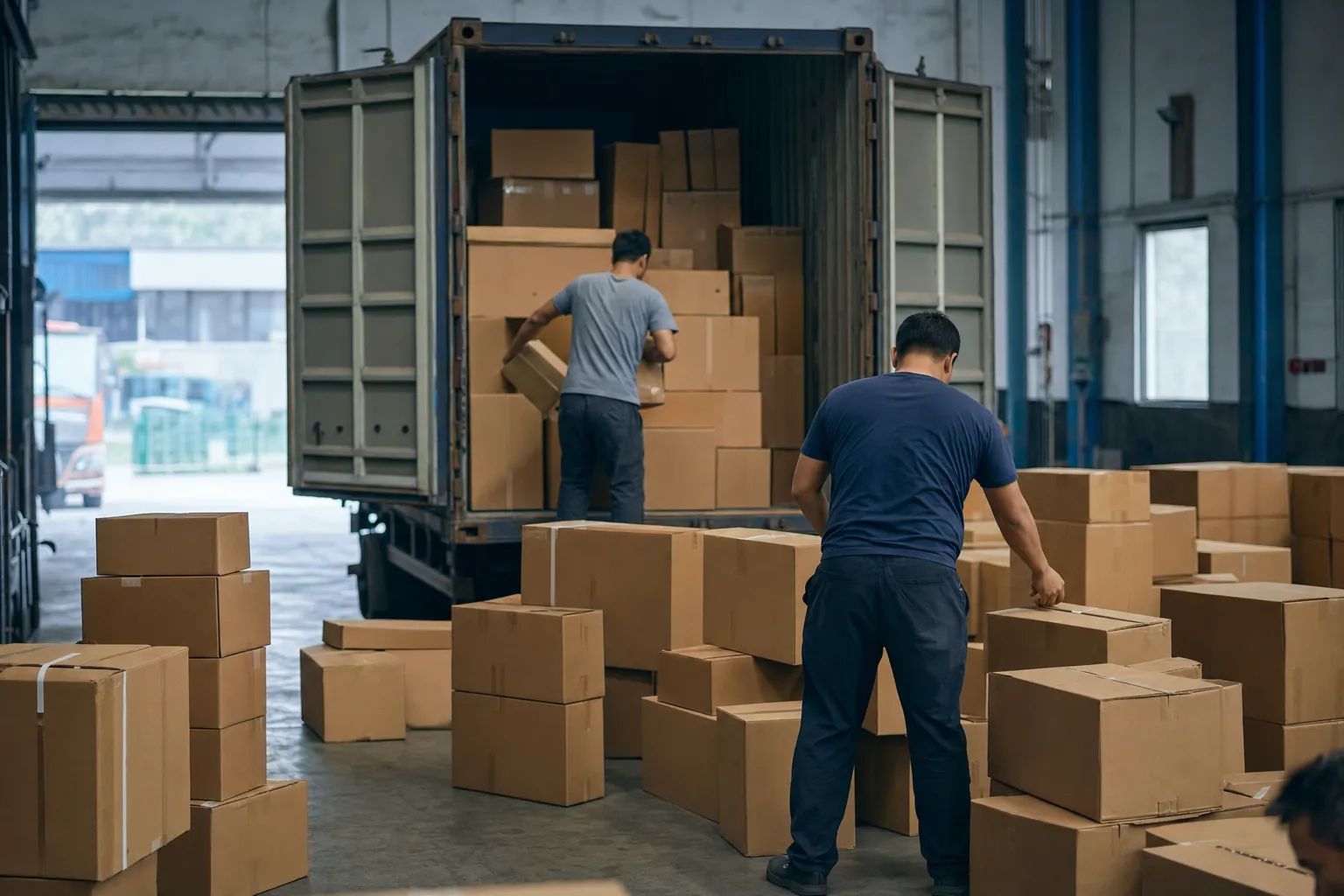
Between the supplier's loading bay and the container, there is one moment when the plan can still be corrected cheaply: the moment each supplier's cargo arrives at the collection point. What is recorded in that moment is the only record that will exist.
Record, per delivery, and per carton where the lot is mixed:
- Supplier and purchase order reference, taken from the delivery note rather than from memory.
- Carton count against that supplier's own packing list — the count is the check, not the paperwork.
- Condition on arrival. Damage noted before the pallet is stacked is a supplier or carrier issue; damage noted afterwards is your issue.
- Measured dimensions and weight, per carton. Plans built on supplier estimates fail at this point, and the measurement is also what the carrier charges on.
- Photographs of the cartons as received, with labels legible, taken before anything is moved.
Once cartons are stacked among other suppliers' goods, reconstructing what arrived — and in what condition — becomes guesswork, and a shortage claim with no arrival record is one you lose by default. The record also catches a supplier's undercount while the supplier can still fix it.
Two disciplines make it work. One labeling standard for every supplier — supplier name, purchase order, and carton number of total on every carton — because mixed labeling produces "missing cartons" that turn out to be miscounts. And an agreed inspection scope: whether the warehouse opens cartons or only checks the outside must be decided before arrival. Opening cartons without instruction breaks the supplier's packaging and, on regulated goods, can change what is still declarable.
Wood is checked here too. Pallets, crates and dunnage that carry the ISPM 15 mark are accepted — the mark that says the wood has been treated to the IPPC standard for wood packaging in international trade — while untreated wood found at destination is a problem with a charge attached, and the same wood found at receiving is a phone call to the supplier (what ISPM 15 requires of wood packaging).
The output of the checkpoint is one document that matches the physical lot: a consolidated packing list with every carton accounted for, which is the document the export declaration and the destination declaration are both built from.

When cargo consolidation is the wrong answer
Five situations where the answer is no, or not yet.
One supplier dominates the volume. If one supplier's cargo would nearly fill a container on its own, the others are riding along at that supplier's schedule and convenience, and the fixed steps you are dividing were mostly that supplier's anyway. The coordination cost is real; the saving is small.
One line needs its own permission. A restricted product, a registration still in progress, a brand that requires written authorization: a separate shipment keeps one approval from holding four suppliers' inventory hostage. This is the most common reason a well-planned lot should have been two shipments.
The wait costs more than the repetition. If the cargo that is ready is what starts production, fills a shelf or meets a contract date, waiting for the last supplier is not a saving — it is a delay you chose, and it has a price that no freight comparison will show.
A supplier cannot export cleanly. No export rights, or documents that will not withstand a review, is a problem consolidation cannot fix. Combining the cargo hides it until the declaration, where it stops everything instead of stopping one shipment.
The lots should not touch. Fragile with heavy, food with chemicals, anything with an odor or a leakage risk: mixed loading is a physical decision before it is a paperwork decision, and no amount of documentation discipline makes a bad stow safe.
A sixth case is really a scope error: if the four suppliers' cargo goes to four different cities in Indonesia, the destination side of the saving largely evaporates, because those inland deliveries were never combined. Consolidate the ocean leg — but count only the steps that stop repeating.
A decision sequence you can run before you book
- Build one master list, one row per product line: supplier, purchase order, description, HS code, carton count, carton dimensions, gross weight, cargo-ready date. Per line, not per supplier — the line is the unit that gets classified and the carton is the unit that gets counted.
- Fix the cut-off, then send the address. Work backwards from the departure through the receiving window and the documentation lead time. The cut-off is a date you publish to suppliers, not a date you discover.
- Sort the lines into declare-together and declare-apart. Anything needing its own permit, its own registration or its own authorization leaves the lot. Anything whose classification or value is unresolved gets resolved now, while there is time to ask the supplier.
- Measure, do not estimate. Collect carton dimensions from each supplier and re-measure at receiving. Every number in the plan should be a measured number (how volume is measured and charged).
- Compare the two shapes on measured volume. One lot: one set of fixed steps, one cut-off, one storage clock, one destination declaration. Separate shipments: repeated fixed steps, four schedules, four independent risks. Choose one, and write down why.
- Agree the record and the responsibility, in writing: who receives, who signs, what is photographed, who pays storage if a supplier is late, and who bears the cost if a line is held at destination. This is the step that decides whether the arrangement survives its first bad month.
The test is not whether consolidation is cheaper. It is whether the cargo you are combining can share a date, a declaration and an arrival — and whether what you save on repeated fixed steps is worth giving up the right to ship each supplier's goods the day they are ready.
If you are combining supplier cargo in South China for Indonesia, our team coordinates the receiving record, the export documentation and the clearance side through partner facilities in Guangzhou and Jakarta. Send the supplier list with cargo-ready dates and we will tell you which of the three tests your lot fails first.
Examples in this article are hypothetical: they are not client cases and not quotations. No rate, tax figure, percentage or binding transit time is stated anywhere on this page. Photographs are illustrative; no ownership of any vessel, container, terminal or warehouse is claimed.