
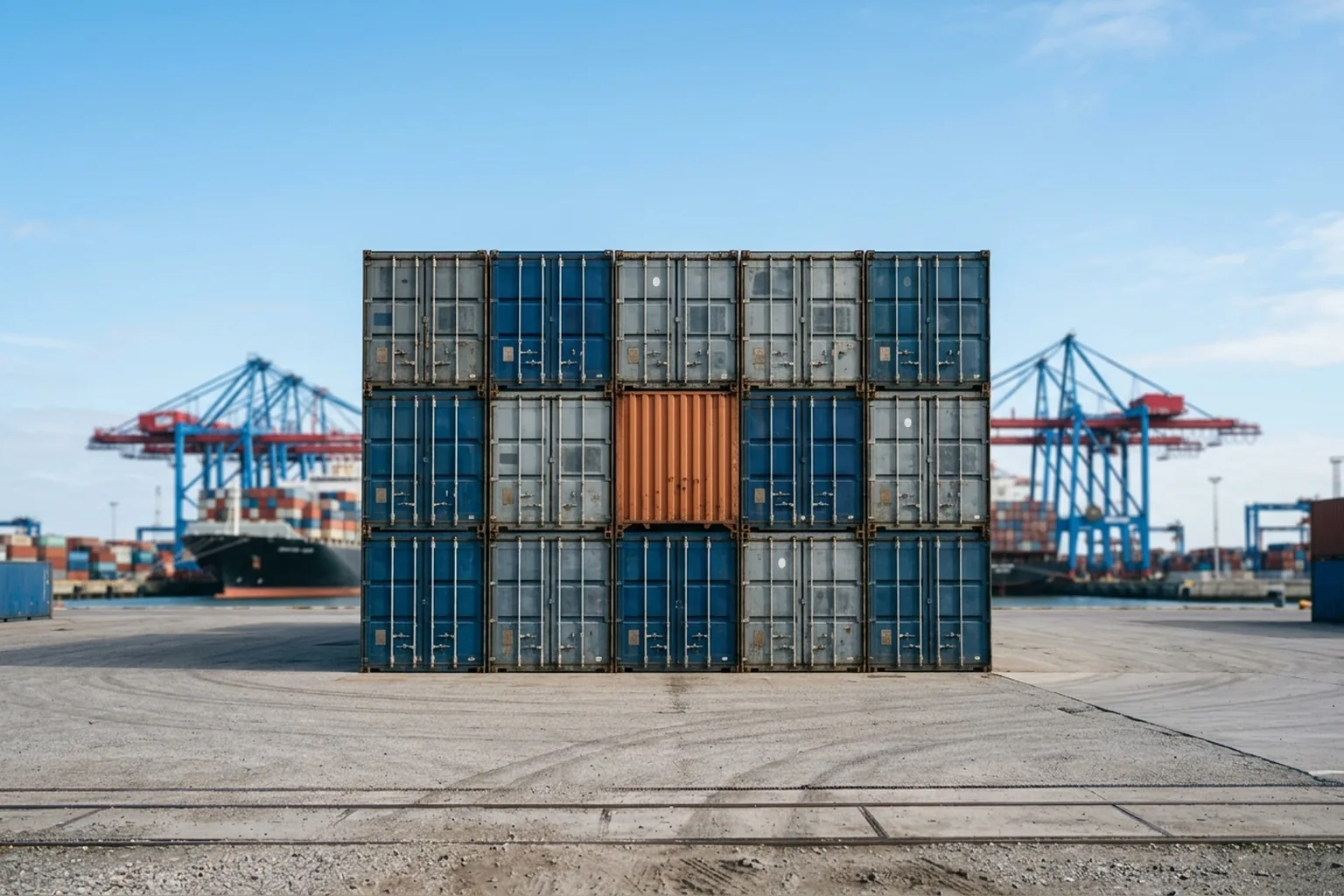
FCL vs LCL is the choice between buying a whole container and buying space in one that is already sailing. FCL, or full container load, means one shipper books the entire container; the cargo is sealed inside and rated per container. LCL, or less than container load, means your cargo shares a container with other shipments and is rated on the space and weight you use. The usual advice is that consolidation stops paying somewhere between 12 and 15 CBM, but no fixed figure can be derived without your lane, your cargo and your quoted charge scope. The test below uses your own numbers instead.
Both modes move your goods on the same vessel types. What changes is how much of the container you buy, how many times the cargo is handled on the way, and which line items appear on the invoice.
FCL vs LCL in shipping: what each option actually is
FCL, the meaning of full container load, is a shipment that occupies an entire container for one consignee. The container is packed once, sealed, and opened at destination, which is why FCL is normally described as the lower-handling option: cargo is not mixed with other shippers' goods and there is no shared consolidation step in the middle.
LCL (less than container load, the meaning most often asked about) is a shipment that does not fill a container on its own. Several shipments are received at a consolidation point and loaded into the same box. Because no single shipper pays for the whole container, each is charged for the billable quantity it contributes, usually by volume and by weight where the cargo is dense.
Decision factor | FCL | LCL |
|---|---|---|
What you buy | A dedicated container | Shared space in a consolidated container |
Rating basis | Per container, plus the charges around moving it | Per billable volume, or by weight-and-measure, with per-shipment minimums |
Handover points | Fewer: pack, seal, load, release | More: receipt at origin, consolidation, deconsolidation at destination, delivery |
Documentation | Container moves under one bill of lading to the consignee | Cargo moves under a house bill inside the carrier's master bill, with several consignees |
Typical fit | Planned replenishment, fragile, valuable or bulky loads | Smaller lots, several suppliers, stock needed sooner than a container can be filled |
What you buy
FCL
A dedicated container
LCL
Shared space in a consolidated container
Rating basis
FCL
Per container, plus the charges around moving it
LCL
Per billable volume, or by weight-and-measure, with per-shipment minimums
Handover points
FCL
Fewer: pack, seal, load, release
LCL
More: receipt at origin, consolidation, deconsolidation at destination, delivery
Documentation
FCL
Container moves under one bill of lading to the consignee
LCL
Cargo moves under a house bill inside the carrier's master bill, with several consignees
Typical fit
FCL
Planned replenishment, fragile, valuable or bulky loads
LCL
Smaller lots, several suppliers, stock needed sooner than a container can be filled
The acronyms cause confusion outside shipping, because "LCL" also stands for other things in other industries. When you ask for a quotation, name the service rather than the abbreviation.
Why there is no single CBM where consolidation stops paying
Every comparison page puts a number on this. None of them shows where the number comes from, and the figures do not agree with each other. That is not carelessness so much as a missing denominator: the volume at which LCL stops being the cheaper route depends on inputs that differ per shipment.
Four of them matter most.
Billable volume, not packed volume. The quantity you are rated on is the volume the provider adopts after its own measuring rules, not necessarily the total on your packing list.
Weight, if your cargo is dense. LCL is commonly rated on a weight-or-measure basis: the provider compares volume against weight using an agreed conversion. Maersk's published LCL terms, for instance, rate in weight-and-measure units on a one-cubic-metre-to-1,000-kilogram convention, and the higher of the two figures applies. A dense consignment reaches that point long before it fills a container.
Whether your cargo can be consolidated at all. Oversized pieces, dangerous goods and cargo that cannot be stacked may not be accepted into shared space, which removes LCL from the comparison entirely.
The charges on the destination side. Two quotations for the same boxes can differ in whether they end at the port, at a warehouse or at your final address. A comparison between an LCL rate that includes deconsolidation and delivery and an FCL rate that stops at the terminal is not a comparison at all.
So the useful version of the question is not "at what volume does LCL stop paying?" Ask instead: at what volume does the container price, delivered to my address and including what I actually need, fall below the LCL price for the same job? In practice there is a knee in the curve, a point where adding volume adds little to the LCL bill and starts adding space you could have bought outright, and it can sit well above or below the figures you read online.
One further input turns up in sustainability reporting. A shared container is space on a vessel that sails either way, so the comparison usually rests on the consolidation and handling steps rather than on the sea leg. Ask each provider whether it reports emissions for the shipment before treating the mode choice as an environmental decision.
The charge events that decide it
The cleanest way to see the difference is to list the events each mode triggers. FCL concentrates cost into the container itself plus a fixed set of moves. LCL spreads the same journey across more, smaller events, because your cargo is received, combined, separated and handed over individually.
Stage | FCL | LCL |
|---|---|---|
Origin handling | Pickup of the packed container, lifting, terminal receipt | Receipt of loose cargo or pallets at a consolidation point, labelling, checking |
Export formalities | Declared for the container | Declared for the consolidated container, with your own documentation attached |
Linehaul | One container, one booking | Costs apportioned across the shipments in the box, plus the consolidation operation |
Documentation | Usually one bill of lading | A house bill for your cargo, issued inside the carrier's master bill |
Destination | Container released and de-hired | Cargo separated at a deconsolidation point, then released per consignee |
Final delivery | Container or cargo delivered to the address | Delivery arranged per consignee, frequently after the box has been stripped |
Minimums | Not applicable in the same way | Per-shipment minimum charges often apply regardless of size |
Origin handling
FCL
Pickup of the packed container, lifting, terminal receipt
LCL
Receipt of loose cargo or pallets at a consolidation point, labelling, checking
Export formalities
FCL
Declared for the container
LCL
Declared for the consolidated container, with your own documentation attached
Linehaul
FCL
One container, one booking
LCL
Costs apportioned across the shipments in the box, plus the consolidation operation
Documentation
FCL
Usually one bill of lading
LCL
A house bill for your cargo, issued inside the carrier's master bill
Destination
FCL
Container released and de-hired
LCL
Cargo separated at a deconsolidation point, then released per consignee
Final delivery
FCL
Container or cargo delivered to the address
LCL
Delivery arranged per consignee, frequently after the box has been stripped
Minimums
FCL
Not applicable in the same way
LCL
Per-shipment minimum charges often apply regardless of size
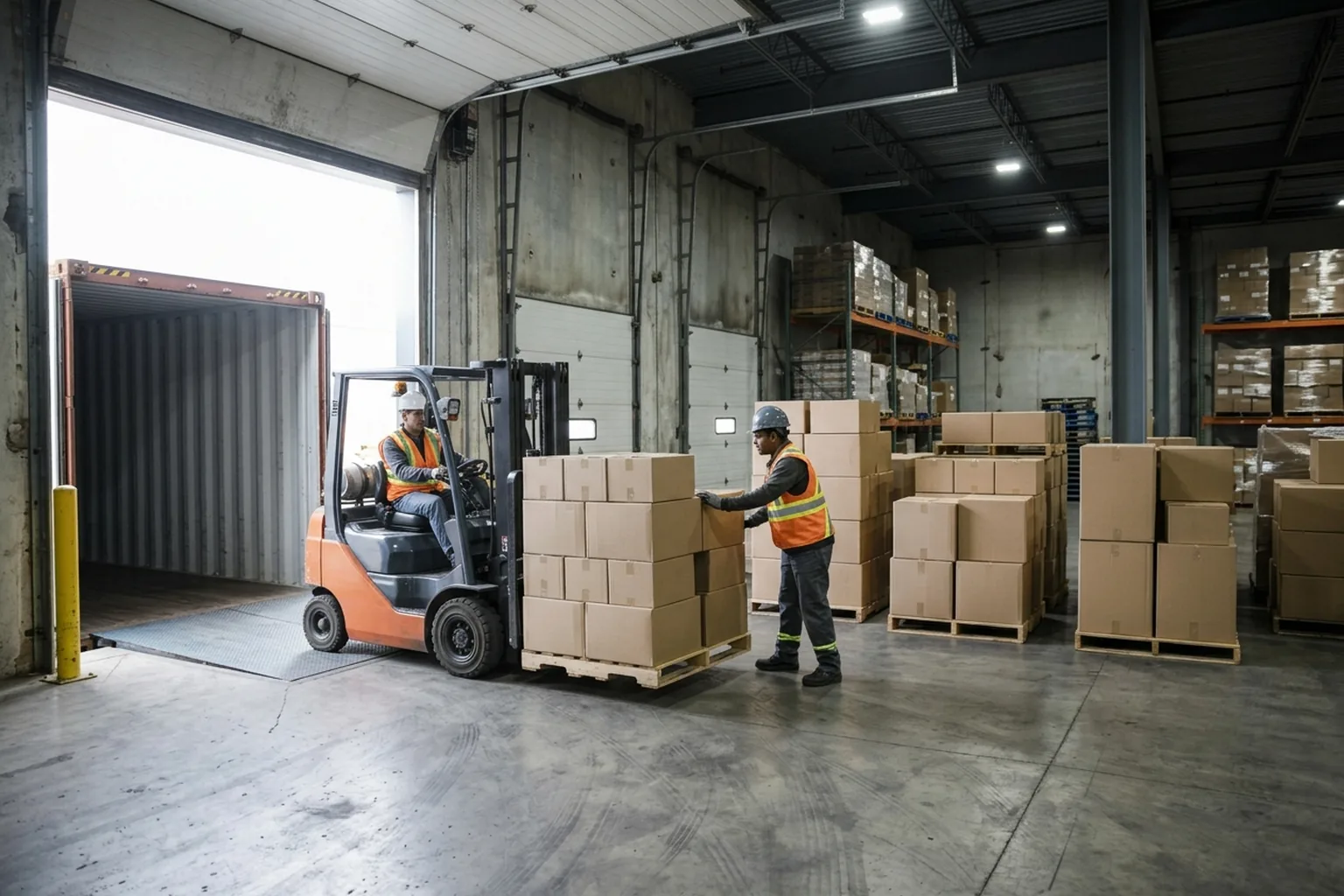
Two consequences follow. First, an LCL quotation contains more line items, and each can be subject to a minimum, so a very small shipment can cost nearly as much as a larger one: that is why the per-CBM price appears to fall as volume grows. Second, the extra handovers are where handling damage and documentation mismatches are most likely to appear, which makes this a quality question as much as a cost question.
Even the head-to-head rate question is not symmetric. For air cargo, chargeable weight compares actual weight with volumetric weight using a density ratio, and DHL's chargeable-weight guide explains the comparison and why the ratio matters. Sea LCL applies the same logic with a different convention, as the Maersk LCL terms show. Ask which basis each quotation uses before comparing totals.
Run the test on your own volume
You do not need a formula. You need four numbers and one honest answer about your own cargo.
- Establish the billable quantity. Start from the packed volume and gross weight you send for quotation (the same measurements used in our guide to measuring cargo in CBM), then ask each provider to confirm the quantity it rates on.
- Mark which charges are per shipment and which are per container. Put the LCL quotation and the FCL quotation side by side and tick the events from the table above that appear in each. The LCL-specific events are where the difference lives.
- Check whether the container genuinely fits your cargo. Piece dimensions, stacking strength, weight concentration and loading access all have to work before a container price is a real option. A volume total alone does not prove that twelve awkward pallets will load safely.
- Then compare the two totals against the same delivery scope and the same date window.
Here is an illustration, not a customer case and not a quote: a buyer ships twelve pallets of packaged components from Guangzhou to a warehouse in Jakarta, each pallet 120 × 100 × 115 cm, for a total of 16.6 CBM and 4,800 kg gross. That volume occupies a clear minority of the container the buyer would have to book, so the useful question is not "which mode is cheaper per cubic metre" but "what does each quotation actually include and deliver?" Running steps 1 to 4 means asking two things. Is the received-at-consolidation charge in the LCL quote per shipment or per CBM? Does the LCL quote include deconsolidation and delivery to the Jakarta address while the FCL quote stops at the terminal? If the two totals land close together, the quieter route with fewer handovers is worth paying a little more for. If the gap is wide, the cheaper option is the cheaper option.
Do not price an LCL shipment by taking a container rate and dividing by the container's nominal capacity. The result ignores consolidation, deconsolidation, documentation and minimums. Ask for an LCL quotation instead.
FCL vs LCL: two shipments or one container?
A single-shipment comparison hides the question most growing importers actually face: ship 8 CBM now and 8 CBM in six weeks, or hold both lots and ship 16 CBM in one container later?
Route | What it costs you | What it buys you |
|---|---|---|
Two LCL shipments | Two sets of per-shipment charges, plus the freight for each | Stock arrives earlier; less cash tied up in transit |
One consolidated FCL shipment | One container and one set of container-level charges | Lower cost per unit of space if the container is genuinely used |
Two LCL shipments
What it costs you
Two sets of per-shipment charges, plus the freight for each
What it buys you
Stock arrives earlier; less cash tied up in transit
One consolidated FCL shipment
What it costs you
One container and one set of container-level charges
What it buys you
Lower cost per unit of space if the container is genuinely used
The freight bill is only half of it. Holding goods in transit delays revenue and can force expedited production, while shipping early can mean paying for storage in a bonded warehouse or handling facility in Indonesia as the second lot sits unused. Incoterms 2020 matter here too: the same mode choice lands differently depending on where the handover sits and which party pays each leg, so confirm the rule and the named place before comparing two options.
Compare the total landed cost for the period both lots are in play, not two freight lines.
What can go wrong after the quote
Cost structure explains most of the decision, but four risks separate the two modes.
Demurrage and detention. Containers accrue charges once free time runs out, whether the delay comes from clearance, inspection or delivery planning. In LCL the container is shared, so a hold on one consignment can affect the box your cargo is in as well. Free time, the charges after it and who bears them sit in the carrier's tariff and bill-of-lading terms rather than in a general rule. The questions worth asking are where free time starts, how many days are included, and what happens if clearance runs late.
Damage and loss. LCL cargo passes through more handling points. Carrier liability is limited by the applicable terms and conventions, while cargo insurance is a separate contract: the International Union of Marine Insurance is the international body that represents marine insurers, and the wording of the policy itself decides what a claim covers. Establish what is insured, by whom, and at what value, rather than assuming that a carrier's liability covers your invoice value.
Dangerous and special cargo. If your goods are classified as dangerous for transport, they need declaration and packing that meet the applicable code before they can be booked. The International Maritime Organization's dangerous goods programme is where the IMDG Code sits. Consolidated boxes are often the first place acceptance becomes difficult.
Space and schedule risk. Shared space is more exposed to peak-season pressure than a booked container. If a fixed delivery window matters, that belongs in the comparison alongside the price.
Where the Indonesia end changes the calculation
The China–Indonesia leg adds one factor that is easy to miss when you compare modes in the abstract.
An LCL shipment arrives under the carrier's master bill, and each consignee holds a house bill for its own cargo. Clearance is then per consignee, so the importer of record, the registration held by that importer and the completeness of the documents all have to be settled before the cargo matures at the destination point, not after. If those are still being arranged, an LCL booking can stall in the middle of a shared container, and the friction is not limited to your own boxes.
Onward delivery also changes by destination. Jakarta cargo is handled at the container terminals at Tanjung Priok, where Jakarta International Container Terminal is one operator, before it moves inland. Shipments to other islands are quoted and scheduled differently again. Whichever terminal or deconsolidation point your quotation names, it is usually not your final address, so confirm where the LCL service ends, who arranges the last leg, and what the delivery address actually requires: access, vehicle type, appointment windows.
Timing reference points from our own operations are sea and consolidated sea freight at roughly 15–25 days, and air at roughly 3–5 days, excluding public holidays and red-flag clearance periods. Those are reference bands for planning, not per-lane promises. The comparison between modes is set out in our guide to choosing between sea and air freight, which this article assumes you have already narrowed down.
Questions to put to both quotations
Most expensive surprises on this decision come from unasked questions rather than from the freight rate. Send the same list for both options:
- Is my cargo rated per CBM, per weight-and-measure unit, or on the higher of the two?
- Which origin charges are per shipment and which are per cubic metre?
- Does the quotation end at the port, at a warehouse, or at my delivery address?
- Who clears the cargo, in whose name, and what has to be ready before it arrives?
- How much free time is included, and who pays demurrage or detention beyond it?
- Is cargo insurance included, optional or excluded, and at what value?
- What happens if the shipment grows or shrinks after measurement?
Comparing quotations only works when both describe the same work. Our international freight service sets out the scope we coordinate on this lane.
FCL or LCL: frequently asked questions
Which is better, FCL or LCL?
Neither, in general. The word order makes no difference: lcl vs fcl is the same comparison as fcl vs lcl. FCL is usually the better route once the container you pay for is close to the space and protection you need. LCL is usually the better route while your volume is small, your suppliers are still consolidating, or your cash position favours a smaller shipment now. The decision is a comparison of two delivered totals, not a rule.
Why is LCL more expensive per CBM than FCL?
Because the per-CBM figure spreads a set of per-shipment charges (receipt, consolidation, documentation, deconsolidation, handling) across your volume. As your volume grows, those fixed elements are spread further, so the effective cost per cubic metre falls. It does not fall to the container's rate per cubic metre; that comparison ignores the work the container does not need.
What are the disadvantages of LCL shipping?
More handover points and therefore more handling risk; slower transit through consolidation and deconsolidation; per-shipment minimum charges that punish very small volumes; shared container risk, where another consignment's delay can affect the box; and a rating basis that can switch to weight if your cargo is dense.
What does "20 FCL" or "40 FCL" mean?
It refers to the container size being booked, a 20-foot or 40-foot container, used as a full container load. Container types differ in capacity, loading access and availability, so confirm the equipment the quotation assumes rather than inferring it from the number.
How long does LCL take compared with FCL?
Consolidated sea freight is slower than a dedicated container on the same lane, because cargo waits for the box to be filled and is separated again on arrival. On our China–Indonesia services both sit inside the same reference band of roughly 15–25 days, with consolidated cargo usually at the later end of it, excluding holidays and red-flag clearance periods. Ask for the schedule of your specific sailing rather than applying the band as a promise.
What is a CFS in LCL shipping?
A container freight station is the point where loose cargo and pallets are received, checked and loaded into the consolidated container, and at destination it is where the container is stripped and the cargo separated again. It is the handover point that FCL shipments do not use.
Is LCL the same as LTL?
No. LCL combines shipments into an ocean container, so the shared unit is a maritime container. LTL, or less than truckload, is the road equivalent, where several consignments share a truck. A shipment can be LTL at one end of its journey and LCL on the sea leg.
More guides on freight, customs and delivery costs are collected in the freight planning section.
Decide with your own numbers
Write down the billable volume, the gross weight, whether the cargo can be consolidated, the delivery scope you need and the date the goods must be available. Then ask for both options on those exact terms. The answer for a 16 CBM consignment of dense components is not the answer for 16 CBM of assembled furniture, and neither is decided by a number someone else published.
If you are preparing that comparison for a China–Indonesia shipment, our door-to-door LCL service and FCL sea freight service describe what each includes, and the team can quote both from the same shipment details.