
The choice of sea freight vs air freight to Indonesia starts with your delivery deadline. Air is worth considering when earlier arrival protects an urgent order or keeps production moving. Sea is usually the stronger starting point for bulky, planned replenishment. Compare both using the same cargo details, delivery address and included services before deciding.
For shipments from China, a low freight rate and an early arrival date can each hide an incomplete comparison. One quotation might end at a port; another might include delivery to your warehouse. A flight can arrive quickly while the goods still need clearance and local transport.
Start with the decision you actually need to make: when must the goods be available to use, and what extra cost would you accept to reach that date?
Sea freight vs air freight to Indonesia: a quick comparison
If you are asking what is the difference between sea freight and air freight, the useful answer goes beyond the vehicle carrying your goods. The choice changes your shipment's cost structure, available capacity and planning requirements.
Decision factor | Sea freight | Air freight |
|---|---|---|
Best starting point | Planned stock replenishment and larger shipments with scheduling room | Urgent replenishment, samples or eligible parts needed to protect a deadline |
Cargo profile | Bulky loads that are expensive to move by air; equipment suitability still matters | Cargo whose dimensions, weight and handling requirements fit the available aircraft service |
Pricing questions | FCL container quotation or LCL consolidation quotation, plus local charges | Chargeable weight, available service and any handling or other applicable charges |
Time comparison | Include cargo collection, sailing schedule, arrival handling, clearance and delivery | Include cargo collection, flight availability, arrival handling, clearance and delivery |
Main trade-off | More planning room is needed; a lower transport bill may leave more inventory in transit | A higher transport bill needs a clear commercial reason; space and cargo acceptance may constrain the option |
Best starting point
Sea freight
Planned stock replenishment and larger shipments with scheduling room
Air freight
Urgent replenishment, samples or eligible parts needed to protect a deadline
Cargo profile
Sea freight
Bulky loads that are expensive to move by air; equipment suitability still matters
Air freight
Cargo whose dimensions, weight and handling requirements fit the available aircraft service
Pricing questions
Sea freight
FCL container quotation or LCL consolidation quotation, plus local charges
Air freight
Chargeable weight, available service and any handling or other applicable charges
Time comparison
Sea freight
Include cargo collection, sailing schedule, arrival handling, clearance and delivery
Air freight
Include cargo collection, flight availability, arrival handling, clearance and delivery
Main trade-off
Sea freight
More planning room is needed; a lower transport bill may leave more inventory in transit
Air freight
A higher transport bill needs a clear commercial reason; space and cargo acceptance may constrain the option
Full container load (FCL) gives your consignment a dedicated container. Less than container load (LCL) places it in shared container space. LCL can suit a shipment that does not need a full container, but it is a distinct service with its own consolidation and destination handling steps. Get an LCL quote rather than estimating it as a fraction of an FCL price.
There is no single weight or cubic-metre threshold that makes one mode the right answer for every China–Indonesia shipment.
Start with the date the cargo must reach your address
Write down two dates before comparing transit times:
- Cargo-ready date: when the shipment will be packed, measured and ready for collection or handover.
- Required delivery date: when it needs to reach the address where it will be used or sold.
Then ask each provider to explain the steps between those dates. A port-to-port sailing estimate cannot be compared directly with a door-to-door air estimate. “Departure” could mean warehouse dispatch, aircraft take-off or vessel sailing; “arrival” could mean landing, port discharge or delivery to the consignee.
Ask for the quotation to name those milestones. It should also distinguish the expected schedule from a committed service promise, if any, and identify what happens if the cargo misses a cut-off.
For example, goods needed at a warehouse outside Jakarta are not ready for use merely because they have reached Jakarta. Confirm the delivery postcode, vehicle requirements and whether the onward leg is included. The same applies to a shipment entering through Surabaya: the port name alone does not define the final delivery scope.
Air becomes a plausible option when its expected delivery window fits your deadline and sea does not. But paying for air will not resolve missing documents, an unconfirmed importer or cargo that the proposed service cannot accept. Check those constraints before treating the faster movement as a solution.
If both modes comfortably meet the date, you have more room to compare cost and inventory exposure. If neither does, ask whether the order can be rescheduled or whether a smaller, essential quantity can arrive first.
Price the packed shipment, then compare the same scope
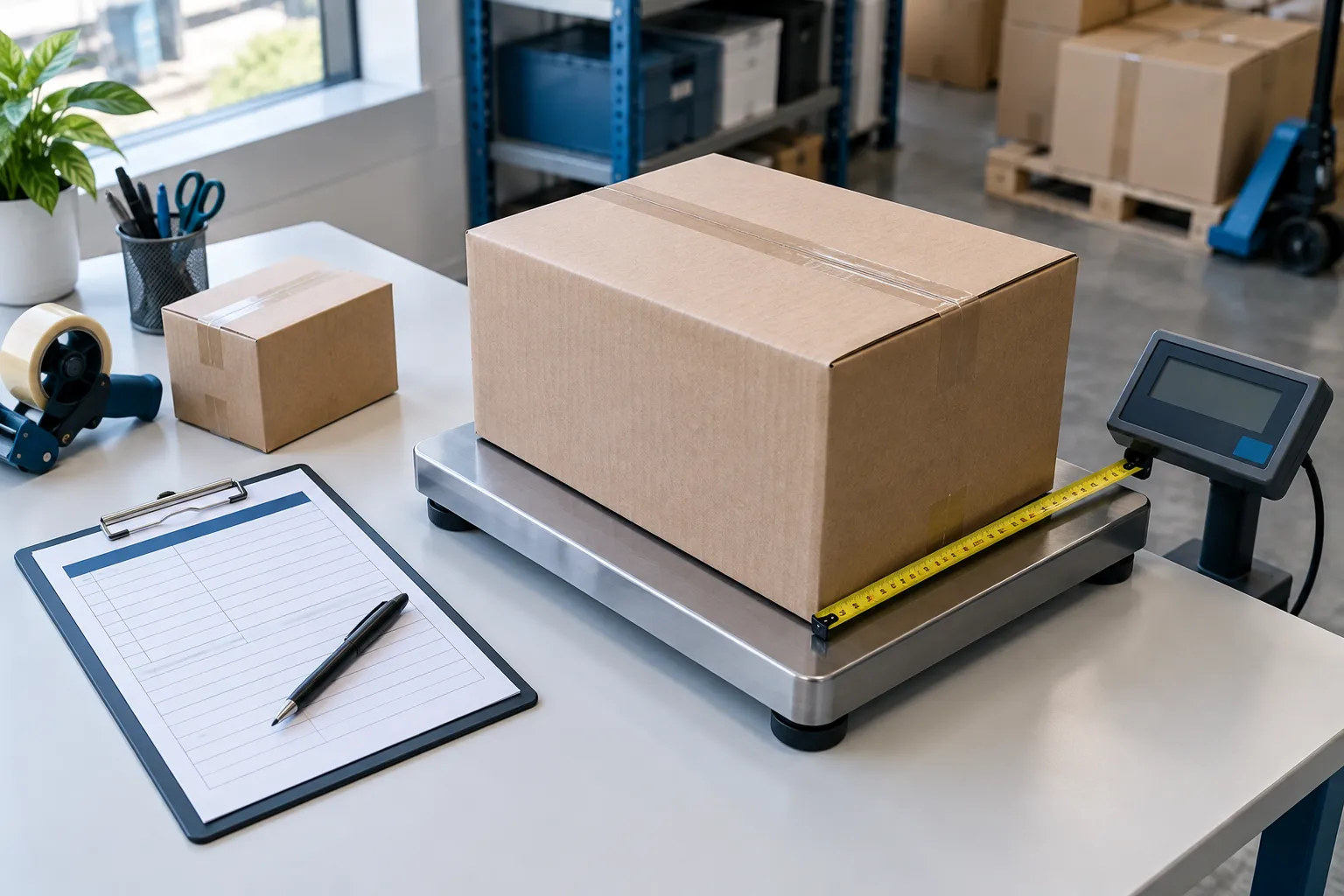
A supplier's product weight is not enough for a reliable freight comparison. Obtain the number of packages, the dimensions of each package and the gross weight after packing. Include pallets and any protective packaging in the measurements.
Understand what you are being charged for
For air freight, chargeable weight generally compares actual gross weight with volumetric weight and uses the greater amount. A light but bulky shipment can therefore cost more than its scale weight suggests. DHL's chargeable-weight guide explains that comparison and why the applicable density ratio matters. Ask the provider which divisor and rounding rules its quotation uses.
For LCL, ask how volume, weight, minimum charges and handling affect the quote. For FCL, ask for the appropriate container and a clear list of charges around the container movement. Do not assume that a quoted ocean-freight line includes every cost at origin or destination.
These checks are especially useful when packaging changes. If the final cartons are larger than the supplier's estimate, request a revised comparison before booking.
Put the quotations side by side
Use the same checklist for both modes:
Cost or service | What to confirm |
|---|---|
Origin handling | Collection address, warehouse handling, export formalities and delivery to the departure facility |
Main transport | Service, routing, quote validity, cargo measurements and chargeable basis |
Destination handling | Terminal or warehouse charges and release-related handling |
Customs and taxes | Who handles clearance, who is the importer, and which fees or taxes are included or excluded |
Final delivery | Exact address, access conditions and any remote-area or oversized-cargo charges |
Exceptions | Inspection, storage, waiting time, failed delivery and other potential additional costs |
Cargo protection | Whether insurance is included, optional or excluded, and where to obtain its terms |
Origin handling
What to confirm
Collection address, warehouse handling, export formalities and delivery to the departure facility
Main transport
What to confirm
Service, routing, quote validity, cargo measurements and chargeable basis
Destination handling
What to confirm
Terminal or warehouse charges and release-related handling
Customs and taxes
What to confirm
Who handles clearance, who is the importer, and which fees or taxes are included or excluded
Final delivery
What to confirm
Exact address, access conditions and any remote-area or oversized-cargo charges
Exceptions
What to confirm
Inspection, storage, waiting time, failed delivery and other potential additional costs
Cargo protection
What to confirm
Whether insurance is included, optional or excluded, and where to obtain its terms
Use the same agreed Incoterms and named place when requesting both options, and ask for the service scope in plain language alongside them. A headline such as “door to door” is not enough to settle every charge or responsibility.
Is sea freight cheaper than air freight? It often offers a lower main-transport cost for larger, less urgent loads. The quotation that matters, however, is the one covering your actual shipment and required endpoint. For a small shipment, local and minimum charges may change the comparison; for an urgent one, the cost of waiting may change the decision.
Clear the cargo checks before paying for speed
Give the forwarder a specific product description. “Accessories” or “machine parts” may not explain what is inside the packages or how it must be handled. Include photos, materials or specifications where relevant, and flag batteries, liquids, powders or other features that need review.
For battery-containing goods, IATA's battery transport guidance is an authoritative starting point for understanding the need for classification, packing, marking and documentation checks. A product being sold commercially does not, by itself, confirm acceptance on a particular air service. Obtain a shipment-specific assessment; do not infer that switching to sea removes all restrictions.
Prepare a commercial invoice and packing list with consistent descriptions, quantities and weights. Confirm who will provide the remaining transport and clearance documents, and which information must be ready before booking.
Transport acceptance and permission to import are separate checks. DHL's freight-shipping FAQ advises checking import requirements before arranging shipment. For Indonesia-bound cargo, have the relevant product and importer requirements reviewed for the actual goods. A generic checklist cannot establish that a particular consignment is eligible.
The comparison becomes useful only when both proposed routes are feasible. Otherwise, you are comparing a bookable service with an assumption.
Consider flying only the units you need first
An urgent shortage does not always make the whole order urgent.
Consider a hypothetical buyer with 1,000 units ready in China. The buyer needs 100 units to cover an immediate gap, while the remaining 900 can follow on a later replenishment schedule. This is an illustration, not a customer case or a proposed shipping commitment.
Ask for three quotations:
- The full order by sea.
- The full order by air.
- The urgent quantity by air, with the balance by sea.
Compare the extra transport and handling cost of the third option with the expected cost of the shortage it could actually prevent. Use your own figures for missed contribution margin, production interruption or agreed customer penalties. Lost revenue alone may overstate the impact because some orders can be fulfilled later and some costs are avoided.
The timing test comes first: if the urgent portion still arrives after the shortage, the extra spend may achieve little. Check the quantities needed during the gap, rather than automatically choosing a round percentage of the order.
A split shipment can also create additional handling, documents and coordination. Confirm those costs and the treatment of each consignment. It is an option to evaluate, not an automatic saving or a promise that every cargo type can be split this way.
Questions to settle before choosing a mode
Should small shipments always go by air?
No. Packed dimensions, service availability, urgency and destination charges all matter. A small but bulky consignment can be costly by air. Request an actual comparison when both modes are practical instead of relying on a universal kilogram cut-off.
Does choosing air make the delivery date certain?
No. The flight is one part of the journey. Ask what the estimate includes, what the cargo must have completed before departure, and how clearance or onward-delivery delays affect the forecast.
Is FCL always preferable to LCL once the shipment grows?
Do not choose from volume alone. Compare the two quotations, suitable equipment, departure options and destination handling. The point at which FCL becomes attractive depends on the shipment and the services being offered.
Does one mode remove the need for insurance?
Do not assume that it does. Discuss the cargo's value, packaging and proposed journey, then review the available cover, exclusions and claims terms separately from the freight rate.
Send one brief for both quotations
Send the same information to whoever is preparing your sea and air options:
- Collection or handover address in China and final delivery address in Indonesia.
- Product description, photos and any relevant specifications.
- Package count, final packed dimensions, gross weight and cargo value.
- Cargo-ready date and required delivery date.
- Commercial invoice, packing list and known clearance arrangements.
- Any batteries, liquids, powders, oversized pieces or special handling needs.
- Required quotation scope, insurance preference and whether a partial urgent shipment is possible.
Ask for the earliest realistic delivery window, an itemised price with exclusions, and a list of information still needed to confirm the booking. That gives you a decision you can explain internally: what each option costs, what date it is expected to achieve and what could change it.
For the available service paths, see YANCHAO's China–Indonesia freight options. Use the brief above to discuss the route that fits your actual cargo and deadline.