

A PIB — Pemberitahuan Impor Barang, or Notification of Imported Goods — is Indonesia's import declaration. It is the document through which an importer tells the Directorate General of Customs and Excise what is arriving, how the goods are classified, what they are worth and which permits apply, so that customs can assess the charges owed and authorize the release of the cargo.
That one document is what turns a delivery into a legal import. Your commercial invoice describes a transaction, your bill of lading or air waybill is a contract of carriage, and the PIB is the act of declaring those goods to the state receiving them. Everything else travels as evidence attached to it.
This page explains how the declaration works; it does not price it. No duty, tax or fee figure appears here, because those follow from your goods and cannot be stated in the abstract. Where a time window appears, it is a planning reference drawn from our own traffic, not a service level — and nothing on this page is an offer or a quotation.
Why the declaration, not the invoice, decides what happens next
Two things follow from an accepted declaration: what is owed, and how closely the shipment will be looked at. Neither is decided by your forwarder, your carrier, or the value printed at the bottom of the invoice.
The declaration carries the elements customs uses to build the assessment basis — the classification of each item, the customs value, the origin of the goods and the permits that travel with them. The charges are composed from that basis under the rules that apply to your particular goods. Import duty, value added tax (PPN) and income tax article 22 (PPh 22) are among the components that can follow from it, depending on the goods. No rate appears on this page: a rate only means something once the tariff heading and the goods are known. What actually drives the cost of shipping to Indonesia sets out where those components sit in the wider cost structure; this article stays with the declaration itself.
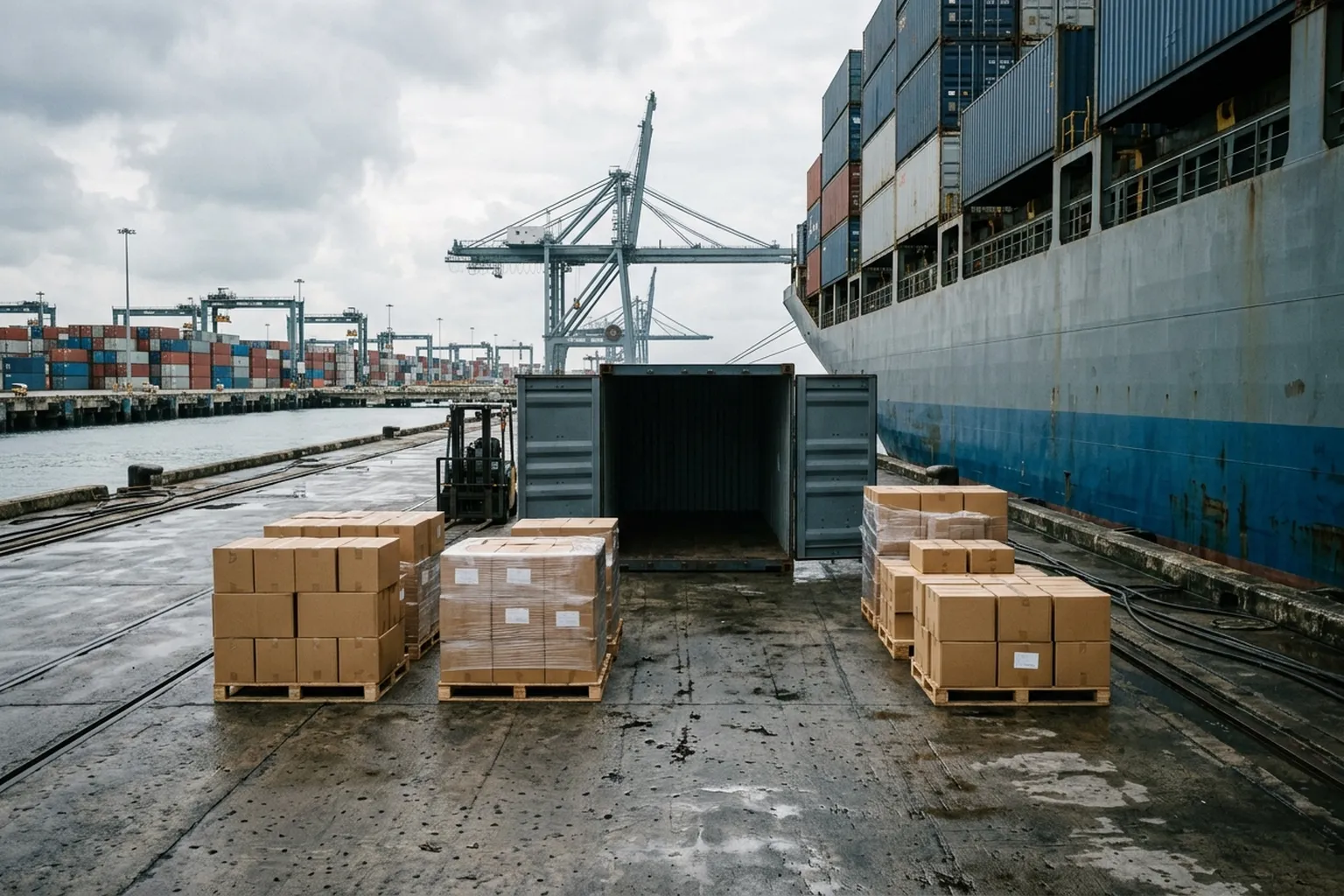
The second consequence is quieter and often more expensive. Customs assigns an accepted declaration to a risk channel, and that channel — not the arrival date — decides whether the cargo is released without examination or held for examination. A declaration whose lines do not hang together sends a shipment down the slower path even when the goods themselves are entirely legal.
What a PIB actually contains
A PIB is a structured form, not a letter. Customs reads it in blocks, and each block answers a different question.
Header and identity. The customs office of entry, the declaration date, the importer's identity and registration particulars, and the identity of whoever submitted the declaration when that is not the importer.
Parties. Consignee, consignor and delivery party. These must line up with the transport document. A mismatch between the name on the bill of lading and the name on the declaration is one of the more ordinary reasons an entry gets questioned.
Goods lines. One line per item: description, tariff classification — the HS code your broker will ask for — quantity, weight, the measurement the cargo is charged on, unit price, and the customs value the transaction supports — normally the price actually paid, adjusted to the place of importation. Accuracy is won or lost here. Volume carries its own weight on these lines, which is why how cargo is measured in cubic meters sits behind most less-than-container declarations.
Permit and approval references. Where goods fall under Indonesia's import controls, the relevant approval, surveyor report or registration reference is recorded on the declaration. This is the point where a permit stops being an attachment and becomes part of the entry.
The declaration itself. The importer's statement that the particulars are true, followed by the record of what customs determines.
Notice what is absent from that list: no rate, no tariff figure and no amount payable — those belong to the assessment that follows the entry, not to the entry itself. The structure is the same whether the consignment is four cartons or four flat racks, and it is the structure — not the arithmetic — that decides whether the entry is accepted cleanly.

How a PIB moves: single submission and the filing number
Indonesia's import declaration is filed electronically in the customs system — CEISA, the filing platform the Directorate General runs. Alongside it, the Indonesia National Single Window is the national platform through which the cross-agency requirements for the same shipment are coordinated: the approvals other agencies issue, and the public lookup that lets a declaration be traced. The same infrastructure carries the export side.
A filed declaration is not a single event. It moves through states, and knowing them helps you read what a broker is telling you:
- Lodged. The declaration data is submitted electronically against the shipment.
- Registered. The system issues a registration number and date — the aju number anyone handling the shipment will ask you for — once the entry meets the formal requirements. Among those requirements: the charges are settled or covered by a guarantee, the goods are in a temporary storage area, the inward manifest is available, and the applicable import controls (the LARTAS regime) are satisfied. Authorized traders and periodic declarations are registered under separate arrangements.
- Assessed. Customs confirms classification, value and permit references, produces the amount payable, and fixes the service lane the entry travels: the release lane (Jalur Hijau, released against the entry without examination) or the examination lane (Jalur Merah, held for physical examination and document research).
- Released. Once the amount is settled, the release authorization is issued and the cargo can leave the port or the customs-controlled area where it has been waiting.
Those states are what the system exposes rather than a hand-over between desks: the amount is determined from the declaration itself, and it is settled or covered by a guarantee as part of getting the entry registered.
Two practical points follow. A declaration can be lodged ahead of the vessel's arrival, but because registration is gated on those requirements, lodging early does not make an entry accepted early — a declaration filed before the ship arrives can sit unregistered until the conditions exist. And a correction made after registration is a different, more visible process than getting the entry right the first time.
On our side, that step is documentary and coordinative: we prepare and check the declaration and inspection work we coordinate against the transport documents and the physical facts of the shipment before it is lodged, and we coordinate with the customs broker and the receiving party if something needs correcting. The entry itself is lodged by the importer, or by a licensed customs service provider (a PPJK) acting on the importer's instructions.
Who is entitled to file a PIB
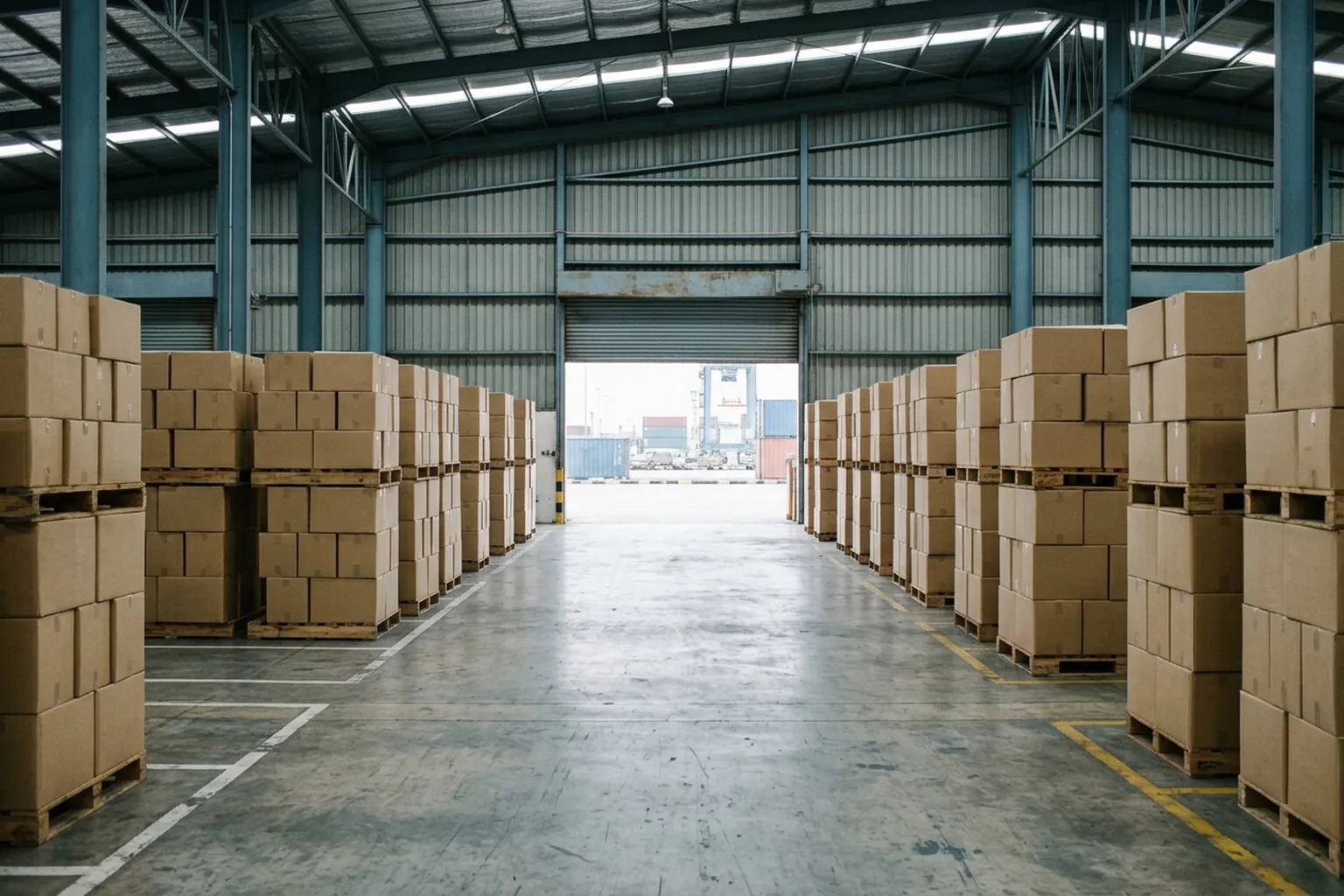
The right to declare belongs to the importer, but the hands on the keyboard are often somebody else's. Three arrangements cover almost every shipment, and they differ in who carries the legal responsibility rather than in how fast the cargo moves.
Arrangement | Who lodges the entry | Who carries the declaration risk |
|---|---|---|
Importer files in its own name | The importer or its in-house customs team, using its own registration and import identification | The importer, directly |
Importer instructs a licensed customs service provider (PPJK) | A PPJK files on the importer's instructions and account | The importer remains the declaring party; the provider must file accurately |
A third party acts as importer of record | A licensed entity imports in its own name, with the consignee being the domestic receiving party | The recording entity, on the facts it has been given |
Importer files in its own name
Who lodges the entry
The importer or its in-house customs team, using its own registration and import identification
Who carries the declaration risk
The importer, directly
Importer instructs a licensed customs service provider (PPJK)
Who lodges the entry
A PPJK files on the importer's instructions and account
Who carries the declaration risk
The importer remains the declaring party; the provider must file accurately
A third party acts as importer of record
Who lodges the entry
A licensed entity imports in its own name, with the consignee being the domestic receiving party
Who carries the declaration risk
The recording entity, on the facts it has been given
Which arrangement applies usually follows from the delivery term agreed with your supplier, which is why the Incoterms rules are worth settling before the shipment is booked. The arrangement you choose changes who signs, whose registration appears on the declaration and who answers a post-clearance question years later. It does not change what the declaration has to contain. Whichever route applies, the quality of the entry still depends on the documents and the goods description the importer supplies.
For shipments we handle, the import side of this is dealt with by the importer and its own arrangements. Our role is to coordinate: we assist and coordinate with the parties involved on the Indonesian side — the importer of record, the customs broker and the receiving operation — rather than determine them. Where a shipment needs Indonesia customs clearance coordination, that work is an assessment and assistance activity, not an approval we can grant.
PIB, PEB and the passenger e-CD: three declarations people confuse
The word "declaration" is used for at least three different things in Indonesia, and mixing them up wastes time in the wrong conversation.
Document | Direction | Who lodges it | What it covers |
|---|---|---|---|
PIB — Pemberitahuan Impor Barang | Into Indonesia | The importer or its customs service provider | Commercial cargo being imported and cleared |
PEB — Pemberitahuan Ekspor Barang | Out of Indonesia | The exporter or its customs service provider | Commercial cargo being exported |
e-CD — the electronic customs declaration for travelers | Into Indonesia | The arriving traveler | Personal accompanied baggage and personal effects |
PIB — Pemberitahuan Impor Barang
Direction
Into Indonesia
Who lodges it
The importer or its customs service provider
What it covers
Commercial cargo being imported and cleared
PEB — Pemberitahuan Ekspor Barang
Direction
Out of Indonesia
Who lodges it
The exporter or its customs service provider
What it covers
Commercial cargo being exported
e-CD — the electronic customs declaration for travelers
Direction
Into Indonesia
Who lodges it
The arriving traveler
What it covers
Personal accompanied baggage and personal effects
Two boundaries are worth stating plainly. A PIB is not a substitute for the import permit or product registration a restricted consignment needs; it is the declaration that records whether those exist. And the PIB is not the same thing as the invoice, the packing list or the bill of lading — those are the inputs a declaration is built from, and customs can ask to see all of them.
For an exporter in China, the practical implication is that the two ends of the same shipment have two different declarations in two different jurisdictions. The export side is declared at origin by the shipper or its agent; the import side is declared in Indonesia, by an Indonesian entity or by someone licensed to act for one. Neither declaration can stand in for the other.
Where the PIB sits in the clearance journey
Read the journey as a sequence of gates rather than a list of steps:
- Goods are classified and the entry is prepared. Classification, value and permit references are fixed before lodgement.
- The declaration is lodged and accepted, and the entry receives its filing number.
- Customs assigns a channel. A document-based route releases against the paperwork; an examination route holds the cargo for physical checking. Which route applies depends on the risk profile of the entry, not on the size of the shipment.
- Charges are settled and release is authorized, at which point the cargo can be collected from the port or the customs-controlled area.
- Cargo moves to the consignee, and the declaration and its supporting documents enter the record you may be asked for later.
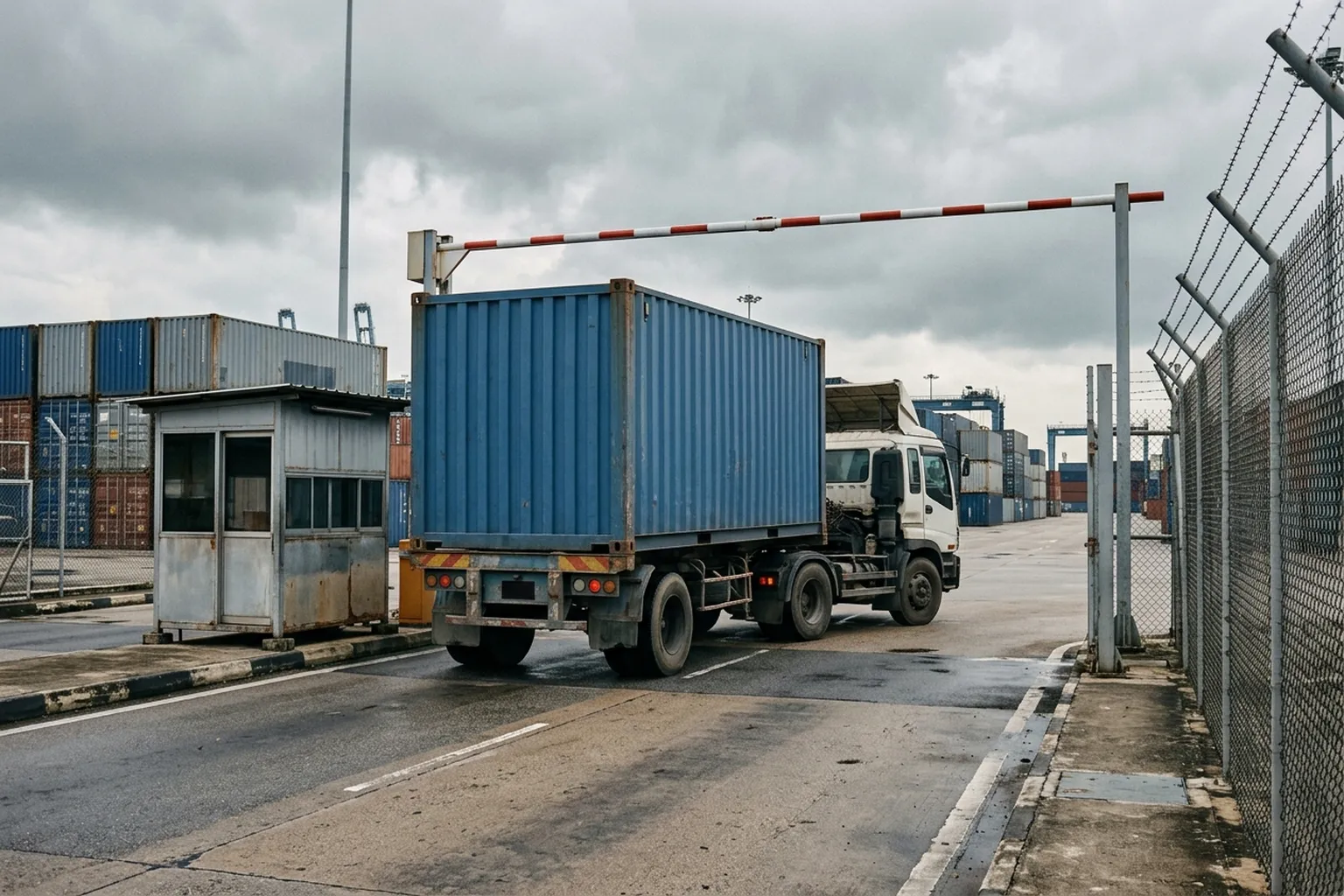
As a planning reference only, and taken from our own China–Indonesia traffic rather than from the authority: on an entry that travels the release lane (Jalur Hijau), we plan about three working days from release to handing the cargo over for delivery, and where an examination applies we budget about five to seven working days for that same span. Both windows are conditional references for that traffic, they end at hand-over rather than at the consignee's door, and they assume the documents and the receiving address are settled; neither is a fixed processing time, a service level, a delivery promise or a guarantee.
What to prepare so the declaration is right the first time
The declaration fails on inputs, not on forms. These are the inputs worth settling before a shipment is booked.
What to prepare | Why the declaration depends on it |
|---|---|
A goods description that matches the physical cargo | The description drives classification and is the first thing examined when there is doubt |
Classification you can stand behind | Classification determines which controls apply, not just what is payable |
Invoice, packing list and transport document that agree | Any disagreement between them becomes the declaration's problem |
Weights and measurements taken after packing | Declared weight and volume must reflect the cargo as it actually ships |
Permit, approval or registration references where they apply | A restricted consignment cannot be declared cleanly without them |
The correct importing entity's registration details | The declaration carries the importer's identity, so it must be the right one |
A record-keeping arrangement from day one | Post-clearance review can reach back years and reads the same file |
A goods description that matches the physical cargo
Why the declaration depends on it
The description drives classification and is the first thing examined when there is doubt
Classification you can stand behind
Why the declaration depends on it
Classification determines which controls apply, not just what is payable
Invoice, packing list and transport document that agree
Why the declaration depends on it
Any disagreement between them becomes the declaration's problem
Weights and measurements taken after packing
Why the declaration depends on it
Declared weight and volume must reflect the cargo as it actually ships
Permit, approval or registration references where they apply
Why the declaration depends on it
A restricted consignment cannot be declared cleanly without them
The correct importing entity's registration details
Why the declaration depends on it
The declaration carries the importer's identity, so it must be the right one
A record-keeping arrangement from day one
Why the declaration depends on it
Post-clearance review can reach back years and reads the same file
Two of those deserve emphasis. Classification is where honest mistakes are most expensive, because it decides both the controls that apply and how the entry is assessed. And the "who is the importer" question has to be answered before the cargo sails, not after it arrives — it determines whose name is on the declaration and who answers for it afterward.
Common questions about the PIB
What does PIB stand for?
PIB is short for Pemberitahuan Impor Barang, which translates as Notification of Imported Goods. It is Indonesia's import declaration: the electronic document through which goods are declared to the Directorate General of Customs and Excise — Bea Cukai — so that they can be assessed and released.
Is a PIB the same as an import license?
No. An import license or registration is a standing entitlement to import; a PIB is the declaration of one specific consignment. A licensed importer still files a declaration for every shipment, and a declaration cannot supply a permit that the goods require.
Who can file the PIB?
The importer, in its own name, or a licensed customs service provider filing on the importer's instructions. Importers who do not have an Indonesian entity commonly use a licensed third party as the importer of record, in which case that entity declares in its own name.
What happens if the declaration is wrong?
It depends on the error. A minor inconsistency can usually be corrected while the entry is still in process. Substantive misdeclaration — of classification, value or the goods themselves — moves the matter from administration into a compliance question, which is why preparing the inputs carefully is cheaper than fixing the entry later.
Can the declaration be filed before the cargo arrives?
Yes. Lodging ahead of arrival is normal practice and is a planning decision, since the entry cannot be assessed and released before the shipment is presented. Filing early and filing accurately are two different things, and the second one is what shortens the wait.
Do I need a customs broker in Indonesia?
Not by law for every shipment, but the declaration has to be lodged by an entity entitled to lodge it. Most importers work through a licensed customs service provider because the classification, valuation and permit detail on the entry has to be right the first time, and because the provider already sits inside the systems that lodge it.
What number does a PIB return, and how do you check a declaration's status?
The registration number, usually called the aju number, is issued when the entry is registered and it is the reference every later exchange about the shipment uses. Because that number identifies the declaration inside the system, a registered entry can be traced through the public PIB/PEB lookup that Indonesia's national single window publishes, rather than by asking the carrier where the cargo is.
What documents does a declaration need?
At minimum an invoice, a packing list and the transport document, because the declaration is built from them and customs can ask to see all three. Add the permit, approval or surveyor references where the consignment requires them, the importing entity's registration particulars, and a packing record carrying the weights and measurements as they actually shipped. Most paperwork delays trace back to one of those documents disagreeing with another.
Yanchao Logistics works the China–Indonesia route — the freight, and the declaration coordination that goes with it. Send us the goods description, the packing details, the shipment terms and the intended importing entity through our contact page and we respond within two hours on working days, with a preliminary quotation normally provided within 48 hours once the documents are complete. Shipments involving restricted goods, complex clearance or project cargo are confirmed after review rather than on the standard turnaround. This article opens our Indonesia customs cluster, which takes the declaration apart one box at a time.