
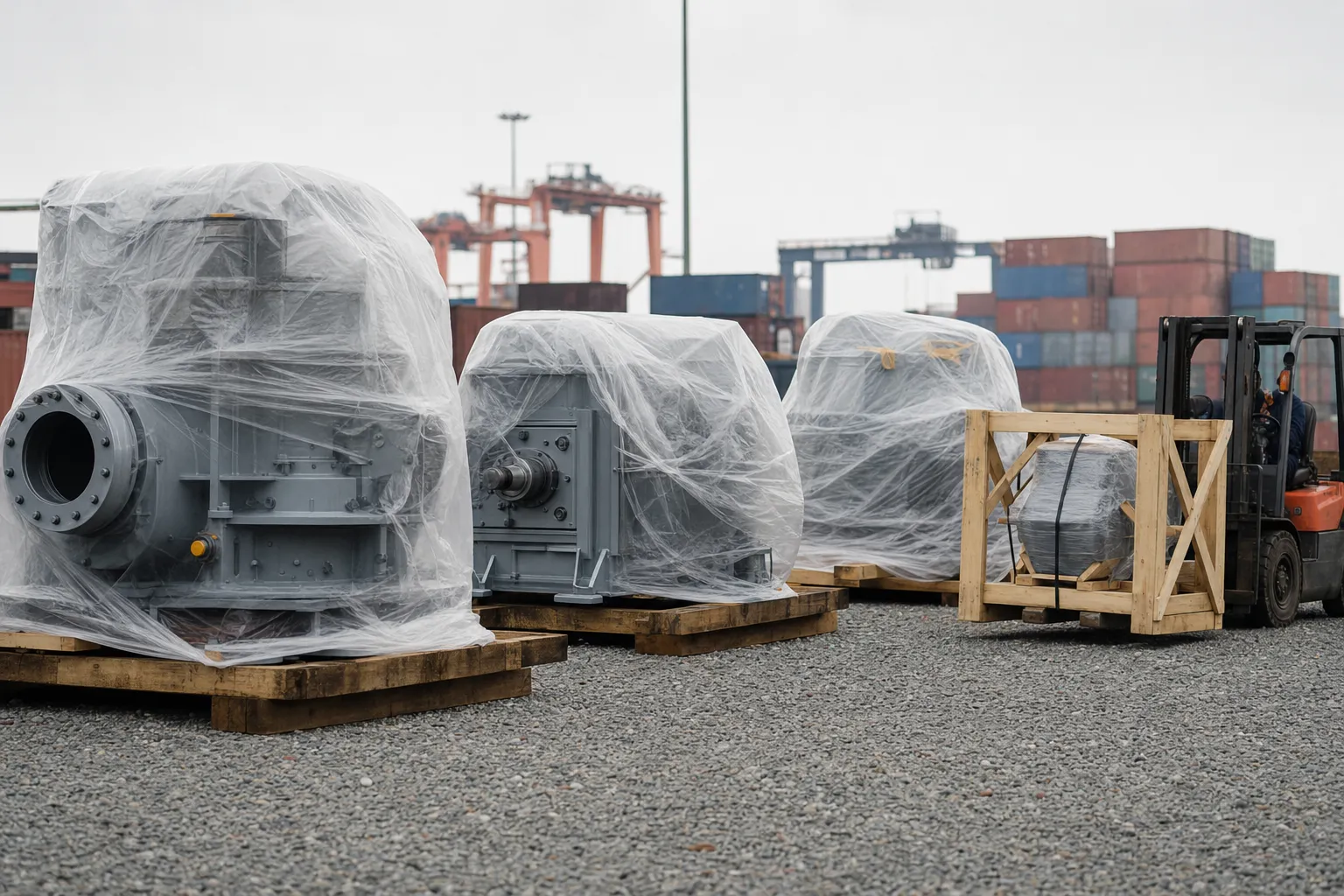
A project cargo shipment is not a freight arrangement with a freight price. Splitting one project into several shipments does not divide the work; it multiplies obligations — each consignment carries its own entry, its own document set, its own handling and its own delivery window — so the decisions that stay cheap are the sequence, the place the cargo is allowed to wait, and what the receiving site can accept.
The question usually arrives as a cost question: can we send this in three lots instead of one and save something? Sometimes the answer is yes, often it is no, and the arithmetic that decides it is not the one most buyers have in mind. The costs that move are not only freight. They are the obligations that get created each time cargo leaves a yard, arrives at a port, is declared to a customs authority and is handed over at a gate.
What follows is the working order for that decision: why a project gets split at all, what each split duplicates, how to sequence the pieces, where they are allowed to wait, and what the site has to confirm before the next sailing is booked.
This article quotes no freight rate, duty rate, tax figure, percentage or currency amount, and promises no clearance, sailing or delivery date. Every example in it is illustrative — not a client case and not a quotation. Nothing here is legal, tax or customs advice: what a given arrangement permits for your entity and your goods is decided by Indonesia's authorities and by the licensed parties you appoint, not by a sales term or by this page.
Why projects get split, and who usually decides it
Almost no project is split by the logistics team. The split is inherited, and it arrives dressed as a schedule.
A production line is broken into shipments because the supplier finishes the sections in a different order from the one the foundation can receive. It is broken up because the payment structure ties money to delivery milestones, so the buyer wants the first consignment moving before the last one is paid for. It is broken up because the site has room for two modules and not for six until the roof is on. It is broken up because one component needs a permit that is still being processed, and the remaining cargo does not deserve to wait for it. And occasionally it is broken up because a single piece is larger than any convenient way of carrying it, which is a question that belongs with the container envelope rather than the shipping plan.
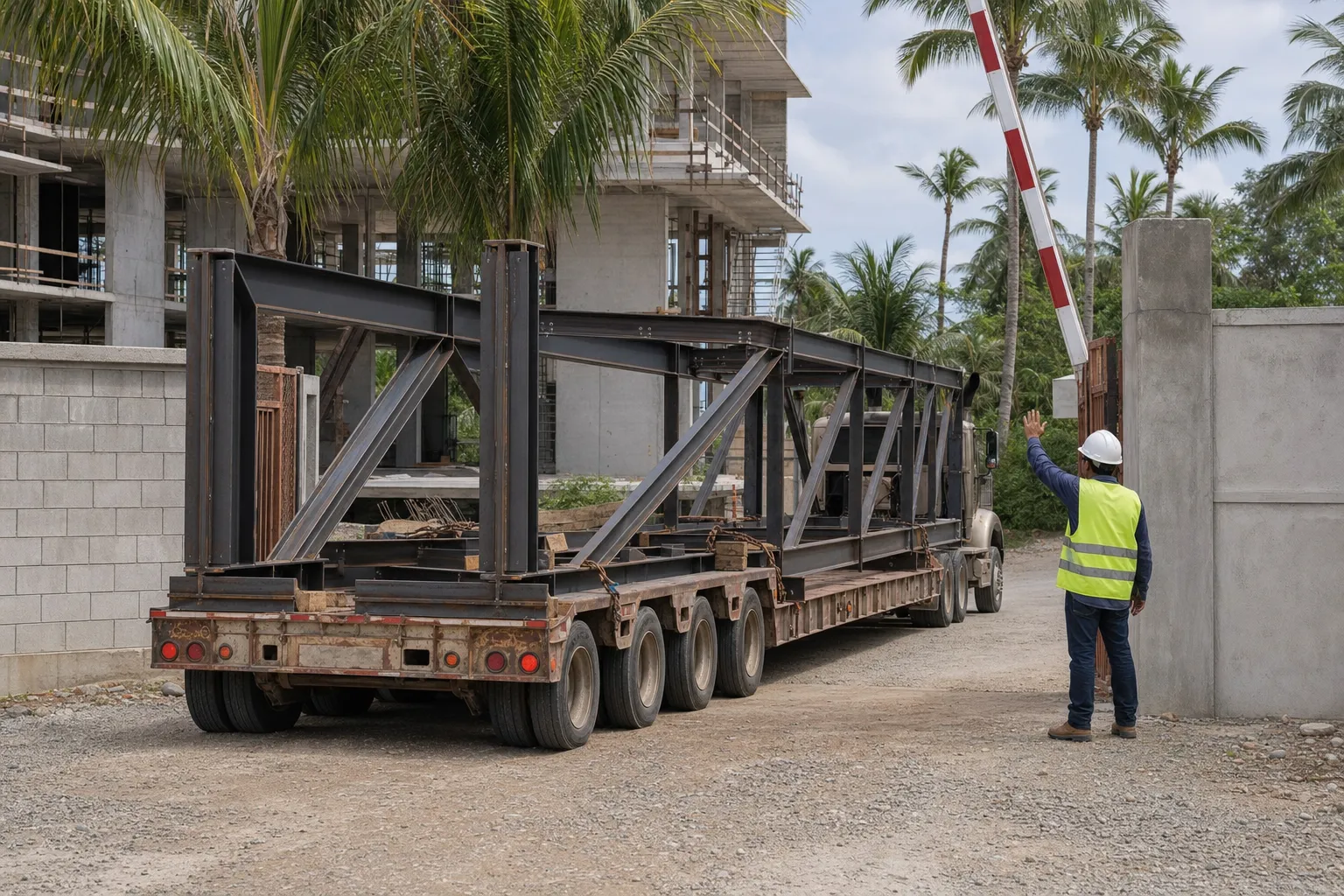
By the time the forwarder is asked to quote, the number of shipments is usually fixed by one of those constraints. That is fine. What is not fine is treating the count as the only decision, because the count is the one thing you no longer control.
The decisions still open to you are narrower and more valuable: in what order the consignments go, where each one is allowed to wait between legs, and what the receiving site has already agreed to when the second one lands. Those three are what separates a split project from a project that has simply been broken.
Every extra project cargo shipment is a new set of obligations
A useful way to plan is to separate what is decided once for the whole project from what repeats with every consignment. One consignment means one shipment here: one entry, one document set, one delivery window. Most of the disappointment in a split project comes from assuming the left column covers the right one.
Item | Decided once for the project | Repeats with every consignment |
|---|---|---|
Tariff classification | The line each item is declared under, agreed before any invoice is issued | Applied to that consignment's invoice, packing list and transport document, consistently |
The import declaration | Who the importer of record is | An entry lodged per consignment, in that entity's name, against that consignment's documents |
Document set | The description convention — what the goods are called | Invoice, packing list, bill of lading and certificates for that shipment only |
Packing | The specification for crating and marking | Every new crate needs its own compliant wood-packing mark |
Securing | The lashing or stowage concept for the piece | Performed, inspected and recorded again for each sailing |
Storage | That storage will be needed somewhere | A named place, a named custodian and an owner for the cost, per leg |
Delivery window | That the site will take the cargo | Agreed again for each arrival, against what the site is doing that week |
Insurance | Which policy responds to what | Cover declared per shipment, describing the pieces actually moving |
Exception path | Who decides when something slips | Reached once per slippage, not once per project |
Tariff classification
Decided once for the project
The line each item is declared under, agreed before any invoice is issued
Repeats with every consignment
Applied to that consignment's invoice, packing list and transport document, consistently
The import declaration
Decided once for the project
Who the importer of record is
Repeats with every consignment
An entry lodged per consignment, in that entity's name, against that consignment's documents
Document set
Decided once for the project
The description convention — what the goods are called
Repeats with every consignment
Invoice, packing list, bill of lading and certificates for that shipment only
Packing
Decided once for the project
The specification for crating and marking
Repeats with every consignment
Every new crate needs its own compliant wood-packing mark
Securing
Decided once for the project
The lashing or stowage concept for the piece
Repeats with every consignment
Performed, inspected and recorded again for each sailing
Storage
Decided once for the project
That storage will be needed somewhere
Repeats with every consignment
A named place, a named custodian and an owner for the cost, per leg
Delivery window
Decided once for the project
That the site will take the cargo
Repeats with every consignment
Agreed again for each arrival, against what the site is doing that week
Insurance
Decided once for the project
Which policy responds to what
Repeats with every consignment
Cover declared per shipment, describing the pieces actually moving
Exception path
Decided once for the project
Who decides when something slips
Repeats with every consignment
Reached once per slippage, not once per project
What has to be agreed before the first booking covers the left column in detail. The right column is the part a split makes unavoidable, and it is why a project quoted as one movement and executed as four rarely behaves like four times a simple movement: the marginal consignment is small, but its fixed obligations are not.
Sequencing: the order the site needs is not the order the factory is ready
Two sequences collide on every split project. One is the order the supplier can produce and pack. The other is the order the site can install. They are rarely the same, and somebody has to choose which one the shipping plan follows.
The instinct is to ship by readiness, because that is the sequence with dates already attached to it. The consequence is that the site ends up storing whatever happened to be finished, which turns a laydown area into a warehouse nobody costed, and pushes the one piece the crew actually needs to the back of the queue.
The alternative is to ship by installation sequence, and to accept that some cargo waits at the origin instead of at the destination. That trade is usually better, for three reasons: cargo waiting at a supplier's yard is under the supplier's roof and the supplier's control, cargo waiting at the site blocks work, and cargo waiting at a port is exposed to whatever the terminal charges for the space.
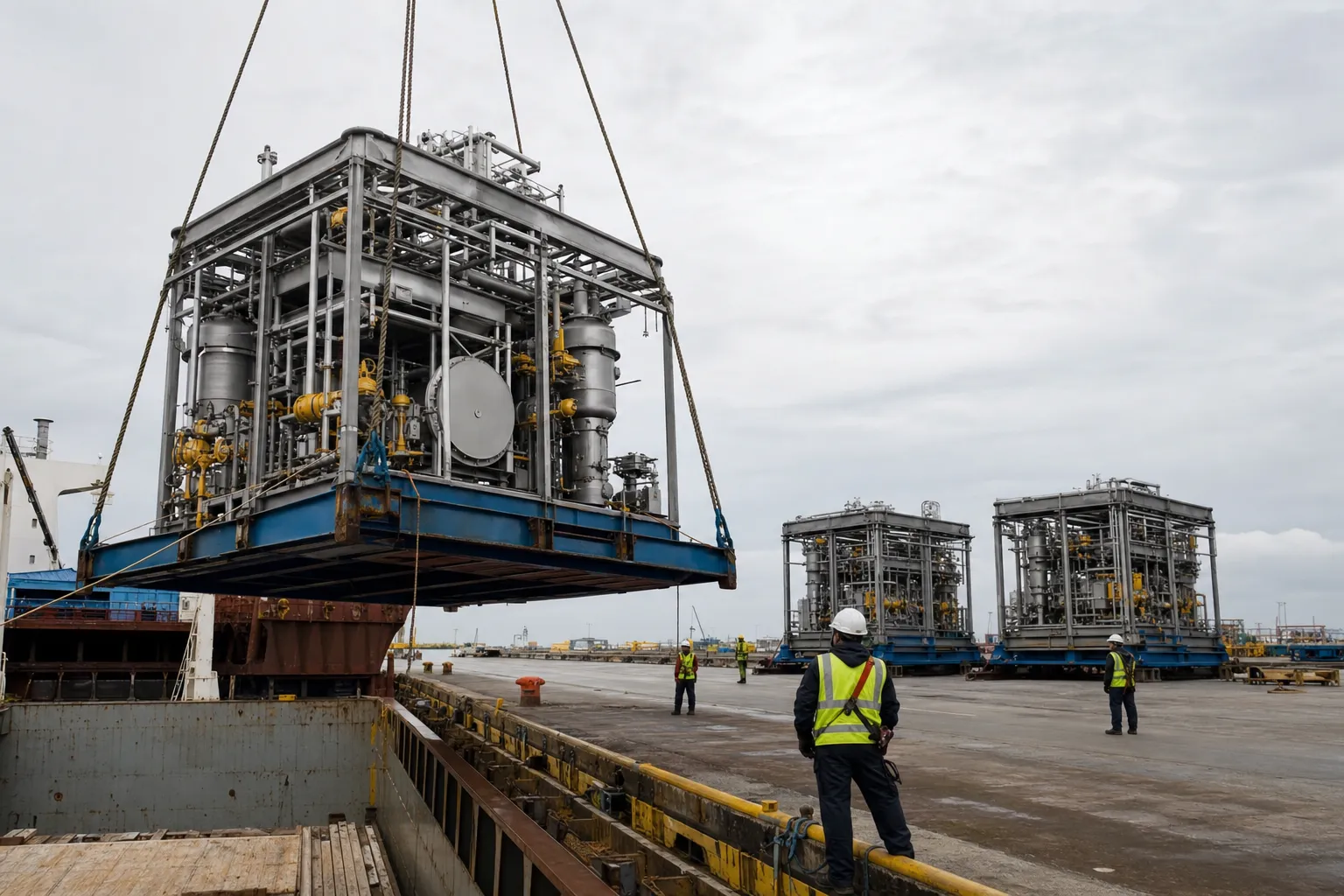
Three criteria decide the order in practice, and none of them is "what is finished".
What sets the order | The question it answers | What it commits the project to |
|---|---|---|
The keystone piece — the module or frame everything else is built around | Which arrival closes the building, or unblocks the trades that follow it? | Shipping that piece early and, if necessary, holding smaller finished pieces at the supplier instead |
The lifting resource — the crane that has to be on site, not merely available somewhere | Which consignment the crane window belongs to, and who pays if it has to be re-mobilised? | Sequencing cargo around a lifting resource: a mobile crane hired for one lift is demobilised after that lift, and a second lift means a second mobilisation |
The equipment class — container, flat rack, break bulk or heavy lift deck | Whose schedule does the leg actually follow: a booker's or a vessel's? | Accepting that one leg moves on a vessel's rotation, and that before a booking is confirmed there is no interval to quote |
The keystone piece — the module or frame everything else is built around
The question it answers
Which arrival closes the building, or unblocks the trades that follow it?
What it commits the project to
Shipping that piece early and, if necessary, holding smaller finished pieces at the supplier instead
The lifting resource — the crane that has to be on site, not merely available somewhere
The question it answers
Which consignment the crane window belongs to, and who pays if it has to be re-mobilised?
What it commits the project to
Sequencing cargo around a lifting resource: a mobile crane hired for one lift is demobilised after that lift, and a second lift means a second mobilisation
The equipment class — container, flat rack, break bulk or heavy lift deck
The question it answers
Whose schedule does the leg actually follow: a booker's or a vessel's?
What it commits the project to
Accepting that one leg moves on a vessel's rotation, and that before a booking is confirmed there is no interval to quote
Of the three, the last is the one most often misread. A heavy lift or break bulk booking follows a vessel's advertised range and a confirmed laycan — the loading window a charterer and an owner agree; once the booking is confirmed, that sea leg runs on the vessel's schedule, and before it is confirmed there is no interval to quote — only a sequence of steps that has to happen first. A split project with one out-of-gauge piece therefore has one leg set by a vessel's rotation and other legs set by whoever books containers. The keystone piece is worth travelling early for exactly that reason: it is the leg with the least flexibility and the most to lose from arriving late.
Where the cargo waits, and who carries the risk while it does
A split project always has cargo waiting somewhere. The only question is whether anyone wrote down where, for how long, at whose cost and under whose insurance.
There are three waiting places, and they are not interchangeable.
Where the cargo waits | Who holds it | What accrues while it sits | The line that has to be written |
|---|---|---|---|
The origin yard, between packing and collection | The supplier, until collection | Space the supplier will eventually price into the job | The collection date, and who pays if it slips |
A destination port, container freight station or bonded area | The terminal or the operator running it — not the forwarder | Storage once the terminal's free time ends, plus another handling cycle | When free time expires, and who authorises more |
The site laydown, where the cargo will be installed | Whoever signed the handover — and nobody, if nobody did | Nothing at all, until the ground, the space and the signatory are agreed | Place, ground bearing, custodian, insurance answer |
The origin yard, between packing and collection
Who holds it
The supplier, until collection
What accrues while it sits
Space the supplier will eventually price into the job
The line that has to be written
The collection date, and who pays if it slips
A destination port, container freight station or bonded area
Who holds it
The terminal or the operator running it — not the forwarder
What accrues while it sits
Storage once the terminal's free time ends, plus another handling cycle
The line that has to be written
When free time expires, and who authorises more
The site laydown, where the cargo will be installed
Who holds it
Whoever signed the handover — and nobody, if nobody did
What accrues while it sits
Nothing at all, until the ground, the space and the signatory are agreed
The line that has to be written
Place, ground bearing, custodian, insurance answer
The middle row is the one people underestimate. Free time at a terminal is a term of the terminal or the authority running it, not a favour a forwarder can extend, and storage charges start when it ends. Cargo held there has also been handled once more than planned and has to be inspected and re-secured before it moves again — the IMO's guidance on cargo stowage and securing is written for the sea leg, but the principle applies to every re-handling.
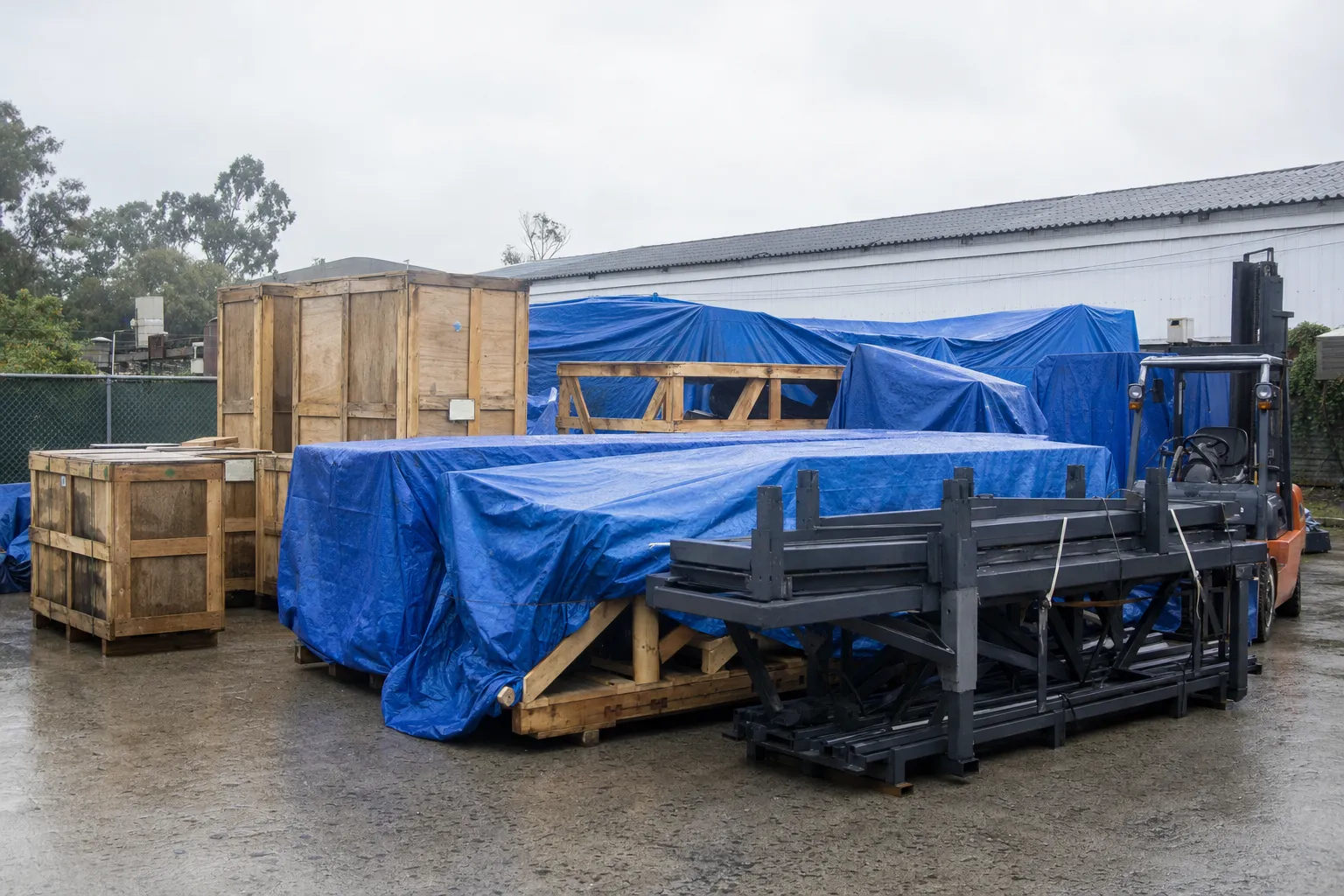
Whichever place is chosen, four lines belong in writing before the first consignment leaves: the named place, the named custodian, who authorises additional time, and which insurance responds while the cargo sits there. A door-to-door scope is a good place to see why: the boundary of a single movement is easier to draw than the boundaries of four movements sharing one project.
Every consignment is declared on its own documents
This is the part of a split that is decided in Indonesia rather than in the shipping plan, and it is the part most likely to be discovered late.
A customs entry — the PIB — is lodged per consignment, in the name of an importer established in the country, who stands behind the conditions attached to those goods and settles what the declaration attracts — the customs directorate's own FAQ on imports for use sets out the framework, and US Commercial Service guidance on Indonesian import requirements and documentation lists the importer identification and licences that party has to hold. Entry data is submitted through Indonesia's national single window, which is where a project's paperwork meets the border in practice.
Three consequences follow from that, and none of them care how the project was split commercially.
The importer has to be able to answer four times, not once. Who is named as importer of record is a single decision, but the obligation it creates is repeated per consignment: the entity must still hold what the goods require on the morning each shipment arrives, and it must be able to produce the documents for that shipment, not for the project.
The description has to survive the split. If classification is agreed once — and it should be — then every consignment's commercial invoice and packing list has to describe its goods the same way. The classic failure is a machine that travels in sections: shipment one is invoiced as a machine, shipment three as steel parts, and the border has two versions of the same project. How classification is decided is worth settling before the first invoice rather than after the third.
Wood packaging is per crate, not per project. Every new crate built for a later consignment needs its own compliant mark; crates assembled at a supplier's yard months after the first shipment are new crates. The mark is the proof, and it does not carry over — the standard behind it is ISPM 15, published by the IPPC.
One further check belongs here: whether the goods may be shipped in parts at all. If the commercial contract or the letter of credit behind it does not permit partial shipment, splitting the order can breach the document before it ever reaches a border, and if a component is restricted or quota-controlled, the question of how much of it may enter is answered per consignment rather than per project. How to check restricted status belongs in the planning conversation, not in the exception log.
What the receiving site must confirm before shipment two
The first consignment is usually received well, because everyone is watching. The second is where a project discovers that the site was ready once, for one arrival, under one set of conditions.
By then the site has changed. The laydown area that was empty is now a working area with a crane track through it. The access route has a stack of rebar on the corner that was not there last month. The crane that lifted the first module has gone, and the crane now on site was hired by a different contractor for a different job. The person who signed the first handover has moved to another package.
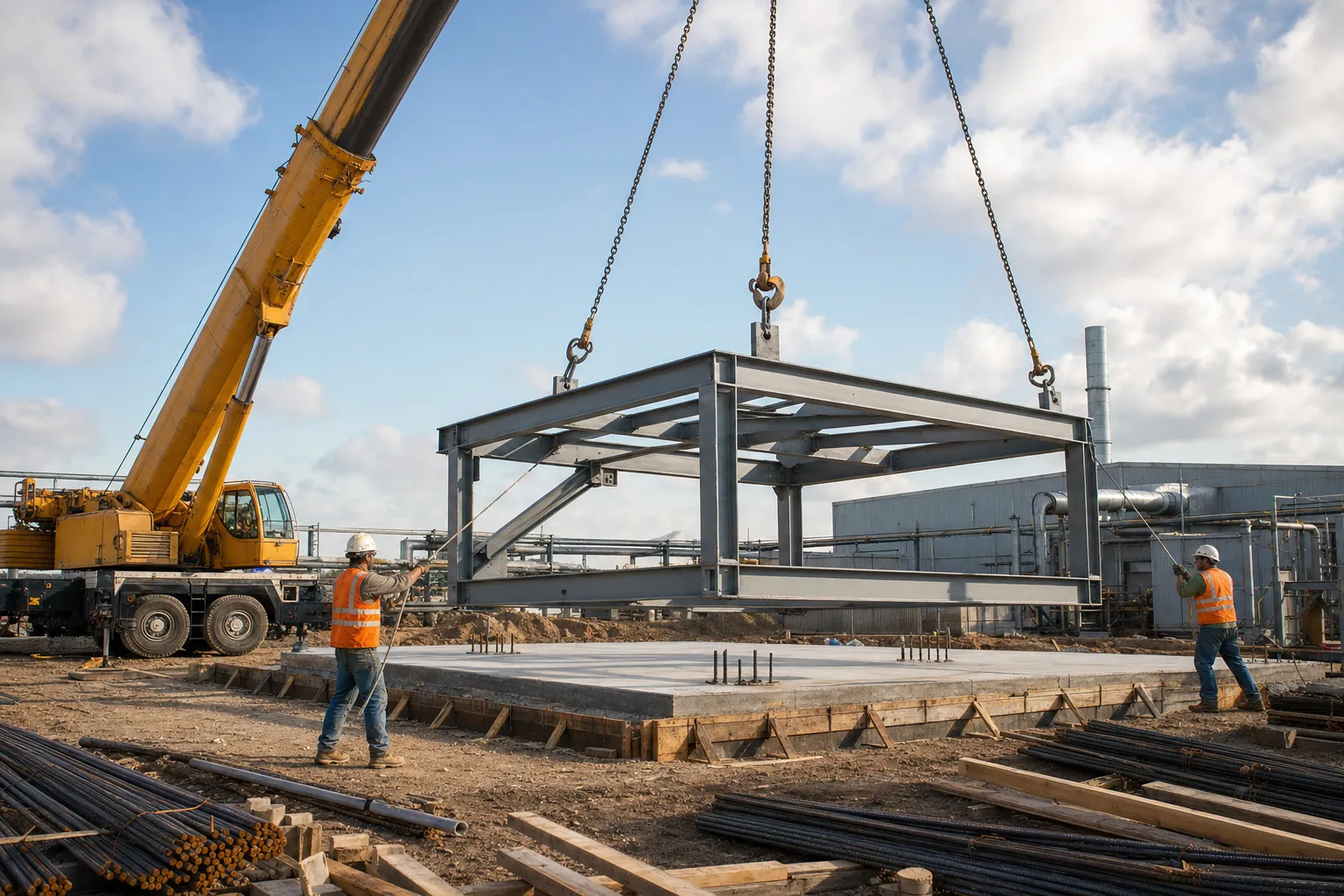
So the readiness question for consignment two is not "can the site receive cargo". It is four narrower ones:
- Where does this piece wait while the site works around the last one? If the answer is "where the first one went", the first one is in the way.
- Which lifting resource is available on the day, and who is paying for it? A crane that has to be re-mobilised is a decision, not an assumption.
- Is the access route still the route the survey assumed? Construction sites change weekly; a turning circle measured in month one may be a materials store by month three.
- Who signs this time? A handover is an event per arrival. If the site has one signature for the project, damage found after the second delivery has no documented starting point.
What an imported production line has to satisfy before it ships covers the preparation upstream of these questions. The downstream version is simpler and blunter: the site has to nominate, for each arrival, a place, a lifting resource and a signatory — and put it in writing before the booking, because those three answers are what the shipping plan is actually built on.
A split is not a saving, and not every project can be split
Two honest boundaries belong in this article, because both are discovered expensively otherwise.
Some cargo cannot be divided. A single module cannot be cut in half to fit a better schedule. Splitting a machine into sections changes the fabrication, the lifting points, the classification argument and often the warranty, so the decision to ship in parts is an engineering decision with a logistics consequence, not the reverse. Where a piece is indivisible, the project's flexibility has to come from the other pieces.
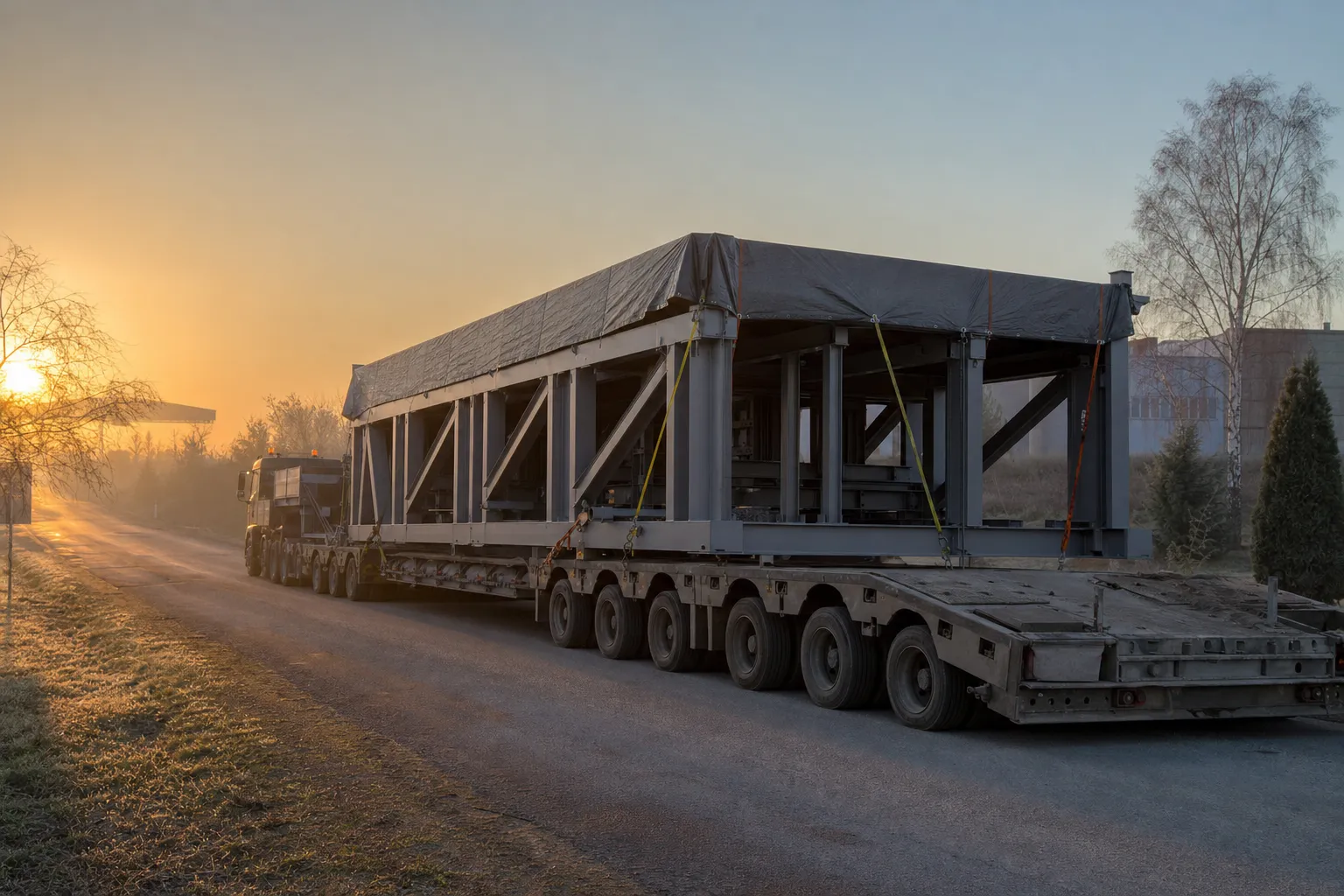
Not every consignment is admissible on the same terms. Restricted and quota-controlled goods are assessed per shipment; an approval or allowance consumed by the first consignment is not automatically available for the third, and the check has to be repeated rather than inherited. What a pre-shipment review catches is exactly this class of problem, and it is cheaper to catch it once per consignment than once per arrival at the port.
And a split does not remove exposure; it distributes it. Four sailings mean four opportunities for a rolled booking, four handovers, four document sets that each have to be consistent, and four chances for the site's plan to change after the cargo has been committed. What a split shipment buys is flexibility in the sequence and the ability to start installation earlier. What it does not buy is a shorter project, and any schedule that treats the split as compression is assuming the vessel, the border and the site will all behave.
An invented project, split two ways
What follows is a constructed illustration. It is not a client case, and it is not a quotation.
An Indonesian manufacturer is installing a processing line bought from a supplier in Guangdong. The line travels in four sections; the site is an existing building with a yard on one side; the buyer wants production started before the last section arrives. Assume the goods are exactly as specified and nothing is damaged.
Split by what fits. The forwarder groups the sections to fill containers economically, ships the three that fit a standard container first, and leaves the largest for a flat rack on a later vessel. The first three arrive while the building's roof is still open, so they sit in the yard under tarpaulins through the wet weeks. The largest section arrives on a vessel whose rotation slipped, after the crane hired for the installation window had been demobilised. When the crane returns, the yard has to be cleared before the frame can be set, and the tarpaulins have hidden a bent handrail that nobody can now date. Nothing was mis-shipped. The split was grouped by the wrong criterion.
Split by sequence. The same four sections, sequenced differently. The largest section is shipped first, because it is what the building has to be closed around, and the crane window is booked against that arrival rather than against the supplier's completion date. Two smaller sections follow once the roof is on and the yard can be given over to them, with a named custodian at the site and the storage cost assigned. The fourth section waits at the supplier until the site's second crane slot is confirmed. Documents are issued from one description for all four consignments, and each entry is lodged against its own invoice and packing list.
The difference between the two is not the freight. It is which criterion the split was sequenced by, and whether the place the cargo waits was ever named.
Where we sit
YANCHAO coordinates project cargo from China to Indonesian sites. We do not own the vessels, containers, terminals or warehouses involved: the collection, the sailing, the clearance, the storage and the local trucking are performed by partners at both ends, and what we hold together is the sequence — which consignment goes first, where each one waits, and whether the receiving site has answered for the arrival before the booking is made.
We assist and coordinate on the Indonesian import side rather than declaring on your behalf. Each entry is lodged by an Indonesian entity entitled to do it, against that consignment's own documents, and a project split into four shipments is four sets of documents that have to describe one project.
If a project is being divided now, the useful starting inputs are the same four that start any project review: the cargo list with dimensions and weights as packed, the intended installation order, the site's constraints and storage options, and who will import each consignment — send them and the first review starts there. Project logistics coordination describes how those threads are held in practice. Anything that turns on an authority's decision, an approval or a restricted-goods check is confirmed after review rather than on a standard turnaround, because that is the honest way to answer it.
Photographs here are illustrative — a trailer approaching a site gate, a module lashed to a flat rack, crated equipment waiting under tarpaulins and a crane setting a frame on a prepared pad — not client cargo, facilities or personnel, and no ownership of any vessel, container, terminal or warehouse is claimed. The example in this article is a constructed illustration, neither a client case nor a quotation.