
The HS code on a shipment into Indonesia is not a label you copy off a website. It is a determination made on facts — the material, the function, the way the goods are presented — under interpretation rules that Indonesia's customs authority and every major trading nation apply in the same order. For an Indonesian import that determination produces an eight-digit tariff line called a Pos Tarif, it is made under the country's customs tariff book, the BTKI, and it fixes far more than the duty: it fixes which import controls apply, which licence the goods need, and whether a preferential rate can be claimed at all.
Which is a longer answer than most shippers get. Ask a supplier for the HS code and you will usually receive eight or ten digits, confidently, with no note on what was decided or why. That number may well be right. It may also be a code lifted from a similar product, a code a factory has used for a different destination, or a code chosen because it was the first plausible match in a search box. The trouble is that the number is doing several jobs at once at the Indonesian border, and by the time a discrepancy surfaces the cargo is usually already on the water — or already landed and awaiting release.
This page explains how an HS code for goods imported into Indonesia is actually decided, what the buyer has to have ready before it can be, and what the tariff line then controls. Where a page like this would normally print a duty rate, it does not.
This article prints no duty rate, no tax figure, no threshold, no deadline and no currency amount. A rate belongs to a specific tariff line on a specific date and is published by the Indonesian authorities; nothing here is customs advice, and no example on this page is a client case or a quotation. The classification determination belongs to Indonesia's customs authority, not to us.
The number on the invoice that is not the invoice's decision
Start with who decides. On a commercial invoice, the exporter writes a description and, if the buyer asks, a code. That is a commercial document recording a sale. At the Indonesian border, the code that is applied is the one determined for the goods — by the importer of record, by a licensed customs service provider acting on the importer's instructions, and ultimately by the customs officer, who may accept or correct what has been declared.
The distinction matters because "the code" is not one thing in two places. On the invoice it is information the seller supplies. In the import declaration — the PIB — it is part of a legal statement about what is entering the country, and the person making it is accountable for it. That is the same structural point that governs what an Indonesian import declaration actually is: the declaration is a claim supported by documents, not a formality that follows the cargo.
Two practical consequences follow. The first is that nobody can settle a classification on the seller's word alone — a code that arrives with no reasoning is a code nobody can defend if it is questioned, not the supplier, not the forwarder, and not the importer. The second is that classification, not price, is usually the first thing that goes wrong on a new import. Price errors are arithmetic and get caught; a classification error sits quietly in the entry until an officer, or a later review, compares the description against the line.
How the global HS becomes an Indonesian tariff line
The starting point is globally shared. The Harmonized System is a product nomenclature maintained by the World Customs Organization and used by more than 200 countries and economies as the basis for their customs tariffs and trade statistics. It organises traded goods into sections and chapters, each chapter into four-digit headings, and most headings further into six-digit subheadings. The six-digit level is the part common across the countries that use the system, and the WCO publishes the nomenclature itself as the legal text.
Countries then extend it. In ASEAN, member states apply a common regional extension built on the WCO's HS — the ASEAN Harmonised Tariff Nomenclature — and each member state's tariff nomenclature is based on it, as the ASEAN Trade Repository sets out.
Indonesia folds both layers into one national publication. The Buku Tarif Kepabeanan Indonesia — the BTKI — is Indonesia's official tariff book, and the Directorate General of Customs and Excise describes what it holds: the list of tariff-line codes, their product descriptions, and the structure that groups them, built on the WCO's HS and on the AHTN applied across ASEAN, which the same page states runs to eight digits. The eight-digit code in that structure is what Indonesia calls a Pos Tarif; the classification system in force is the one set by Ministry of Finance regulation 26/PMK.010/2022, applied to export and import declarations registered in Indonesia from 1 April 2022 onward and amended since. Not every line in the book comes from the shared nomenclature — Indonesia assembles its tariff lines from the HS and the AHTN, from national requirements and from technical input from the ministries concerned, and the book carries national-use chapters of its own (Chapters 98 and 99) alongside the international sequence. That is one reason an Indonesian tariff line cannot simply be read off a global database.
The BTKI does several jobs at once, which is why the classification carries so much weight: it is the reference for ordinary (most-favoured-nation) duty and for preferential rates under free trade agreements; it is the basis for the import taxes computed on the customs value; it is how Indonesia's prohibited-and-restricted controls (lartas) attach to goods; and it is the code used for the country's external trade statistics.
The lookup tools the search results put in front of you are exactly that: tools. The INSW portal is where a tariff line, its description, related controls and facilities can be checked, and the BTKI is published for consultation. Consulting a candidate line is not the same as deciding it. The decision is a reasoning step, and the reasoning rules are written down.
The rules that decide a classification
Indonesia's tariff book opens with the interpretation rules, and they are binding parts of the classification system rather than guidance. The Indonesian name is Ketentuan Umum untuk Menginterpretasi the Harmonized System — KUM-HS — and the corresponding international instrument is the WCO's General Rules for Interpretation, published as part of the nomenclature and described in the WCO's own account of how the system works.
What makes them worth reading — even once, even at a glance — is that they impose an order. Classification is not a contest between plausible codes; it is a sequence of tests applied until one of them settles the matter.
Step | What it says, in substance | When it is doing the work |
|---|---|---|
Rule 1 | The terms of the headings and any relevant section or chapter notes govern, and a heading's own wording is read together with those notes. | The default. Most goods are settled here — but only after the notes are read, not before. |
Rule 2(a) | A heading's reference to an article includes that article incomplete or unfinished, provided that, as presented, it has the essential character of the complete or finished article; it also includes the complete or finished article presented unassembled or disassembled. | Machines shipped in parts come in under the second limb; goods supplied without one component are tested under the first. |
Rule 2(b) | A heading's reference to goods of a given material includes goods wholly or partly of that material; goods of more than one material are classified according to the principles of Rule 3. | Blends, composites, mixed-material products. |
Rule 3(a) | Where two or more headings describe the goods, the most specific description prevails. | Two headings both look plausible and one names the thing more precisely. |
Rule 3(b) | Where specificity will not settle it, goods are classified by the material or component that gives them their essential character. | Sets, composite machines, mixed consignments, multi-function products. |
Rule 3(c) | Where 3(a) and 3(b) do not settle it, the heading that comes last in numerical order is used. | The genuine tie-breaker — and it exists precisely because "it must be one of these" is not a method. |
Rule 4 | Goods that cannot be classified by the rules above are classified under the heading for the goods to which they are most akin. | Truly novel or ambiguous articles. |
Rule 5 | Cases, packaging and containers presented with the goods are treated in defined ways. | Whether a shipping case or retail presentation is classified with the product. |
Rule 6 | The rules apply at subheading level as well, so the same reasoning continues below the four-digit heading. | Choosing between subheadings inside one heading — which is how the eight-digit line is reached. |
Rule 1
What it says, in substance
The terms of the headings and any relevant section or chapter notes govern, and a heading's own wording is read together with those notes.
When it is doing the work
The default. Most goods are settled here — but only after the notes are read, not before.
Rule 2(a)
What it says, in substance
A heading's reference to an article includes that article incomplete or unfinished, provided that, as presented, it has the essential character of the complete or finished article; it also includes the complete or finished article presented unassembled or disassembled.
When it is doing the work
Machines shipped in parts come in under the second limb; goods supplied without one component are tested under the first.
Rule 2(b)
What it says, in substance
A heading's reference to goods of a given material includes goods wholly or partly of that material; goods of more than one material are classified according to the principles of Rule 3.
When it is doing the work
Blends, composites, mixed-material products.
Rule 3(a)
What it says, in substance
Where two or more headings describe the goods, the most specific description prevails.
When it is doing the work
Two headings both look plausible and one names the thing more precisely.
Rule 3(b)
What it says, in substance
Where specificity will not settle it, goods are classified by the material or component that gives them their essential character.
When it is doing the work
Sets, composite machines, mixed consignments, multi-function products.
Rule 3(c)
What it says, in substance
Where 3(a) and 3(b) do not settle it, the heading that comes last in numerical order is used.
When it is doing the work
The genuine tie-breaker — and it exists precisely because "it must be one of these" is not a method.
Rule 4
What it says, in substance
Goods that cannot be classified by the rules above are classified under the heading for the goods to which they are most akin.
When it is doing the work
Truly novel or ambiguous articles.
Rule 5
What it says, in substance
Cases, packaging and containers presented with the goods are treated in defined ways.
When it is doing the work
Whether a shipping case or retail presentation is classified with the product.
Rule 6
What it says, in substance
The rules apply at subheading level as well, so the same reasoning continues below the four-digit heading.
When it is doing the work
Choosing between subheadings inside one heading — which is how the eight-digit line is reached.
Three consequences matter more than the list.
The notes are part of the rule. Rule 1 does not let you classify on the heading's title alone. Section notes, chapter notes and subheading notes can exclude goods from a chapter, define a term for the whole chapter, or attach a condition — and they are binding. A product that "obviously" belongs in a chapter can be moved out of it by a note in that chapter, and a classifier who has not read the notes has not applied Rule 1.
The order cannot be skipped. If the goods are a set or a composite machine, the question is not which heading sounds better; it is whether Rule 3(a) or 3(b) settles it, and 3(c) exists to stop the argument from becoming a matter of taste. Working down the sequence — rather than jumping to a favourite heading — is what makes the conclusion defensible later, and it is why a disagreement over a classification is usually an argument about which rule applies, not about the goods.
The subheading has its own rules. The most common version of "I have the code" is a four-digit heading in mind and a sixth or eighth digit that was never reasoned about. Rule 6 carries the same method down, and the eight-digit Pos Tarif is where Indonesian duty, controls and facilities actually attach.
The WCO also maintains interpretative material — the Explanatory Notes — as the official commentary at international level, which is why classification work on a genuinely new product tends to involve reading rather than searching.
The facts a classification is decided on — and who has them
Everything above is method. Method needs inputs, and this is where an import goes right or wrong long before the cargo reaches a port: the facts a classification rests on are product facts, and they are held by the seller or the factory — not by the forwarder, and not by the customs broker.
An invoice line that reads "machine parts", "samples" or "hardware set" gives a classifier nothing to apply the rules to. What makes a classification conductible is a description that answers the questions the rules ask:
- What the goods are made of, with proportions where the product is a mixture, a blend or a composite — because material can decide the chapter, and Rule 2(b) turns on it.
- What the goods do, and how they do it. Function is often decisive between two otherwise plausible headings, and a technical description beats a commercial nickname.
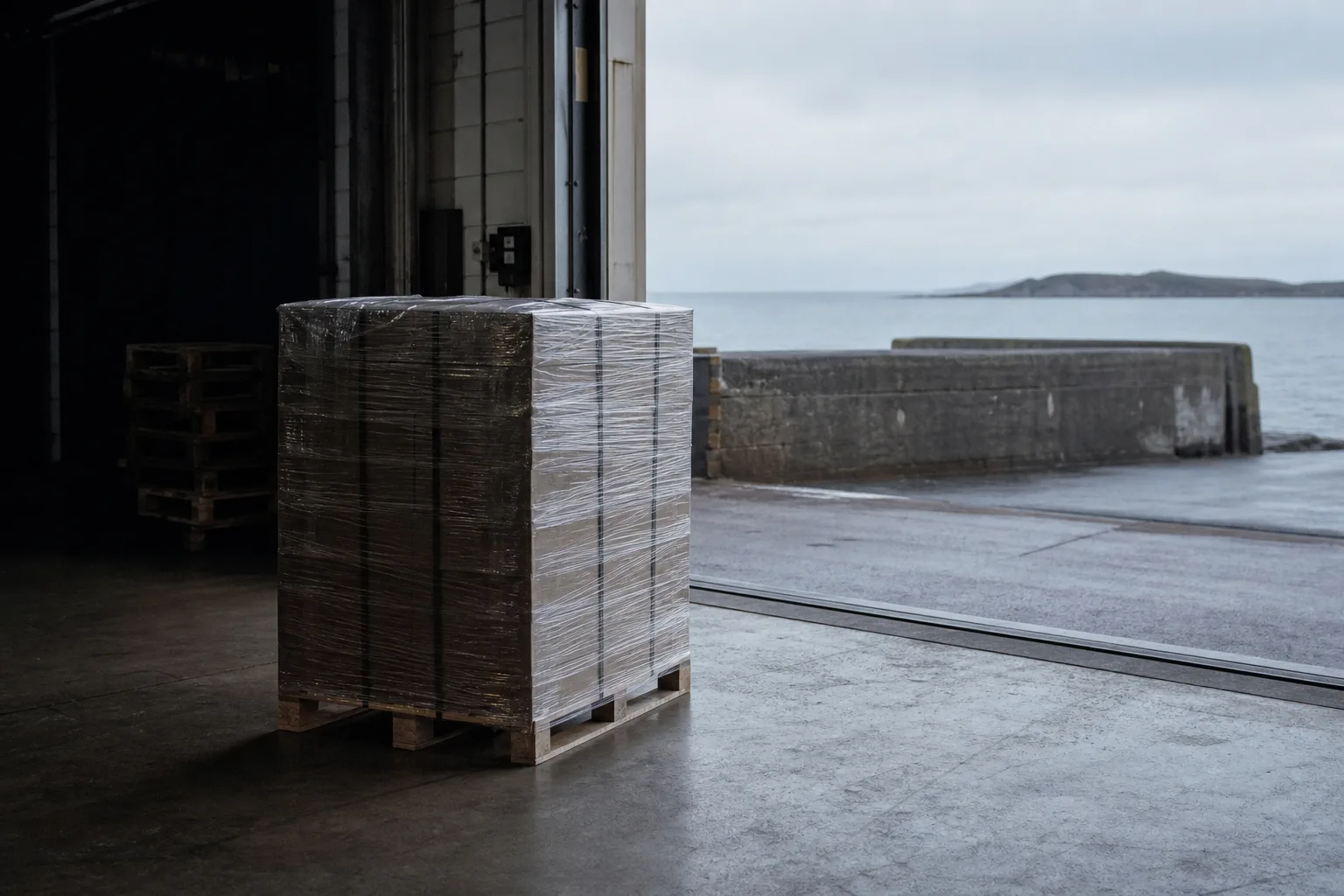
- How the goods are presented: complete or incomplete, assembled or in parts, as a set for retail sale, with or without accessories, in a case, on a pallet, in bulk.
- What the goods are for: the intended use and the industry, stated as the product's design purpose rather than as an estimate of what the buyer will do with it.
- The technical evidence behind all of the above — a datasheet or product specification, drawings, photographs, sometimes a sample, and for a machine a statement of its principal function when it performs several.
Three of those inputs deserve a specific warning.
The first is the difference between a product's name and its classification. Rules 1 and 3(a) reward precision about what the goods are; a trade name, a brand term or a catalogue heading is not a classification input, and the same word can cover goods in different chapters.
The second is the set problem. Goods sold or shipped together — a tool kit, a machine with interchangeable heads, a package combining items classified separately — are usually the hardest cases on the desk, because Rule 3(b) asks which component gives the consignment its essential character. That question can only be answered from the product facts, and if the invoice treats the shipment as one line item, the reasoning has to be reconstructed afterwards.
The third is the packaging and presentation question, which Rule 5 handles but which requires the seller to say how the goods are packed and whether any container is of a kind normally sold with the product.
None of this requires the exporter to become a classifier. It requires the exporter to put the product facts into the document set — a fuller description on the commercial invoice, a specification attached where the description has to stay short, and consistency between the invoice, the packing list and any technical data. That is a preparation task, and it can be done while a quotation is still being negotiated.

What the tariff line unlocks at the border
Once the line is fixed, a series of doors open or stay shut, and only some of them are about money.
The duty line. Indonesian import duty is applied according to the product's classification under the HS as specified in the BTKI, which is how the US International Trade Administration's guidance for the market frames the mechanism. The same classification also determines whether a preferential rate under a trade agreement is available at all — and a preference is not automatic. It depends on the goods meeting the origin criteria of the relevant agreement and on a valid certificate of origin being presented.
That last point is one of the most commonly misunderstood. A code printed on a certificate of origin is a reference, not the authority. Tariff treatment and the origin check are applied on the classification determined by the customs officer, so a certificate carrying a code that does not match the declared line does not rescue the declaration — it becomes part of the discrepancy. The same logic applies to a code copied from a supplier's earlier shipment to another country.
Import controls and licences. Indonesia attaches its prohibited-and-restricted goods regime to tariff lines. Whether a product needs a permit, a registration, a technical approval from a sector regulator or an import licence is a function of where it is classified, and controls change as the tariff book and the regulations behind it are updated. A classification that lands goods in the wrong line can hide a licence requirement until the cargo is held, which is the most expensive way to discover it. The mechanism works the other way too: goods genuinely outside a controlled line should not be pushed into a permit application that does not apply to them.
The charges computed on the value. Classification and valuation are the two inputs to the import charges, and they are separate questions. The tariff line says what applies; the customs value — nilai pabean — says what it applies to. How that value is built is taken apart in how Indonesian customs values your shipment, and the composition of the charges themselves is set out in what makes up Indonesia's import charges. A classification error moves the first input; a documentation gap moves the second; both surface at the same moment.
Statistics, and a longer memory. The line is also what Indonesia's trade statistics are built from, and it is what a post-clearance review will compare. Customs can look at an entry after the goods have been released, which is why the reasoning behind a classification should exist on paper — not just as a conclusion in someone's inbox.
Where a classification usually goes wrong
The mistakes are not exotic, and almost none of them are about exotic goods. They are ordinary gaps between what the product is and what the document says.
What happens in practice | What was missing | Why it becomes a problem |
|---|---|---|
The code is copied from a similar product or a previous shipment | The product facts for these goods | Rule 1 starts from the goods and their notes; similarity is not a classification input |
The description on the invoice is a trade name or "parts" | A specification the classifier can reason from | With no composition or function, the rules cannot be applied — so the line is a guess |
A machine shipped in parts is classified as parts | Rule 2(a) — a heading's reference to an article also covers the complete article presented unassembled or disassembled | The goods were classified as they were packed, not as the article they are |
A multi-item consignment is classified as one line | Rule 3(b) — essential character of the set | Either the set is misclassified, or items that belong in separate lines are buried in one |
A chapter note excludes the goods from the chapter assumed | The section and chapter notes | Rule 1 cannot be applied without the notes; the assumed chapter may not be available at all |
A preferential rate is claimed on the strength of a code on a certificate of origin | The origin criteria, and the determination being made on the disclosed facts | The certificate supports a claim; it does not make the classification |
The declaration is filed with a description that does not match the packing list | Internal consistency across the document set | An inconsistency is what triggers the question, and it is cheap to avoid |
The code is copied from a similar product or a previous shipment
What was missing
The product facts for these goods
Why it becomes a problem
Rule 1 starts from the goods and their notes; similarity is not a classification input
The description on the invoice is a trade name or "parts"
What was missing
A specification the classifier can reason from
Why it becomes a problem
With no composition or function, the rules cannot be applied — so the line is a guess
A machine shipped in parts is classified as parts
What was missing
Rule 2(a) — a heading's reference to an article also covers the complete article presented unassembled or disassembled
Why it becomes a problem
The goods were classified as they were packed, not as the article they are
A multi-item consignment is classified as one line
What was missing
Rule 3(b) — essential character of the set
Why it becomes a problem
Either the set is misclassified, or items that belong in separate lines are buried in one
A chapter note excludes the goods from the chapter assumed
What was missing
The section and chapter notes
Why it becomes a problem
Rule 1 cannot be applied without the notes; the assumed chapter may not be available at all
A preferential rate is claimed on the strength of a code on a certificate of origin
What was missing
The origin criteria, and the determination being made on the disclosed facts
Why it becomes a problem
The certificate supports a claim; it does not make the classification
The declaration is filed with a description that does not match the packing list
What was missing
Internal consistency across the document set
Why it becomes a problem
An inconsistency is what triggers the question, and it is cheap to avoid
Read down that column and a pattern appears: the classification failures that cost money are documentation failures first. The number is wrong because the facts never reached the document. Fixing the facts is within the exporter's control; fixing a wrong number after the cargo has landed is not.
Settling the question before the cargo sails
There is a route that turns a guess into a settled position, and it is worth knowing it exists.
Indonesia provides for a classification determination before import, known as Penetapan Klasifikasi Sebelum Impor (PKSI). The mechanism is described in the Ministry of Finance's own service material on PKSI: an importer applies to the Director General of Customs and Excise, through a form lodged with the technical directorate, for a determination on goods before the customs declaration is made, and the decision that comes back applies to the goods as described.
For an importer facing a genuinely difficult line — a composite machine, a set, a product that falls between chapters, or a series of shipments where one wrong number is multiplied across the year — this converts an argument at the border into a decision taken in advance, on the facts, with a document behind it. It is the same logic as the paper trail that protects a customs value: the value of the exercise is that the reasoning exists before anyone is under time pressure.
Two limits belong in the same breath. A determination applies to the goods it describes, so a change in composition, function or presentation can take the goods outside it. And classification does not stop being a live question because a shipment was cleared: a tariff book is updated, and lines move. A settled position is a better position than an assumption — it is not a permanent one.
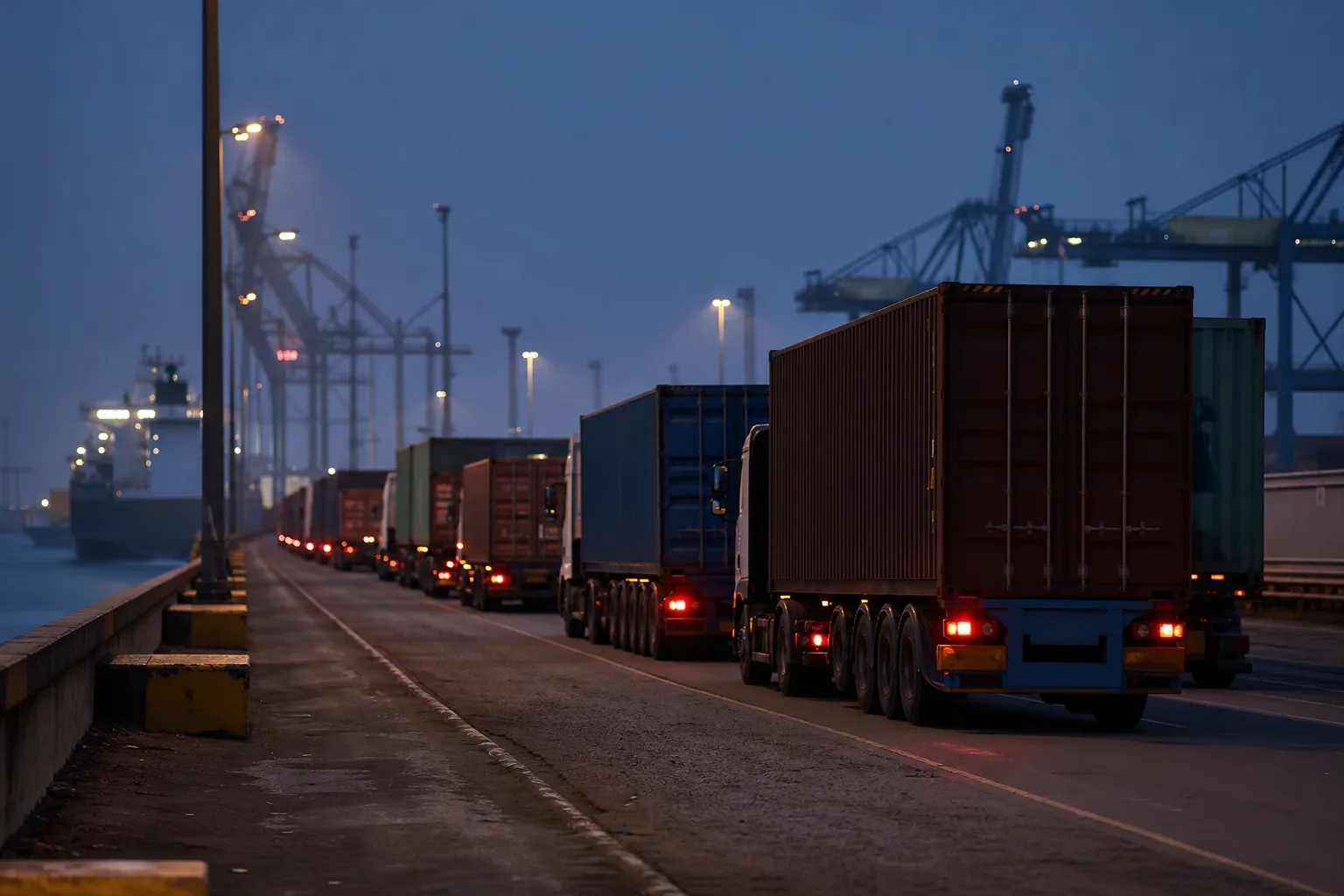
What we do on this route, and what the authority does
On this side of the shipment, our work is documentary and coordinative. We prepare and check the goods description, the tariff-line data and the supporting documents against the transport documents, so that the invoice, the packing list and the declaration describe the same consignment; and we coordinate with the importer of record and the licensed customs service provider on the Indonesian side so that the entry and the cargo agree.
The export-side file that carries that description — the declaration and inspection documents for cargo leaving China — is handled through our customs declaration and inspection service. The reasoning that produces an Indonesian tariff line, and every determination that follows from it, belongs to the customs authority; what an importer can do is arrive with the facts the rules need. On the receiving side, the clearance coordination that works from those facts is the work described on our Indonesia customs clearance service page.
Classification questions we are asked
What is the difference between an HS code and a Pos Tarif?
The HS code is the shared international nomenclature: sections, chapters, four-digit headings and six-digit subheadings maintained by the WCO. The Pos Tarif is Indonesia's eight-digit tariff line, which uses those six digits, extends them with the ASEAN Harmonised Tariff Nomenclature, and adds national chapters of its own. The eight-digit line is what Indonesian duty, controls and facilities attach to.
Can my supplier in China give me the HS code for Indonesia?
A supplier can give you the code they use, and it may be correct. What a supplier cannot do is make the determination on your behalf, because it is made on the facts of the goods as imported and applied at the Indonesian border. Ask a supplier not for a code but for the facts a code rests on: material and composition, function, how the goods are presented and packed, and a datasheet.
How do I check the code a lookup gives me?
Treat any lookup result as a candidate. Indonesia's official portal publishes tariff lines, their descriptions and related controls, and the BTKI is the underlying publication — both are good places to see what a line covers. What a lookup cannot tell you is whether your goods satisfy that line under the interpretation rules, where the section and chapter notes and the rules on incomplete goods or sets decide the matter.
Why does the classification matter if the duty turns out to be the same?
Because the line does three more jobs. It attaches Indonesia's prohibited-and-restricted controls, so it determines which permits or registrations apply; it determines whether a preferential rate can be claimed and on what conditions; and it feeds the statistics and the post-clearance review. A line that produces the same duty as the correct one can still be the wrong line.
If the goods come in parts, is the code for the parts or the finished article?
Both are possible, and the test is in the rules. A heading's reference to an article is taken to include that article incomplete or unfinished where, as presented, it has the essential character of the complete article — and it is also taken to include the complete or finished article presented unassembled or disassembled. So the live question for a parts shipment is what the parts presented actually are: an article taken apart for transport, or separate goods in their own right. Which way it goes depends on how the consignment is made up, which is why the description on the documents has to say.
Can I get the classification settled before I ship?
Yes. Indonesia provides for a classification determination before import, and it applies to the goods as described. It suits products that are genuinely difficult to classify, or products imported repeatedly, where one settled line removes a recurring risk. Arrange it early: the whole point is to have the answer before the goods are loaded.
Yanchao Logistics works the China–Indonesia route — the freight, and the documentation and clearance coordination that goes with it. If a shipment is coming, send us the goods description, the material and function details, the packing details and the intended importing entity through our contact page; we respond within two hours on working days, and a preliminary quotation is normally provided within 48 hours once the documents are complete. Shipments involving restricted goods, complex clearance or project cargo are confirmed after review rather than on the standard turnaround.
This article sits in our Indonesia customs and import charges cluster, which takes the entry, the classification, the value, the charges and the clearance path apart one piece at a time.