

Lartas is Indonesian shorthand for larangan dan/atau pembatasan — prohibition and/or restriction — and the question behind it is narrower than it sounds. Not whether your product is ordinary, or valuable, or something a supplier has shipped before: whether the position you declare it under carries a condition — and if so, which document satisfies it, who may hold it, and which version of the rule was in force when your declaration was filed.
That is a lookup, not a body of knowledge: an input, a source, and an output you can date. Most importers never learn to read the output, and meet their status at the port rather than at quotation. What follows is the procedure, the four things a real answer contains, the ways the check gives a false all-clear, and the four desks that answer four parts of the question. It is deliberately not a list of what is restricted: that list is published and amended by Indonesia's authorities, and a copy here would be stale on arrival.
This article prints no rate, no tax figure, no percentage, no currency amount and no penalty figure, and promises no timeline for a permit, a technical consideration or a clearance. No example is a client case or a quotation. Nothing here is legal advice. Whether goods may be imported, and under what instrument, is determined by Indonesia's authorities and by the party entitled to hold it.
What lartas covers, and why "on the list" is not "banned"
The two halves do different things. A prohibition ends the conversation about that position as configured. A restriction does not: it admits the goods only behind a document that must exist before the declaration is filed — a permit, a technical consideration from a sector ministry, a surveyor's report raised at origin, a standard, a registration.
The halves also come from different authorities, which most English summaries flatten. Public guidance from the U.S. Commercial Service sets out the split: the list sits in a Ministry of Trade regulation, the restricted side is enumerated in a Minister of Finance decree issued under a separate Ministry of Trade regulation, the permits come from the technical ministries whose sector the goods belong to, and the customs directorate supervises at the border (Indonesia — Prohibited and Restricted Imports).
The consequence worth memorising: a finding of "restricted" is not a verdict, it is a description of a document. The useful question is therefore never "is it lartas?" but "which instrument, from whom, held by whom, in which version?"
The unit of the check is the tariff line, not the product
Most pages ranking for this query hand the reader product categories to feel along — consumed or applied to the body, networked, sensitive, high-risk. Categories are how a control list is drafted; they are not how it is applied. The screen reads a position in the tariff book. That book is organised in HS codes: the shared six-digit heading is the level every country recognises, and the answer attaches to the national eight-digit line beneath it, where Indonesia's own splits begin. The same physical article can sit in two positions with two answers, because the position encodes what a product name never does: form, material, whether complete or a part, capacity, retail or industrial presentation, sometimes the packaging it travels in.
Public guidance gives an example of how far that runs from intuition: finished agricultural hand tools — shovels, hoes, rakes sold in finished form — are named among goods that may not be imported at all, apart from the ones a special regulation names. Nothing about their price, destination, buyer, or a competitor's "same thing" predicts it. It is a fact about a position.
So when a supplier says they ship this to Indonesia all the time, you have learned about their paperwork history, not about your line. Classification is its own discipline — HS codes and tariff classification for Indonesian imports — but the output that matters here is a national position, not the shared HS heading.
A real answer has four parts
Anything less than four is a rumour, even from someone helpful.
Part | What it looks like on paper | What you hold without it |
|---|---|---|
Instrument | The regulation and the position it names | A rumour that something applies, with no way to read what it requires |
Issuer | The ministry or agency that grants it | A request sent to the wrong desk, losing the only clock that matters |
Holder | The Indonesian entity entitled to hold it | Paperwork the party that booked the shipment cannot complete |
Date | The version in force when the declaration is filed | A correct answer to last quarter's question |
Instrument
What it looks like on paper
The regulation and the position it names
What you hold without it
A rumour that something applies, with no way to read what it requires
Issuer
What it looks like on paper
The ministry or agency that grants it
What you hold without it
A request sent to the wrong desk, losing the only clock that matters
Holder
What it looks like on paper
The Indonesian entity entitled to hold it
What you hold without it
Paperwork the party that booked the shipment cannot complete
Date
What it looks like on paper
The version in force when the declaration is filed
What you hold without it
A correct answer to last quarter's question
The date is where readers get hurt. Public sources in circulation describe the regime with different instruments attached: the U.S. Commercial Service guide, last published in November 2025, names a 2021 Ministry of Trade regulation behind the list and a 2024 Minister of Finance decree enumerating the restricted side; several practical guides written for importers name a 2025 trade regulation as having replaced its 2023 and 2024 predecessors. They cannot all be the latest word.
That is not a scandal, and it is not resolvable by reading more articles — including this one. What resolves it is procedural: what binds your entry is the version in force when the declaration is filed, and that version is read at the declaration (what a PIB import declaration is).
Running the lartas check so that it leaves a record
Five steps. The output is a dated document, not a recollection.
- Fix the position at national level, not the shared HS heading, and write down the goods description you classified from. A position without its description cannot be re-checked by anyone, including you in six weeks.
- Query the single window. Indonesia's National Single Window — run by the single-window agency under the finance ministry — publishes the requirements recorded against a code, including its lartas status (INSW). You want the entry for your position, not the search result page.
- Read what the entry obliges, by name. An import approval (persetujuan impor), a technical consideration from a sector ministry, a surveyor report raised at origin, a standard, a registration. Each comes from a different party, on a different clock.
- Name the holder. The obligation attaches to the Indonesian importer of record, never the overseas seller — and whether that entity can hold it is a separate question from whether it may import at all (answered by its registration type: NIB, API-U and API-P). An entity that can import but cannot hold the instrument still stops the shipment.
- Record it and diarise the next run. Date the record, keep the evidence, re-run at booking. A screen captured at quotation and never opened again is the commonest way a correct check becomes an incorrect one.

Four ways the check gives a false all-clear
The answer taken at HS heading level. The shared six-digit heading is where classification starts, not ends; an eight-digit split inside it can carry a condition the heading does not show.
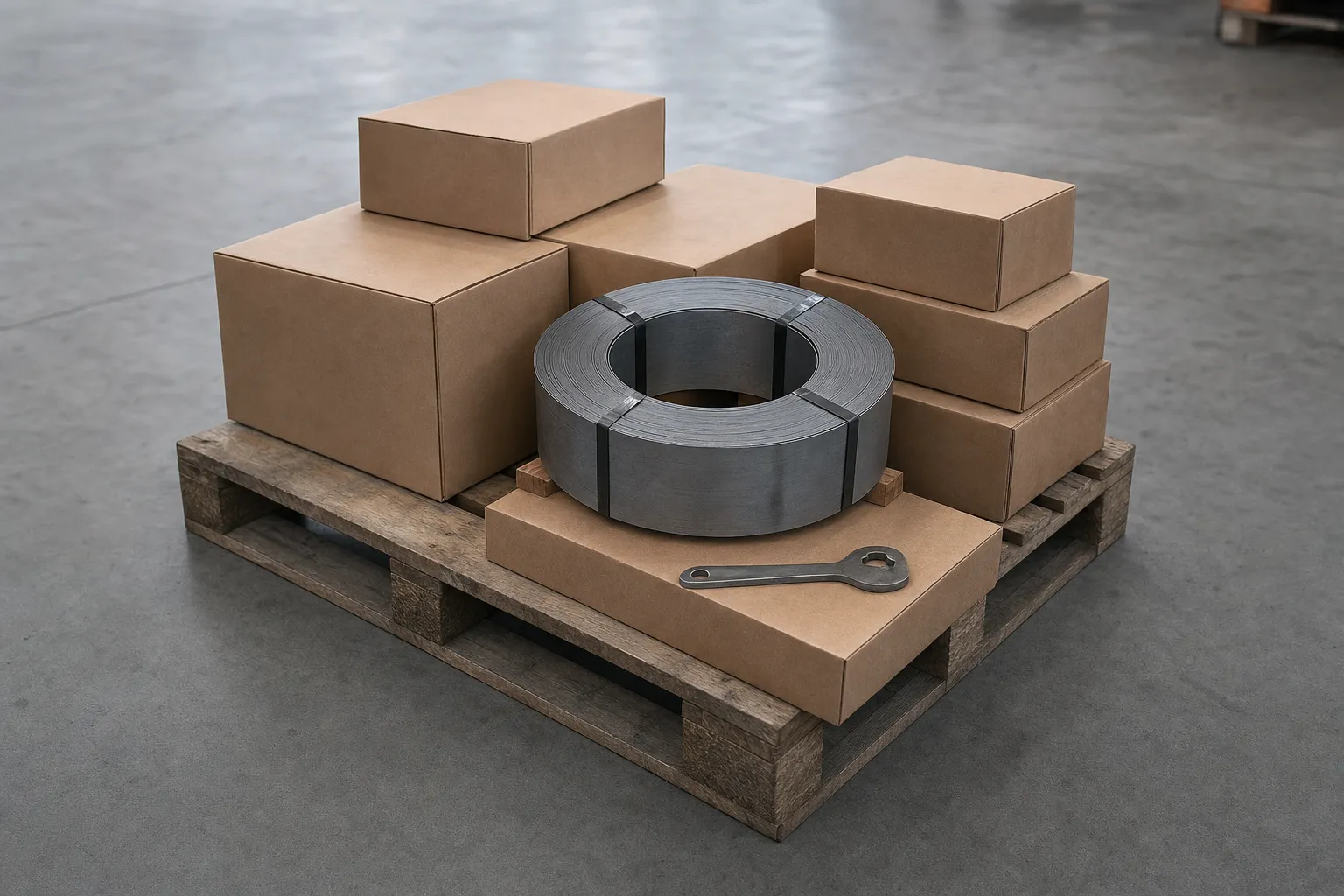
The single-line screen. A consignment is rarely one thing — cartons, the machine that fills them, its spares, the packaging, a sample. Each position is answered on its own, so a clean answer on the main line says nothing about the cartons beside it.
The accessory that travels with the machine. Parts, spares, consumables, tooling and promotional material carry their own positions. A machine's line does not reach into the box of spares strapped beside it.
The snapshot from three months ago. A finding is only as good as its date, and the date that matters is the declaration's, not the check's.
What a lartas answer does not tell you
It answers one question. Four others sit outside it, and shippers routinely hear one answer and conclude they are clear.
- What the entry will cost. Charges come from the tariff and the value basis, on their own logic. A position can be unrestricted and expensive, or restricted and cheap.
- Whether the product may be sold. Registration sits on top of the import question and belongs to different authorities: a mandatory standard for some goods (SNI certification), a registration for others (BPOM registration). A line can be unrestricted while the product stays un-sellable; a registered product still needs its import instrument.
- Whether there is room under a quota. Where an instrument is allocation-based, the permission exists only inside an allocation. Status tells you the door, not whether the room behind it is full.
- Whether the importer is entitled to bring the goods in at all. A question about the entity, not the goods (who can legally import into Indonesia).
"Cleared" is a property of a file with four answers. It has never been a property of a product.
When the paper is missing at the border
A declaration has to reference an approval that exists. Where it does not, the entry cannot be filed cleanly, and the consignment waits while the party entitled to hold that paper obtains it — on the authority's clock, with storage running against yours. Public guidance records seizure and penalties among the outcomes.
Two things follow. The first is the asymmetry: while the fix is made by someone else, the wait is billed to you. The second matters more and is said less — a finding can change the goods rather than the paperwork. A different form, a different presentation, a different position, and the condition no longer attaches. That decision is cheap before production and packing, expensive after.
The channel the entry then takes is a later question (green line and red line), and the hold has its own causes (why cargo gets held). Both are consequences. The check is the cause you control.
What to prepare, and which desk to ask
Before you ask anyone anything, have six things in hand:
- the goods described by material, function, form, and whether complete or a part;
- the national position you believe applies, with the description you classified from;
- the Indonesian entity that will appear as importer, and its registration type;
- any instrument already held — by whom, for which position, valid when;
- the date of your last check and what it returned;
- what the goods will be used for: resale, own use, or a project.
Then ask the right desk, because each answers a different part and only one holds the obligation:
- The importer of record holds it, and is the only party who can say whether it is in a position to hold it.
- The holder of an existing instrument answers whether it covers this consignment, at this position, in this version.
- The licensed customs broker answers how the declaration will be filed and what it must reference.
- The forwarder answers what can be booked, when, around all of the above.
Asking a forwarder whether your product is restricted is asking a scheduling desk a classification question; the reply will be an impression, and an impression is not a record. What one restricted line does to a shipping plan is set out in our guide to steel products into Indonesia.
Where we sit
We issue nothing and we grant nothing. Whether a position is restricted, whether an instrument is issued, whether a condition has been met, and which version applies are determinations made by Indonesia's authorities and by the parties entitled to hold them. What we do on the China–Indonesia lane is narrower than a promise: we make the file agree with itself, and sequence the work so the answer arrives while the goods are still at origin.
Yanchao Logistics works the China–Indonesia route — the freight, and the documentation and clearance coordination that goes with it. If a shipment is coming, send us the goods description, the position you believe applies, and the intended importing entity through our contact page; we respond within two hours on working days, and a preliminary quotation is normally provided within 48 hours once the documents are complete. Shipments involving restricted goods, product approvals or project cargo are confirmed after review rather than on the standard turnaround.
Photographs here are illustrative: generic unmarked goods and plain surfaces, not client cargo, facilities or personnel, and no ownership of any vessel, container, terminal or warehouse is claimed. Examples are neither client cases nor quotations.