
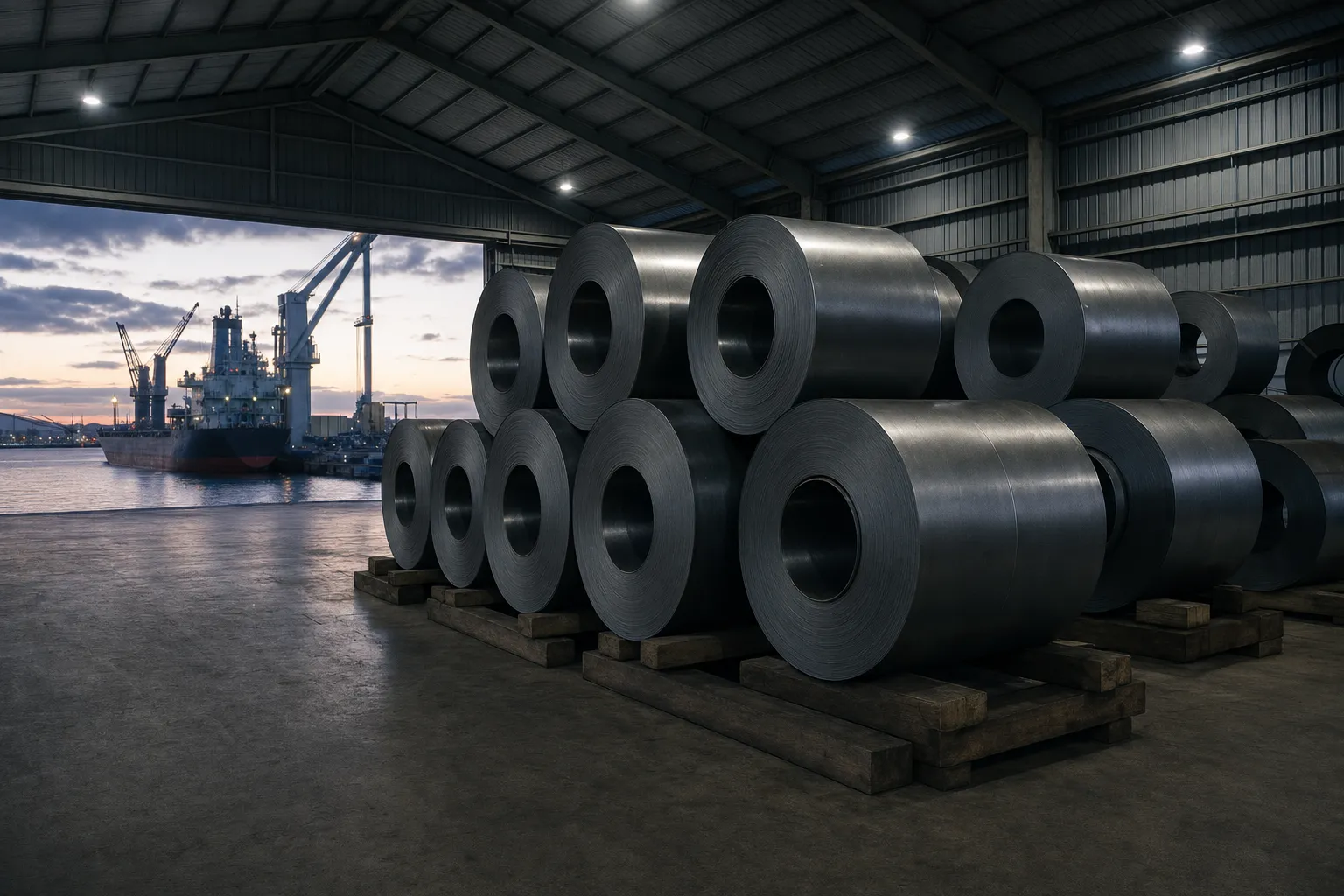
A steel shipment into Indonesia does not meet one control. It meets three, and which three depends on the tariff line the goods are filed under. The restriction and the permit behind it are one layer. The mandatory product standard is another. The trade measures that sit on top — negotiated quotas, and the duty instruments that follow an investigation — are the third. "Quota" is the word the market uses for all of it at once, which is why so many steel consignments are prepared for the wrong one.
Steel is also the cargo where the sending side holds the most of the outcome. By the time a coil is on the water, nearly everything that decides whether it lands cleanly is already fixed: the form the goods take, the line they are filed under, the standard claimed for them, the certificate produced for them, the marking on the bundles, the entity named on the entry, and whether anyone started the permit in time. Freight is the visible part of the timeline and rarely the part that moves.
This page sets out what the three layers actually are, what "quota" means when a supplier or a broker says it, and what to check before the mill releases the goods. It is written for the exporter in China as much as for the Indonesian buyer's procurement lead, because the file that decides the outcome is assembled at origin.
This article prints no freight rate, no duty rate, no tax figure, no percentage and no currency amount. Transit times appear only as conditional planning references under our published service scenario, never as guarantees. No example on this page is a client case or a quotation, and nothing here is customs advice: whether a particular consignment may be imported, and on what terms it is released, is determined by Indonesia's authorities and by the certification bodies accredited there — not by us.
Steel is not one cargo: the tariff line decides which screens apply
There is no separate "steel regime" in Indonesia waiting to be looked up. There is a tariff line, and the line carries the consequences.
Steel enters the classification system in chapters 72 and 73 of the globally maintained Harmonized System — iron and steel, and articles of iron or steel — which Indonesia implements through its national tariff book, the Buku Tarif Kepabeanan Indonesia (BTKI). That structure is what makes "steel" a commercial word rather than a regulatory one. A hot-rolled coil, a galvanised sheet, a structural section, a seamless pipe, a bundle of rebar, a pallet of bolts and a box of hollow sections are all "steel" on a purchase order and sit at different lines with different conditions behind them.
Three consequences follow, and each one has cost real money for someone:
- The line decides which controls attach, not only what is charged. A restricted line and an unrestricted line can be the same metal in a different form.
- The line is decided on facts about the goods, not on the name of the product family: alloy content, dimensions, whether the surface is coated, whether a section is open or hollow, and how far the article has been worked. How that decision is actually reached is a subject of its own, and our guide to HS codes and tariff classification for Indonesian imports takes it apart.
- Almost no project ships a single line. A plant fit-out arrives as coils, plates, structural sections, pipe, stair treads and fasteners, and every one of them is screened separately. A consignment can clear on the headline product and stall on an accessory that nobody screened — the same mix that sinks machinery and equipment imports, which we cover in our guide to importing machinery and production equipment into Indonesia.
So the first useful question is not "what does steel need in Indonesia". It is "which lines is this shipment made of", and it is answered before a supplier is paid, not after a vessel sails.
The restriction layer: lartas, the import approval, and whose permit it is
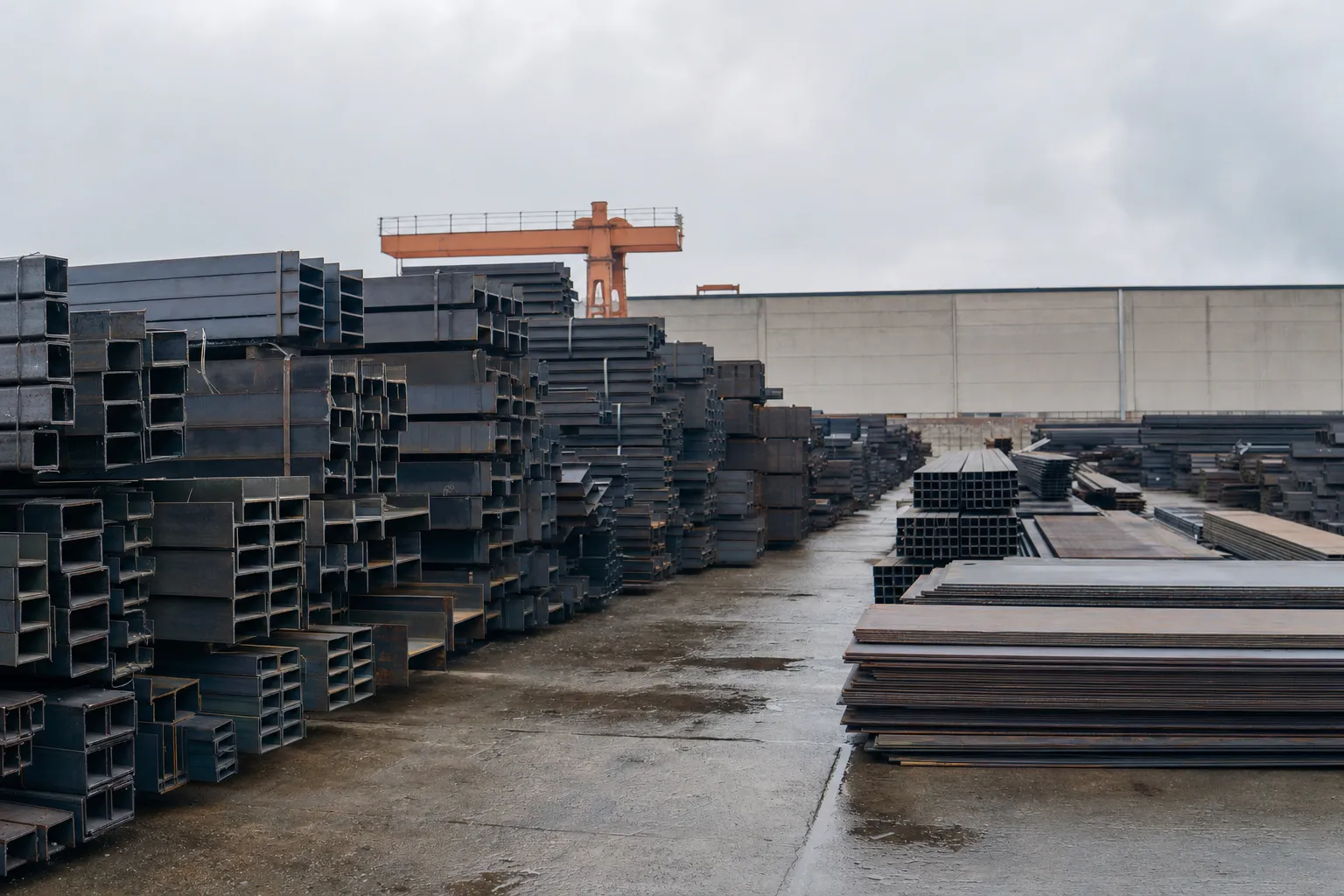
Steel's first screen is not a charge. Indonesian import control asks a prior question — is this goods prohibited or restricted? — about the goods rather than the invoice.
Indonesia's shorthand for that regime is lartas: larangan for goods barred outright, pembatasan for goods admitted only behind a permit or certificate that already exists. The two halves are set out side by side in our guide to importing machinery and production equipment into Indonesia; what matters on a steel file is that restriction is a queue rather than a wall, and a queue is measurable.
The check is per line, and it is public. Indonesia's National Trade Repository, inside the country's National Single Window, lets the tariff line be searched for the import-side requirements that attach to it. This is the lookup to run before anything is booked, and it is the step that first-time steel buyers skip, usually because a supplier already told them "steel needs a permit" and they took that as settled.
The approval belongs to the Indonesian importer. Where a line is restricted, an Import Approval (Persetujuan Impor, PI) is the Ministry of Trade instrument that permits the import, and it is issued on the Indonesian side to an Indonesian importing entity. Product-level instruments from sector agencies — a technical consideration from the ministry whose sector the goods belong to, a registration for a controlled product family — sit in the same layer and also belong to that entity. The Ministry of Industry publishes the permits and technical considerations it issues for industrial goods on its own permit index; the U.S. commercial guide to Indonesia's prohibited and restricted imports describes the same regime from a buyer's side.
Two things follow for anyone assembling a steel shipment.
First, the permit is a property of a line and an entity, not of a product in general. "We have an import licence" is not an answer to "may this come in". The entity named on the entry has to be entitled to import that line — the question our guides to who can legally import into Indonesia and to NIB, API-U and API-P registration take apart — and the specific approval has to cover the specific goods.
Second, the clock belongs to the authority. An application runs on the ministry's assessment timetable, not on the vessel's schedule, and it starts from a complete file. Of every workstream in a steel shipment, this is the one where starting a fortnight earlier changes the outcome and paying more does not.
The standard layer: SNI, mill certificates, and the check that happens before shipment
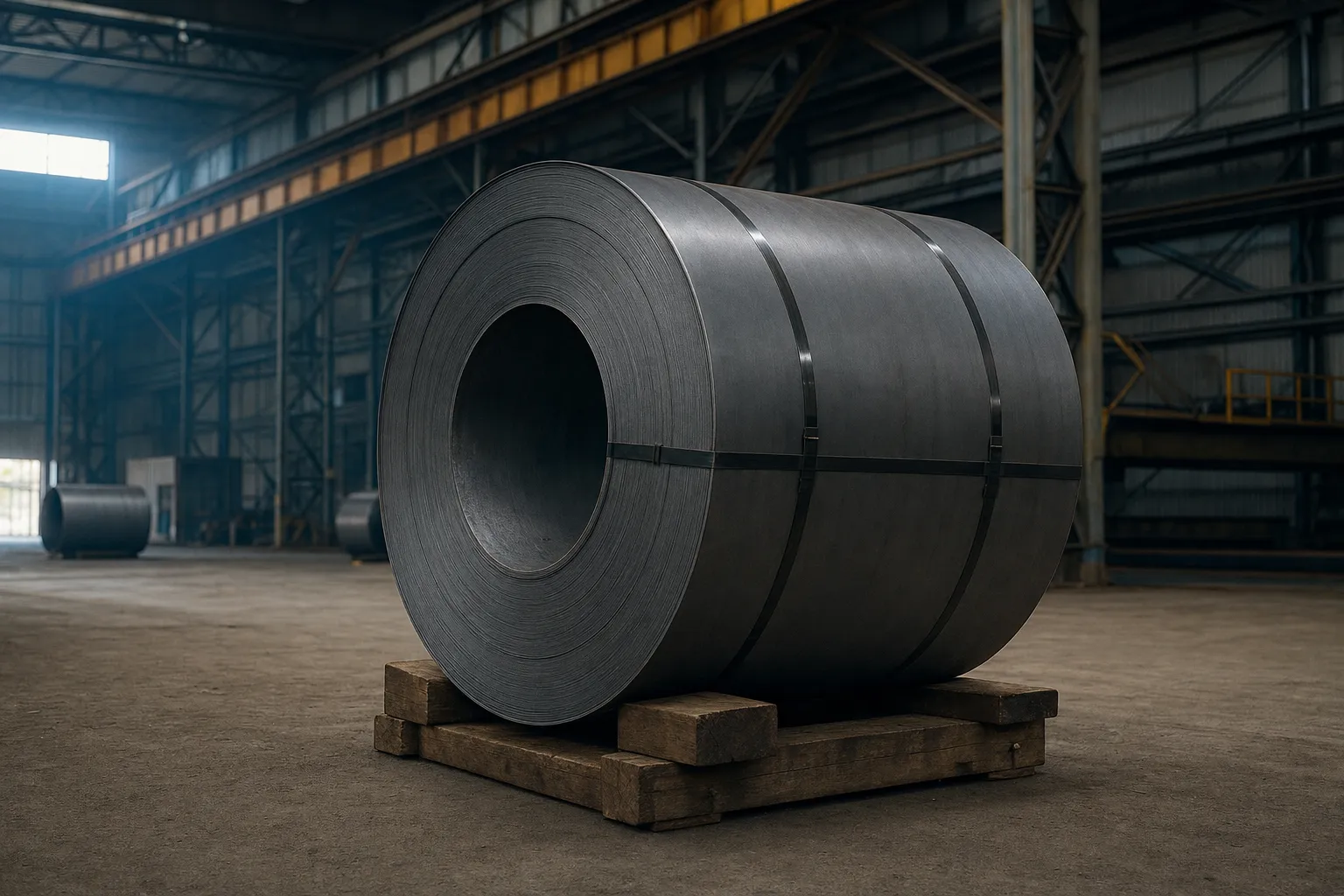
The second layer is the product standard, and Indonesia's mandatory standards are the Standar Nasional Indonesia — SNI — published and administered by the country's standards body, whose own site is the authority for what the standard says and which product forms are covered. A range of steel product families sits under a mandatory SNI; which one applies is a question about the product form, not about the word "steel", and it is answerable from the published catalogue rather than from a supplier's summary.
Two documents travel with a steel shipment and are constantly confused with each other:
- A Mill Test Certificate (MTC). The mill's own statement about the heat or lot the goods came from — chemistry, mechanical results, sometimes hardness or impact values. It is a valuable document, and it is a supplier document: it says what the mill made and tested.
- A product certificate against the Indonesian standard. Issued through Indonesia's certification system and typically held for a product family by the party importing it. It says the goods conform to a standard that Indonesia accepts.
They are not interchangeable, and an offer that says "certificate included" without saying which of the two is not an answer. The most common substitution in steel procurement is an MTC offered in place of the product certification, and it is discovered at the border rather than at the negotiating table.
The third element is less familiar and more consequential: verification in the country of origin, before shipment. For a range of restricted goods, Indonesia requires the consignment to be checked while it is still at origin by a surveyor appointed for the purpose, and the resulting surveyor report travels with the entry. The design intent is the whole argument for pre-shipment checks: the goods are stopped while stopping them is still cheap, rather than after a voyage, a berth and a storage clock. Whether this applies to a given steel line is not a judgement call — it comes out of the same line-by-line repository lookup — and whether it has been booked is a scheduling fact that lives entirely on the origin side.
None of these three is something we issue or grant. Certification is carried out by bodies accredited in Indonesia, and the determination of what applies is the authority's. What can be done on this side is to know which of the three a shipment needs, and to have it arranged before the goods move.

"Quota" is three different things, and only one of them is a quota
This is the word that causes the most avoidable delay in steel, because it is used for three unrelated instruments with three different owners and three different clocks.
What is being described | What the instrument actually is | Who acts | Where it sits in the timeline |
|---|---|---|---|
"There is a quota for steel" | A restricted tariff line: the goods may enter only behind an import approval, and the constraint is the permit and the importer's entitlement, not a volume | The Indonesian importer applies to the Indonesian ministry | Must be resolved before the goods are shipped; assessed on the authority's clock |
"The quota is full for this year" | A tariff-rate quota under an arrangement between governments: an agreed volume of eligible goods enters on preferential terms, and the quota is claimed by the exporter through its own government, which issues the quota certificate | The exporter and its own government, at origin | Claimed and documented before shipment; it cannot be arranged at the destination port |
"Steel has a duty on it now" | A trade remedy — a safeguard or an anti-dumping measure that follows an investigation and applies to a product from a particular origin | The investigating authority; Indonesia's anti-dumping investigations are run by the committee under its Ministry of Trade, whose own site is the record of what is under investigation | Changes the landed cost of a product/origin combination; applies to shipments made after the measure, not to a shipment already at sea |
"There is a quota for steel"
What the instrument actually is
A restricted tariff line: the goods may enter only behind an import approval, and the constraint is the permit and the importer's entitlement, not a volume
Who acts
The Indonesian importer applies to the Indonesian ministry
Where it sits in the timeline
Must be resolved before the goods are shipped; assessed on the authority's clock
"The quota is full for this year"
What the instrument actually is
A tariff-rate quota under an arrangement between governments: an agreed volume of eligible goods enters on preferential terms, and the quota is claimed by the exporter through its own government, which issues the quota certificate
Who acts
The exporter and its own government, at origin
Where it sits in the timeline
Claimed and documented before shipment; it cannot be arranged at the destination port
"Steel has a duty on it now"
What the instrument actually is
A trade remedy — a safeguard or an anti-dumping measure that follows an investigation and applies to a product from a particular origin
Who acts
The investigating authority; Indonesia's anti-dumping investigations are run by the committee under its Ministry of Trade, whose own site is the record of what is under investigation
Where it sits in the timeline
Changes the landed cost of a product/origin combination; applies to shipments made after the measure, not to a shipment already at sea
The mechanism behind the middle row is public. Australia's government publishes the process its exporters follow for Indonesia steel tariff rate quota certificates, and it is worth reading even if your trade is not Australia's, because it shows the shape: the quota is administered by the sending government, which issues a certificate the shipment travels on. The instrument behind the bottom row is described in the World Trade Organization's own material on safeguards — and the operative point here is that a remedy is a duty determined by an investigation, not a permit and not a queue.
Why the distinction is worth a section of its own: the three have nothing in common operationally. One is a licence, one is a certificate obtained at origin, one is a cost that a foreign party decides. A supplier who says "quota is full" and cannot say which of the three is describing a problem, not a constraint. Ask which instrument, who administers it, and where it is published.
And check the currency of whatever answer comes back. Trade measures are amended, investigations open and close, and restriction lists are revised; the current position lives on the authorities' own publications. A page that quotes a figure has probably not been near the source since it was written, which is also why this page quotes none.
What to check before the steel leaves the mill
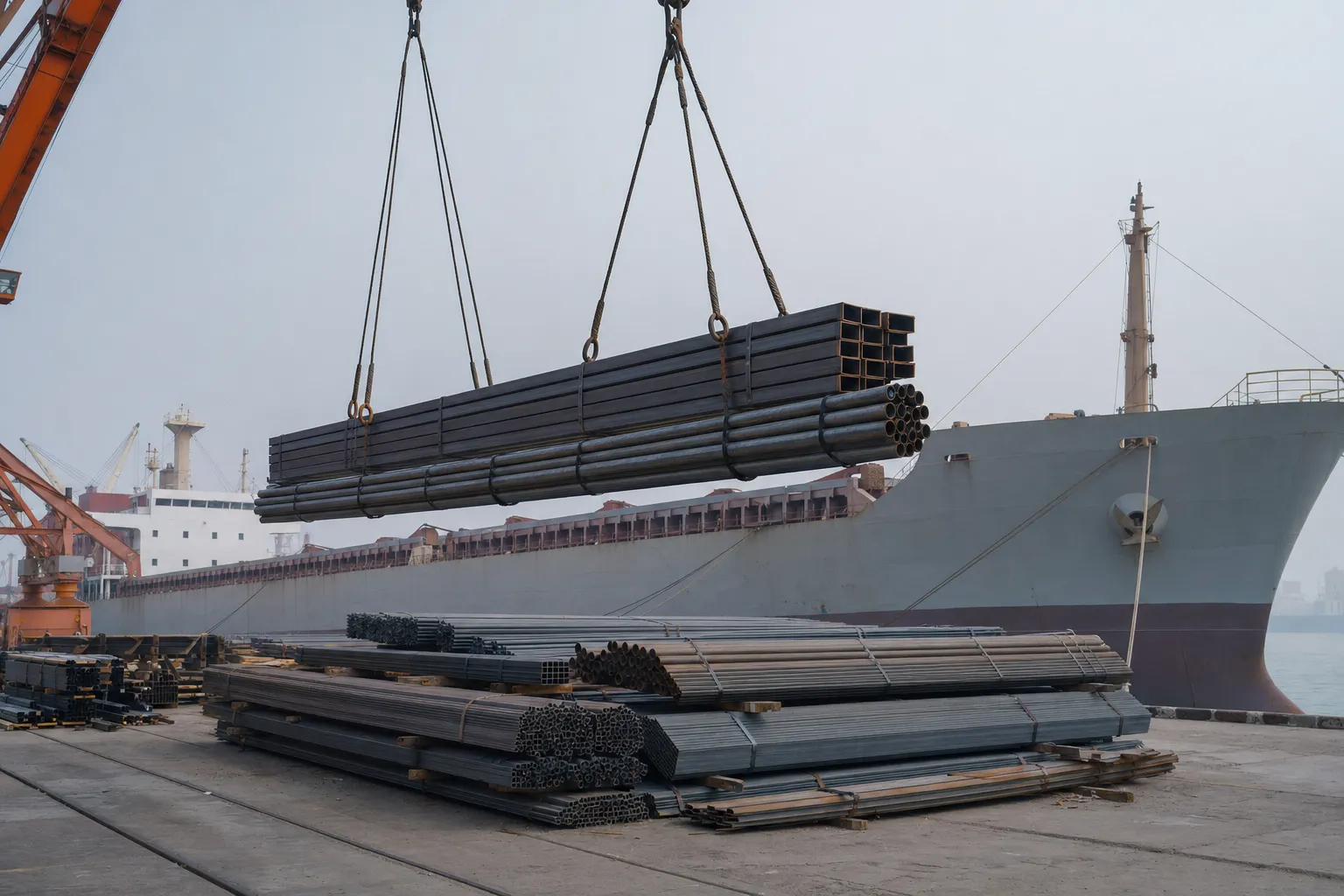
Every item below is settled with the mill, the importer or a certification body rather than with us. The list is cut along four axes — goods, entity, documents, admission — not in the order a filing form lays out.
Axis | Item settled at origin | Why it cannot wait | What the file then shows |
|---|---|---|---|
Goods | The real facts of each form — grade, alloy, dimensions, coating, degree of working — from the mill's data | Classification and the standard follow the article, fixed once packed | One description across order, invoice and mill certificate |
Goods | The tariff line each form is filed under, accessories included | The line, not the word "steel", attaches the controls | A classification basis you can show |
Goods | Whether the form falls under a mandatory SNI, and which edition | Published per product form, not a supplier's to settle | The standard claimed, and its answering document |
Entity | Whether the Indonesian entity on the entry may import those lines | Entitlement is held per entity and per line | The entity named identically on documents and entry |
Entity | Whether a restricted line's approval is issued and covers the goods | Assessed on the authority's clock, from a complete file | The approval referenced on the entry |
Documents | Which certificate the offer carries — mill test certificate or Indonesian product certificate | The two answer different questions and do not interchange | Each document filed where its question is asked |
Documents | One unit of measure and quantity, mill certificate through packing list to entry | Documents are read against one another; pieces against tonnes is a stop | Figures that agree before the bundles are strapped |
Documents | The marks on the bundles, and the marks the file shows | A mark on the steel but not in the file will not reconcile | Bundle marking and paperwork that match |
Admission | Whether each line is restricted, the accessory line included | Restriction attaches line by line, and mixed consignments screen line by line | A recorded trade-repository screen, before booking |
Admission | Whether verification at origin applies, and whether a surveyor is appointed | Where it applies, an appointment is made at origin | A surveyor report that travels with the entry |
Goods
Item settled at origin
The real facts of each form — grade, alloy, dimensions, coating, degree of working — from the mill's data
Why it cannot wait
Classification and the standard follow the article, fixed once packed
What the file then shows
One description across order, invoice and mill certificate
Goods
Item settled at origin
The tariff line each form is filed under, accessories included
Why it cannot wait
The line, not the word "steel", attaches the controls
What the file then shows
A classification basis you can show
Goods
Item settled at origin
Whether the form falls under a mandatory SNI, and which edition
Why it cannot wait
Published per product form, not a supplier's to settle
What the file then shows
The standard claimed, and its answering document
Entity
Item settled at origin
Whether the Indonesian entity on the entry may import those lines
Why it cannot wait
Entitlement is held per entity and per line
What the file then shows
The entity named identically on documents and entry
Entity
Item settled at origin
Whether a restricted line's approval is issued and covers the goods
Why it cannot wait
Assessed on the authority's clock, from a complete file
What the file then shows
The approval referenced on the entry
Documents
Item settled at origin
Which certificate the offer carries — mill test certificate or Indonesian product certificate
Why it cannot wait
The two answer different questions and do not interchange
What the file then shows
Each document filed where its question is asked
Documents
Item settled at origin
One unit of measure and quantity, mill certificate through packing list to entry
Why it cannot wait
Documents are read against one another; pieces against tonnes is a stop
What the file then shows
Figures that agree before the bundles are strapped
Documents
Item settled at origin
The marks on the bundles, and the marks the file shows
Why it cannot wait
A mark on the steel but not in the file will not reconcile
What the file then shows
Bundle marking and paperwork that match
Admission
Item settled at origin
Whether each line is restricted, the accessory line included
Why it cannot wait
Restriction attaches line by line, and mixed consignments screen line by line
What the file then shows
A recorded trade-repository screen, before booking
Admission
Item settled at origin
Whether verification at origin applies, and whether a surveyor is appointed
Why it cannot wait
Where it applies, an appointment is made at origin
What the file then shows
A surveyor report that travels with the entry
Two entries on that list carry more weight than the rest. The approval runs on the authority's clock, which makes it the longest pole. Verification is the one people assume is automatic: where it applies it is an appointment made at origin, and a shipment that books it late waits with the goods already packed.
On our side, this work is documentary and it is deliberately narrow in what it promises. Our pre-shipment review checks the goods information, the classification basis, the importing entity and the product admission documents against the transport documents, so that the invoice, the packing list and the entry describe the same consignment before it sails. It is not a certification, it is not an approval, and it does not replace a surveyor appointed under the verification regime — it is the consistency work that has to happen before any of those can be used.
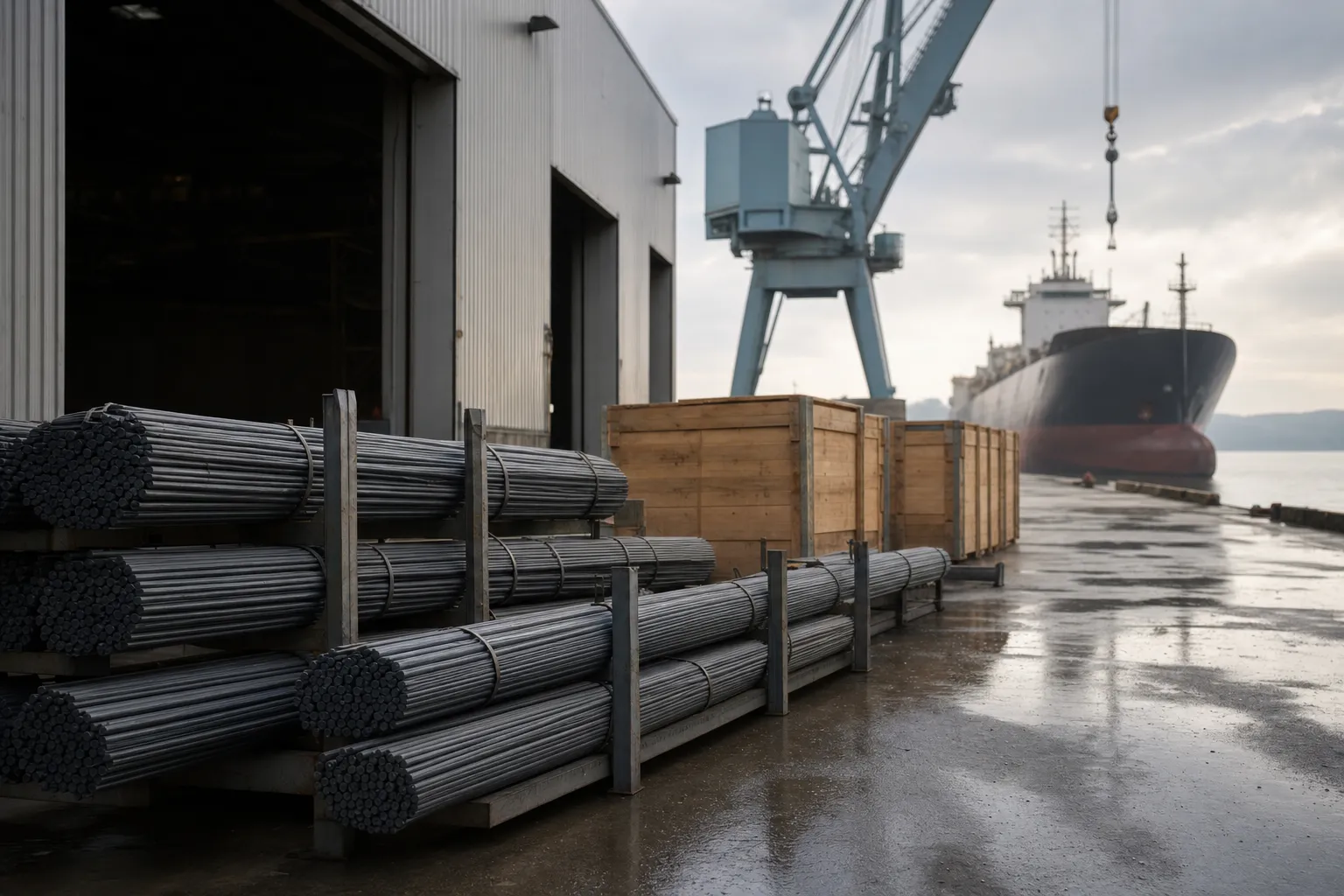
Where steel consignments actually fail
The failures are more consistent than the products. Nearly all of them are file problems, not cargo problems.
- The certificate substituted for another certificate. An MTC offered where the standard requires product certification. Discovered at the border, when the goods can no longer be reworked or re-tested cheaply.
- The line that nobody screened. A fasteners or structural accessory line behind a condition the headline product never carried. Mixed consignments are the norm in project steel traffic, which is precisely why they surprise people.
- The approval still in application when the vessel sails. Entirely predictable, and entirely avoidable — the permit clock is not visible from the shipping desk, but it is knowable from the file.
- The grade that changed between documents. The MTC says one grade, the invoice says another, the marking on the bundle says a third. Three true-looking documents describing three different articles is the cheapest possible hold to avoid.
- The quantity that does not tally. Bundles counted one way, weight declared another, the packing list in pieces and the entry in tonnes. Differential between theoretical and actual weight is a technical conversation; disagreeing documents are a stop.
- Verification not booked, or booked after packing. Where it applies, it is an origin-side appointment.
- The entity mismatch. The transport document naming the buyer while the entry names a different importing entity — the goods then cannot be collected by the party holding the document.
- Marking absent or inconsistent. Required marks missing from the goods, or present on the goods and absent from the file.
If a consignment does stop, the response is its own discipline, and our page on why cargo gets held at Indonesian customs sets out the sequence, the instruments and the storage clock. The useful thing to carry away here is the asymmetry: every hour spent assembling a consistent file at origin is cheaper than the same hour spent correcting one after arrival.
How long this takes, and what drives the clock
There is no single number for a steel shipment, and any page that offers one is describing a different consignment. What can be described is what the clock is made of: the approval, where verification applies, the sailing, the border, and the delivery arrangement.
Under our published service scenario, sea and consolidated shipments on this route are planned at roughly fifteen to twenty-five days end to end, and air freight at roughly three to five days, with public holidays and customs peak-enforcement periods not counted in either. Those are conditional planning references for the scenario we quote on, not promises for any particular consignment. Within the border step, a release on the system is typically followed by delivery arrangements of about three working days, and an examination is planned around five to seven working days.
What lengthens all of it is the list in the previous section, and it is worth noting which items are on whose clock. Document corrections and verification bookings are origin-side and therefore keepable. Approval assessment and any examination are the authority's and are not. Trade-measure changes are nobody's in the shipment and are the reason a project buying steel on a long schedule builds a margin it hopes not to use.
The planning rule that follows is unglamorous: work backwards from the date the steel is needed on site, put the approval and the verification first, and treat the sailing date as the last thing to be fixed rather than the first. Steel is heavy, it is slow to rework, and it is usually holding up a construction sequence that costs more per day than the freight does.
Steel import questions we are asked
Does all steel need an import approval?
No single answer covers the product family, and the two confident answers you will hear — "steel always needs one" and "steel is fine, everyone ships it" — are equally unreliable. The restriction attaches to the tariff line, and the line-by-line lookup on Indonesia's trade repository is what settles it. Run that lookup on your actual lines, including the accessories.
Is a mill test certificate enough for the standard?
No. An MTC is the mill's statement about what it made and tested; Indonesian product certification is a separate document issued through the Indonesian system and typically held by the importing party. In a tender pack, ask for both by name and check that the one you were sent is the one the standard requires.
Can we import on the buyer's licence?
The entity that files the entry is the importer of record, and it has to be entitled to import those lines. What matters commercially is that the name on the transport documents and the name on the entry are the same party, because a mismatch is what stops the holder from collecting the goods. The entitlement question itself is covered in our import-licence guides; the trade structures that sit around it are a matter for the parties' own advisers.
What if a duty applies to my product?
Trade remedies are determined through an investigation by the authority, and they attach to a product from a particular origin for shipments made while the measure is in force. That makes it a cost question owned by the commercial parties rather than a freight question, and it makes the authority's current publication the only place to read the position. Treat any page quoting a duty figure or a case list as unverified.
How early should we start?
Earlier than the booking, every time. Of the two instruments with long clocks, the approval runs on the authority's assessment and verification runs on an appointment made at origin; both are unaffected by how much anyone pays for freight later. A steel project that begins its compliance work in the same week it books space is already behind, whether or not anything goes wrong.
What we do on this route, and what the authority decides
On this side of the shipment, our work is documentary and coordinative. We check the goods description, the classification basis, the declared data and the supporting documents against the transport documents, so that the invoice, the packing list and the entry describe the same consignment before it sails — and we coordinate with the importer of record and the licensed customs service provider on the Indonesian side so that the entity on the declaration matches the cargo that lands. The documentation that carries a steel consignment out of China runs through our customs declaration and inspection service.
We issue nothing and we grant nothing. Whether a line is restricted, whether the approval is issued, whether a standard applies, whether a certificate is accepted, whether verification is required, and whether a measure applies to a product are determinations made by Indonesia's authorities and by the certification bodies accredited there. What we can do is make sure that the file those determinations are made on is complete and agrees with itself, and tell you where each of them sits so that preparation can start from the right end.
This article is one of the cargo-specific guides in our cargo requirements hub, which takes the question "may this particular cargo come in?" apart by goods category.
Yanchao Logistics works the China–Indonesia route — the freight, and the documentation and coordination that goes with it. If steel is coming, send us the goods description, the product forms and their tariff positions, and the intended importing entity through our contact page; we respond within two hours on working days, and a preliminary quotation is normally provided within 48 hours once the documents are complete. Shipments involving restricted lines, product certification or quota-based instruments are confirmed after review rather than on the standard turnaround.