
An imported consignment entering Indonesia is assigned a customs channel — a green (jalur hijau) or red (jalur merah) lane that decides whether the declaration is accepted on the system or met with a physical examination of the goods. A third, yellow lane (jalur kuning) for document-only checks existed until 2022, when it was abolished; how it disappeared, and what now moves a consignment between the two that remain, is the part most importers still get wrong. The channel is not a verdict on the cargo alone: it is the output of a risk assessment the customs authority runs on the declaration, and it can differ from one shipment to the next even when the goods are identical.
Most importers meet the channel system the hard way: the cargo is booked, the vessel sails, and only then does anyone ask what happens after the container is discharged. This page sets out what the channels mean, how the routing is decided, what can be prepared before arrival, and what a fast release does not protect you from.
This article prints no duty rate, no tax figure, no percentage and no currency amount. Transit times appear only as conditional planning references under our standard service scenario, never as a guarantee. Nothing here is customs advice, and no example on this page is a client case or a quotation. The channel assigned to a consignment is decided by Indonesia's customs authority, not by us.
What a customs "channel" actually is
"Channel" is the English shorthand for what Indonesian customs calls a jalur — a lane. It is a routing decision made by Indonesia's Directorate General of Customs and Excise, the DJBC, under the Ministry of Finance, and it is applied to an import declaration once that declaration is lodged. The declaration — the Pemberitahuan Impor Barang, or PIB — is a statement of what is arriving; it is also the input to a risk assessment that sorts the consignment into a service lane. The declaration itself is taken apart in what an Indonesian import declaration actually is; here the point is narrower: the entry that declares the goods is the entry the authority scores.
This is worth separating from a phrase the same words often describe. At an airport, arriving passengers walk through a green channel if they have nothing to declare and a red channel if they do — a self-selected lane for travellers. The channels this article is about are assigned to a commercial consignment by the customs authority, on an assessment the importer does not choose. The two share a colour scheme and nothing else.
The routing is a standard customs instrument rather than an Indonesian quirk. Risk-based targeting — using the declaration and the trader's profile to decide how much attention a consignment needs — is set out in the World Customs Organization's SAFE Framework of Standards, and it is how Indonesia's Directorate General of Customs and Excise manages the flow of goods through its ports.
The two channels today, and the yellow lane that was removed
Two lanes carry the ordinary import flow today, and the practical difference between them is where the goods are checked — on the system, or in the container. In market shorthand they are the green line (jalur hijau) and the red line (jalur merah). A document-only middle lane existed until 2022, and how it disappeared is worth knowing, because most descriptions of this system still include it.
Channel | What customs does | What it means for the goods | Relative pace |
|---|---|---|---|
Green (jalur hijau) | The declaration is matched against the system data and the goods are released without a physical examination — no inspection, and no officer review of the file before release. | The container moves to delivery. | The fastest lane. |
Red (jalur merah) | The consignment is examined physically, and the documents reviewed, before a release is issued. | The container is opened and inspected. | The slowest lane. |
Green (jalur hijau)
What customs does
The declaration is matched against the system data and the goods are released without a physical examination — no inspection, and no officer review of the file before release.
What it means for the goods
The container moves to delivery.
Relative pace
The fastest lane.
Red (jalur merah)
What customs does
The consignment is examined physically, and the documents reviewed, before a release is issued.
What it means for the goods
The container is opened and inspected.
Relative pace
The slowest lane.
That removal is the part most buyers get wrong. The yellow lane (jalur kuning) was a pure document stop: no container was opened, but release waited on a permit, a certificate or a clarification. Indonesia's customs authority removed it with PER-02/BC/2022, the fifth amendment to the import-release rules, which took effect on 25 April 2022 and leaves only Jalur Merah and Jalur Hijau (Pasal 24). Deleting the lane did not delete the document check — it folded it into the two that remain: on the red lane the paperwork is reviewed alongside the physical examination, before release, and a green release is not exempt from a later review of the entry. So the useful question is no longer which of three lanes a consignment lands in, but what decides green versus red.
The declaration that receives the channel assignment is lodged electronically through Indonesia's National Single Window. It carries the tariff line and the declared value, and those two elements are what the channels are, in part, responding to — both are taken apart in our Indonesia customs and import charges cluster.
What decides which channel a consignment is put in
The lane is set by a risk model, and the published rules name the kinds of input it reads rather than the weights it gives them: under PER-02/BC/2022 (Pasal 24) a lane is assigned on the operator's economic profile, the commodity profile, the customs declaration, a random method, and/or intelligence information. That is not something an importer can compute from the outside, but most of those inputs are already written on the declaration.
- The declared facts. The tariff line and the customs value on the entry. A classification that does not fit the goods, or a value that sits awkwardly against comparable imports, is the sort of mismatch a risk assessment notices.
- The importer's profile. Who the importer of record is, what history that entity carries, and whether its registrations are in order. U.S. commercial guidance notes that Indonesian customs weighs the declared value alongside the importer's own assessed risk profile.
- The goods themselves. Whether the product sits inside a category Indonesia controls. Goods under the restricted regime (lartas) draw closer attention by design, and a required licence not yet produced is a reason for the file to stop.
- Consistency across the document set. The invoice, packing list, transport document and declaration describe the same consignment, or they do not. Inconsistency is a signal — and the one entirely within the shipper's control.
The importer cannot control the model, but the importer controls most of the inputs. A clean, correctly classified and correctly valued entry is not a guarantee of the green lane — it is the best available argument for one.
"Red line" is used for three different things
Market talk runs three separate ideas together under the words "red line", and pulling them apart removes most of the confusion.
The first is the red channel — the lane a single consignment is assigned to, and the physical examination that follows.
The second is a "red-light period": a stretch when enforcement is described as broadly tighter, and inspection rates rise. This is a season, not a lane, and it applies to the port environment rather than to your entry. Indonesia's customs authority assigns lanes on a risk basis, so a general tightening simply moves more consignments into the red channel over that window — the DJBC's own account of the penjaluran system sets out how the lanes are assigned. When a forwarder warns that "red line is coming", they usually mean this wider tightening, not a channel your declaration has already been given.
The third is the passenger lane at an airport, which has nothing to do with a commercial consignment.
A channel assignment is a decision about one entry; a red-light period is a change in the enforcement weather. Treating the two as the same leads to the wrong preparation — bracing for a crackdown when the issue is one document, or relaxing because the last shipment cleared green while the next file is thinner.
What the importer can prepare before the shipment arrives
None of the preparation below needs a risk model. It needs the entry to be the strongest version of itself that can be filed.
- Get the classification right, and keep the reasoning. A tariff line chosen from the facts is defensible; a code copied from a supplier's earlier shipment is not. The classification is one of the two declared facts a channel assessment reads.
- Make the value defensible. Have a commercial invoice that reflects the real transaction, and evidence to explain it if asked. A value that diverges sharply from comparable imports invites the closer look described above.
- Make the document set agree. The invoice, packing list, transport document and declaration should describe the same goods, quantity and parties. The commonest avoidable reason for a stop is the file disagreeing with itself.
- Settle who the importer is before, not after. The importing entity and its registrations must be in place for the declaration to be made at all; an importer of record whose details do not line up is a risk flag on the entry.
- Have restricted-goods papers ready in advance. Where a product needs a permit, that permit is what a document check will ask for — before a red release, or in the later review of a green one. Arranging it while the cargo is still at origin turns a potential stop into a formality.
What a green channel does not mean
A green release is good news about one consignment. It is not a standing exemption, and it is worth saying plainly what it does not cover.
It does not mean the shipment is finished with customs. Indonesian customs retains the authority to review an import after release through a post-clearance audit, comparing the entry against the documents and the law. A green lane is a decision made at import on the information available then; it is not a ruling that the entry will never be looked at again.
It also does not carry forward. Every declaration is assessed on its own facts, so a clean history helps an importer's profile but does not guarantee the next identical container the same lane. A single bad entry — a value that cannot be explained, a description that does not match — can pull an importer's next shipments the other way.
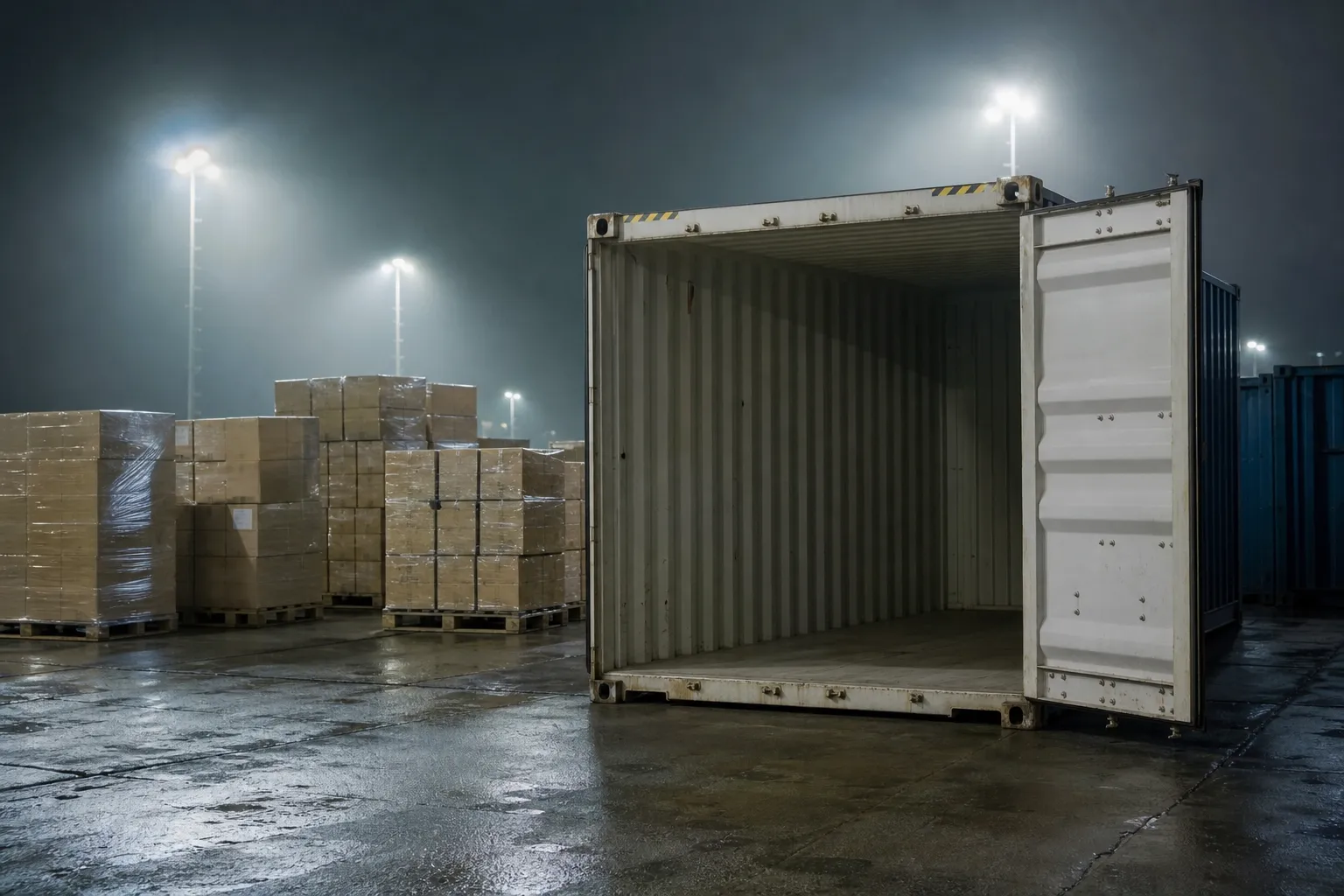
When a shipment goes to the red channel
A red-channel assignment is not a failure or an accusation. It is a decision that this consignment warrants a physical look; the practical questions are what happens next and what the importer should have to hand. The assignment reaches the importer as a written notice — the Surat Pemberitahuan Jalur Merah (SPJM), commonly shortened to the Pemberitahuan Jalur Merah (PJM) — which is effectively a request to make the goods available for examination.
The examination checks the goods against the declaration: whether what is in the container matches what was declared, whether the quantity and description hold up, and whether the required permits and certificates are present and valid. The importer's agent on the Indonesian side coordinates the examination and the follow-up, and any discrepancy becomes a document question to resolve. A consistent file makes that conversation short; an inconsistent one makes it long.
On timing, plan in ranges rather than a single number: a channel decision interacts with port conditions, document readiness and the goods themselves. Under our standard service scenario, a green release is typically followed by delivery arrangements of about three working days, and a red-channel examination is planned around five to seven working days. Those are conditional planning references for the scenario we quote on, not a promise for any particular shipment.
How this works on our route, and who decides
On this side of the shipment, our work is documentary and coordinative. We check the goods description, the declaration data and the supporting documents against the transport documents, so that the invoice, the packing list and the entry describe the same consignment before it sails — and we coordinate with the importer of record and the licensed customs service provider on the Indonesian side so the entry and the cargo agree once it lands.
The channel itself, and every determination that follows from it, belongs to the customs authority; what an importer can do is arrive with the facts the assessment reads. The export-side file that carries the goods description out of China runs through our customs declaration and inspection service, and the receiving-side coordination that works from those facts is the work described on our Indonesia customs clearance service page.
Questions importers ask us
Is the green channel the same as "no check"?
No. Green means the declaration was verified on the system and the goods were released without a physical examination. It does not remove customs' authority to review the entry later through a post-clearance audit, or exempt the goods from the rules that applied to them at import.
Can I choose my channel?
No. The channel is assigned by the customs authority on its assessment of the declaration. What an importer controls is the quality of the input — the classification, the value, the document consistency and the standing of the importer of record.
Does the channel depend on my HS code?
The code is part of it, not the whole of it. The tariff line tells customs what the goods are and whether they sit in a controlled category; the declared value, the importer's profile and the consistency of the file all feed the same assessment. Two shipments under the same code can still be routed differently.
What is the difference between the red channel and a "red-light period"?
The red channel is a lane assigned to one consignment, and it leads to a physical examination of those goods. A red-light period is a general tightening of enforcement across a port environment over a stretch of time. One is a decision about your entry; the other is a change in conditions that affects many importers at once.
How much time does a red-channel examination add?
Plan in ranges rather than a single figure. Under our standard service scenario a red-channel examination is planned around five to seven working days, against delivery arrangements of about three working days after a green release — conditional references, not a guarantee for any given shipment.
Yanchao Logistics works the China–Indonesia route — the freight, and the documentation and clearance coordination that goes with it. If a shipment is coming, send us the goods description, the packing details, the declared value basis and the intended importing entity through our contact page; we respond within two hours on working days, and a preliminary quotation is normally provided within 48 hours once the documents are complete. Shipments involving restricted goods, complex clearance or project cargo are confirmed after review rather than on the standard turnaround.
This article sits in our customs and import charges hub, which takes the entry, the classification, the value, the charges and the clearance path apart one piece at a time.