
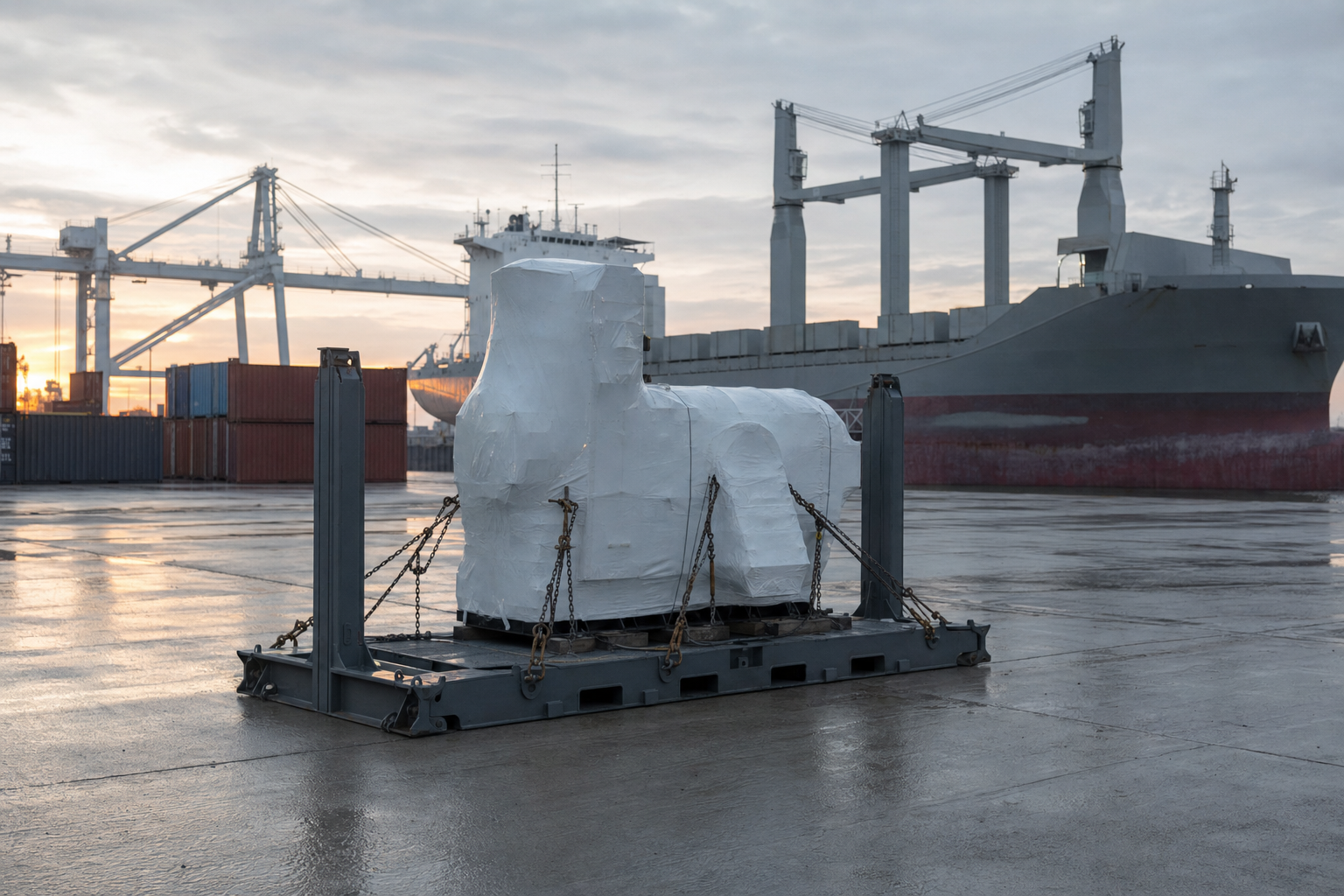
"Oversized" is not one problem. It is four, and each fails against a different limit. A unit can be over-length and fine, over-width by a hand's breadth and occupying two slots on a vessel, over-height and unable to pass under a cable on the last kilometre, or overweight while legal at sea and illegal on the road.
Search the term and you will find dimension tables for the flat rack container, carrier after carrier, with slightly different payloads for the same equipment. They are useful; none of them decides your shipment. What does is which limit you crossed, who owns it, and what must be true before the unit leaves the yard.
This article prints no freight rate, no equipment payload, no tax or duty figure and no percentage. Where a number would normally appear, it says which document carries it instead. No example here is a client case or a quotation; any scenario is illustrative. Nothing here is customs advice, and nothing makes us the importer of record: on the Indonesian side we assist and coordinate with the licensed importer and its appointed broker.
Four limits, four owners
Three words matter, because the booking desk will use them back at you. Cargo needing special equipment but staying inside its envelope is in gauge; cargo exceeding a flat rack or open top in length, width or height, yet still unitised, is out of gauge (OOG); cargo too large or heavy for any container is break bulk. The framing the carriers publish is a reasonable place to start: Maersk's out-of-gauge page.
The four limits behind it are unrelated.
- Length. Overhang past the deck changes lifting geometry and stowage; on a collapsible flat rack it may also mean travelling with walls folded.
- Width. The expensive one: over-width can consume the neighbouring slot, because cell guides assume a standard footprint. An open top cannot solve width.
- Height. Needs top loading or an open deck, then meets a second limit on the road: bridges, cables, gantries.
- Weight. Three ceilings stack — payload, the floor's tolerance for a concentrated load, the axle load the road allows. Passing one says nothing about the other two.
Each limit belongs to somebody else: the carrier owns stowage, the terminal owns what it will lift, the road authority what may travel, Indonesian customs whether the goods may enter. A shipment is only as ready as the least-ready of those.
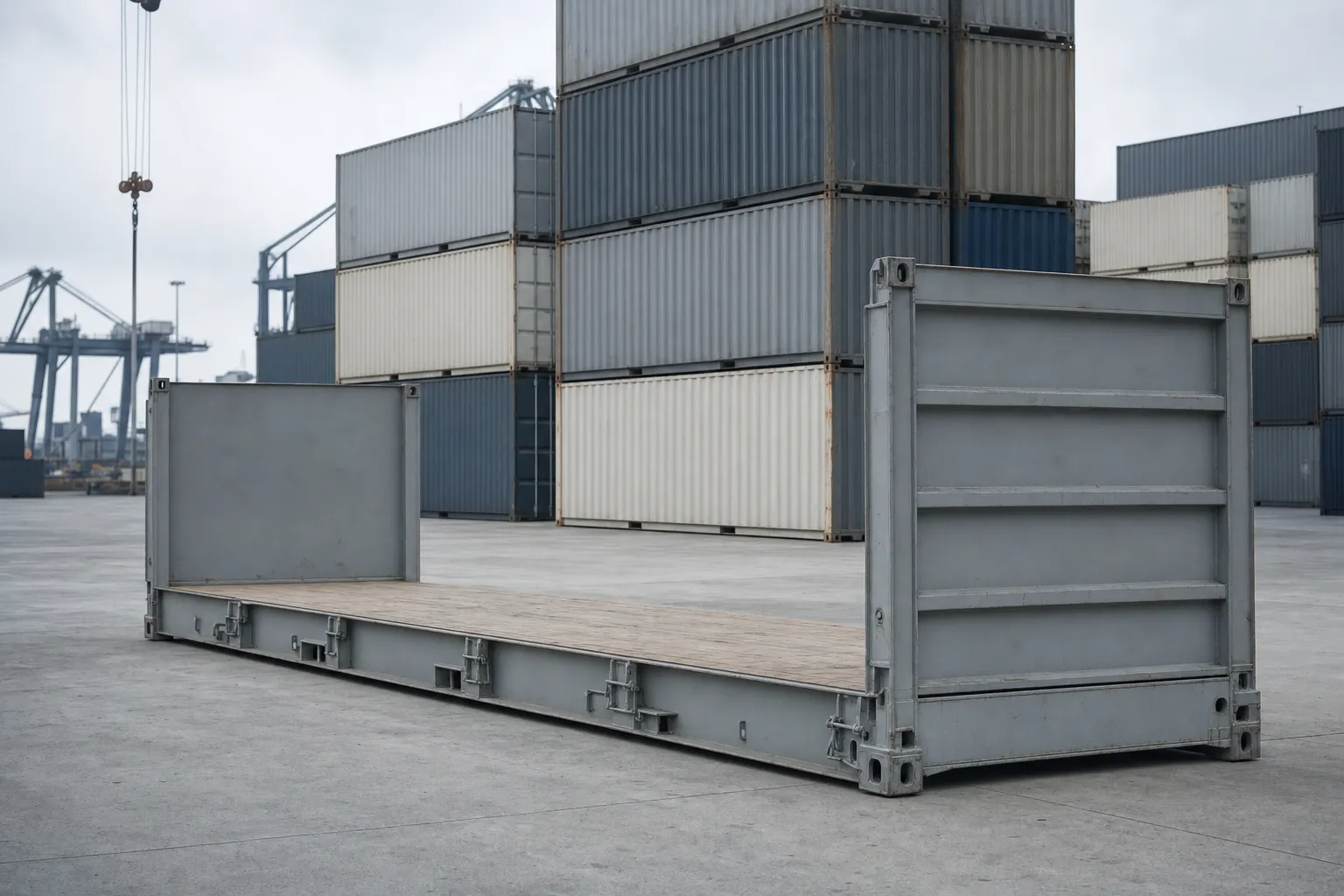
Flat rack container, open top, platform, or a standard box
Read the equipment decision as a ladder, not a menu: each step gives freedom in one dimension and costs protection, certainty and speed. For the standard fleet, see our guide to container types and what each one is for.
Equipment | Removes | Solves | Leaves exposed | Watch for |
|---|---|---|---|---|
Standard dry container | Nothing — six sides | Cargo inside the envelope | Nothing, which is the point | Check the door opening, not just internal dimensions |
Open top | Roof, replaced by tarpaulin on bows | Over-height cargo lowered in | Width, and weather: rain cover, not a seal | Bows and door header must be refitted |
Flat rack, fixed ends | Side walls and roof | Over-width and over-length pieces | Everything — held by lashing | End walls add rigidity and lashing points |
Flat rack, collapsible ends | Walls, roof, ends folded | Over-length cargo overhanging the deck | As above, less protection | Ends down needs carrier approval |
Platform / flat deck | Walls, roof and ends | Very large or heavy single pieces | All of it, few lashing points | Securing becomes an engineered design |
Break bulk | The container | Cargo no unitised option takes | Schedule and price certainty | Different vessels, ports, cycle |
Standard dry container
Removes
Nothing — six sides
Solves
Cargo inside the envelope
Leaves exposed
Nothing, which is the point
Watch for
Check the door opening, not just internal dimensions
Open top
Removes
Roof, replaced by tarpaulin on bows
Solves
Over-height cargo lowered in
Leaves exposed
Width, and weather: rain cover, not a seal
Watch for
Bows and door header must be refitted
Flat rack, fixed ends
Removes
Side walls and roof
Solves
Over-width and over-length pieces
Leaves exposed
Everything — held by lashing
Watch for
End walls add rigidity and lashing points
Flat rack, collapsible ends
Removes
Walls, roof, ends folded
Solves
Over-length cargo overhanging the deck
Leaves exposed
As above, less protection
Watch for
Ends down needs carrier approval
Platform / flat deck
Removes
Walls, roof and ends
Solves
Very large or heavy single pieces
Leaves exposed
All of it, few lashing points
Watch for
Securing becomes an engineered design
Break bulk
Removes
The container
Solves
Cargo no unitised option takes
Leaves exposed
Schedule and price certainty
Watch for
Different vessels, ports, cycle
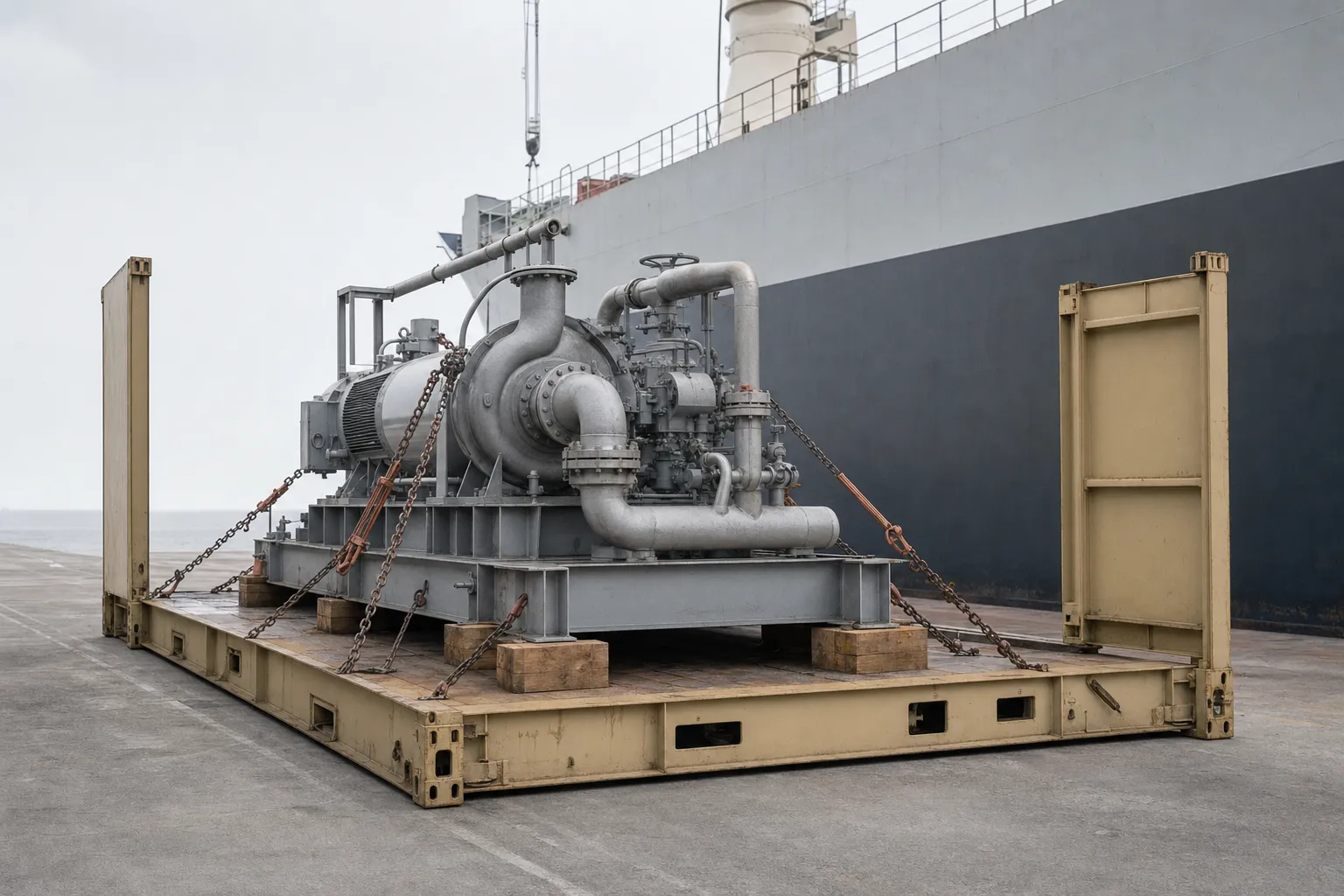
The number in the brochure is not the number that binds you
Ratings vary by maker, age and owner: the carrier's table describes a representative unit, yours is specific. The binding figures sit on the unit's CSC plate and in the booking confirmation, which can also move you: a unit that fits underdeck may be stowed on deck, where the ship — not the cell guides — sets the envelope. Then the floor: a rating assumes weight is spread, while a concentrated load can exceed what the deck takes long before the total does. Ask for the actual unit; fix the centre of gravity before crating.
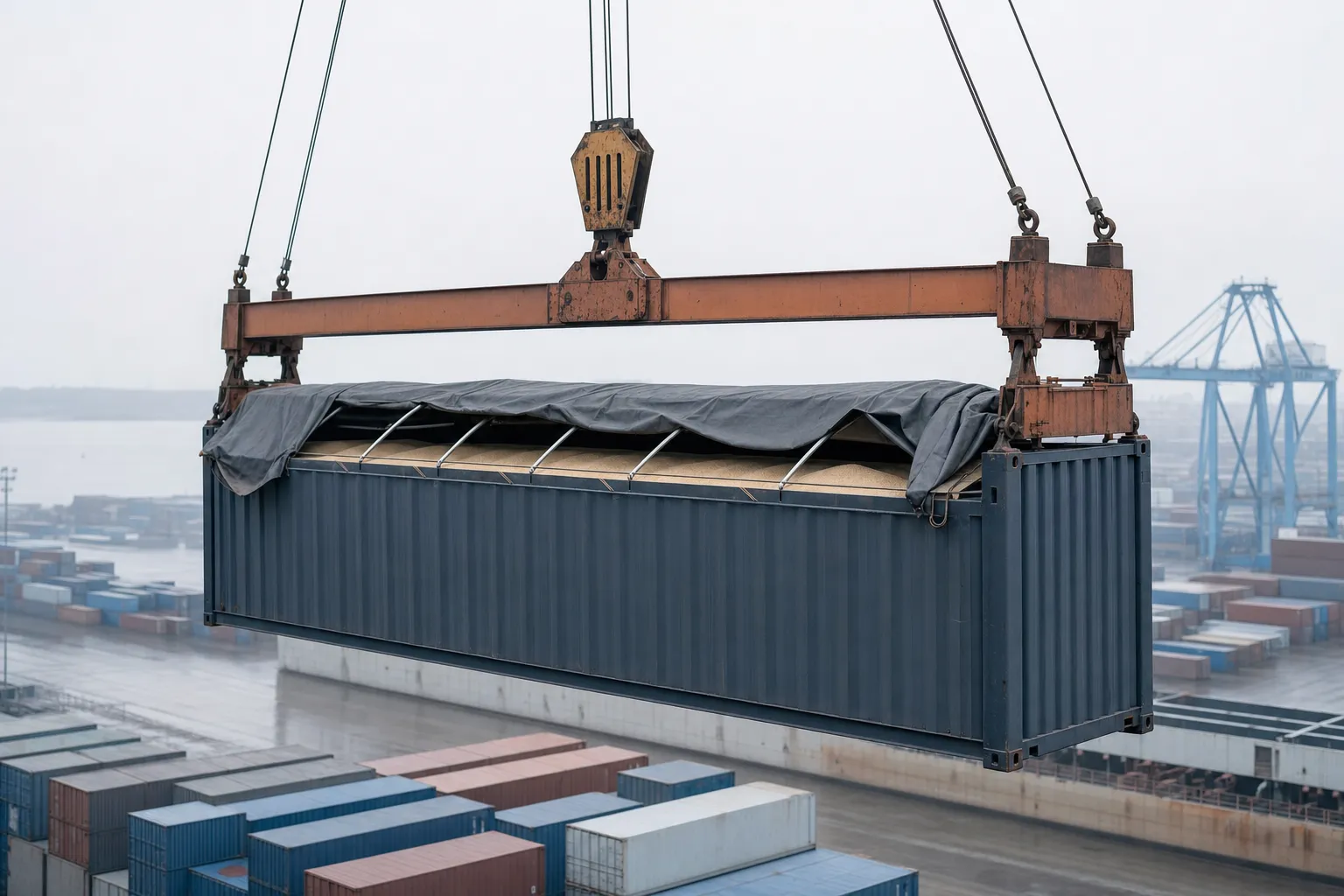
Weight is two questions: the box and the road
Every overweight discussion collapses two compliance questions into one. The second is where Indonesian shipments stall.
At sea, the question is verified gross mass. Under the SOLAS amendments in force since 2016, a packed container cannot be loaded without a VGM — weighed as a unit, or summed from components plus tare — and the shipper produces it. The IMO's summary settles one point: the VGM is a condition of loading, not an entitlement, and the master keeps discretion.
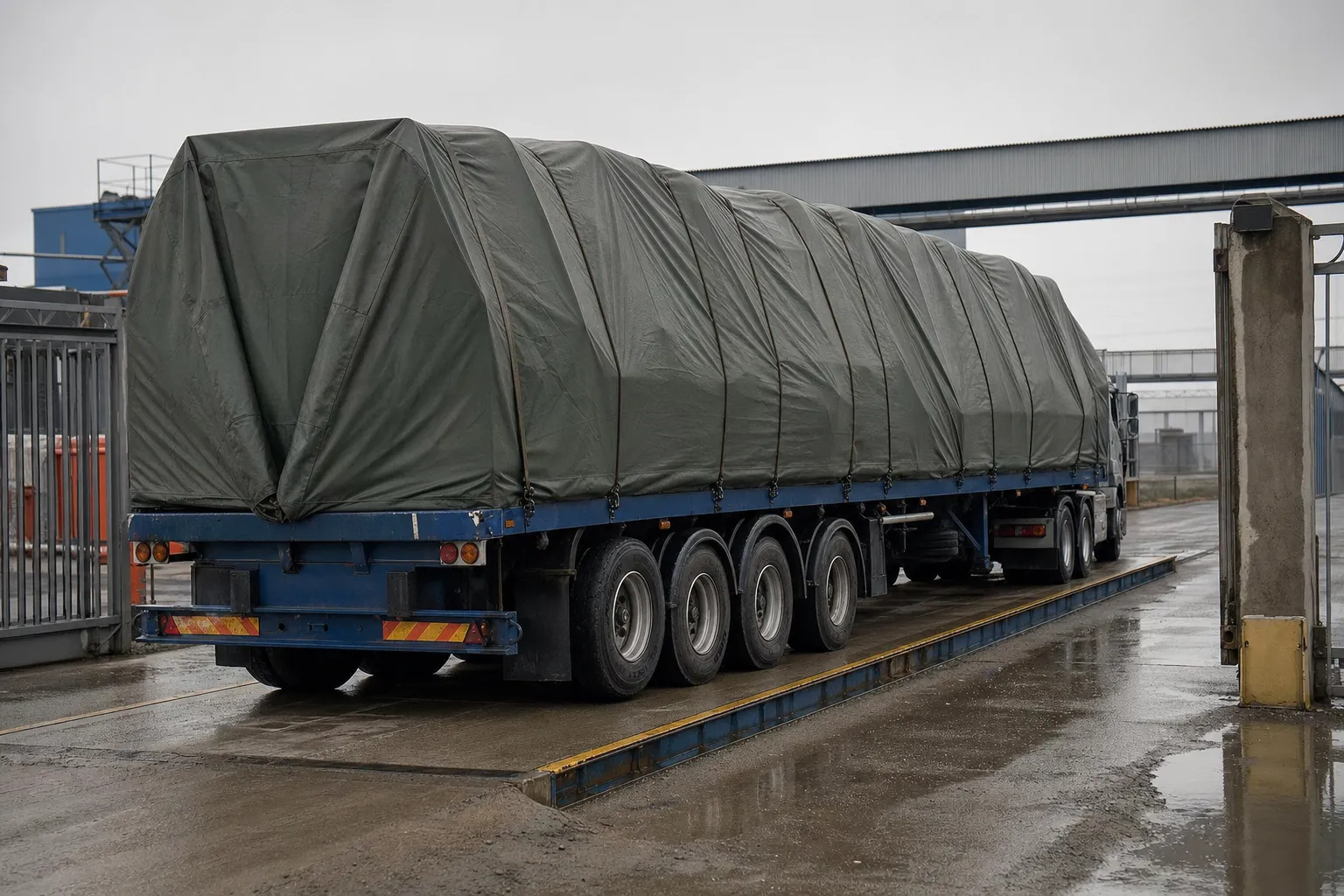
On the road, the question is axle load. Indonesia sets vehicle dimensions and permitted weights by road class under Law 22 of 2009, enforced at weighing stations. The transport ministry has run a Zero ODOL programme — over dimension, over load — for years, and the current posture is what to read. For a heavy indivisible load the question is not "how heavy" but "how is that weight spread across axles, on which trailer, over which route".
The two disagree: a container inside its VGM can be illegal on an Indonesian road, and a piece legal on the road can be refused at the gate. Choose trailer and route with the container, not after the vessel sails.
Securing is a design, not a habit
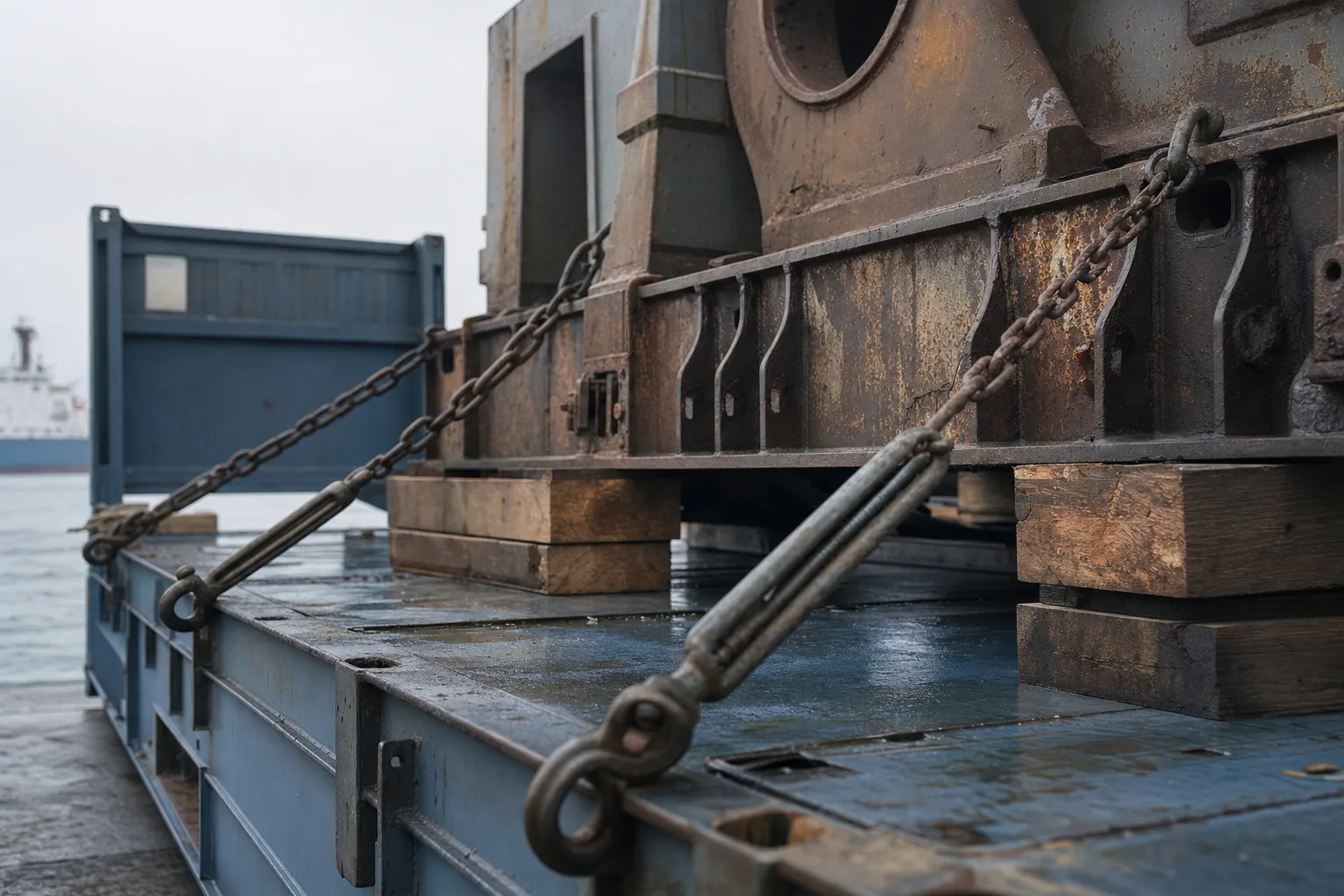
Out-of-gauge cargo is held by lashing and dunnage, measured against the IMO/ILO/UNECE Code of Practice for Packing of Cargo Transport Units — the CTU Code. Its division of responsibility is the part to internalise: the shipper secures the cargo in or on the unit, the carrier secures the unit to the ship. A badly secured flat rack is not the carrier's problem at the quay.
A securing plan answers five questions: where the load sits, centred, with the centre of gravity declared; what holds it down, at angles resisting fore-aft and lateral movement, each point's working load established; what stops lateral movement — dunnage, chocks, friction; what protects the lashing at each contact point; and who signs it off.
That last one changes outcomes. A marine surveyor attends project cargo and photographs the arrangement before it leaves the yard, and some carriers require approval before a flat rack travels with end walls down. Without that record, a shifted load becomes an argument about fault.
How out-of-gauge freight is built, not quoted
There is no rate card for this cargo, but the mechanism is how you sanity-check a quotation.
Out-of-gauge freight is rarely priced per box. It is built from components: equipment and availability on your lane; the space the unit occupies, which for over-width cargo may be more than one slot; the measurement basis — per unit, per cubic metre, per running metre; lashing material and labour; heavy lift at both ports; and the road leg, with trailer, route survey and any escort.
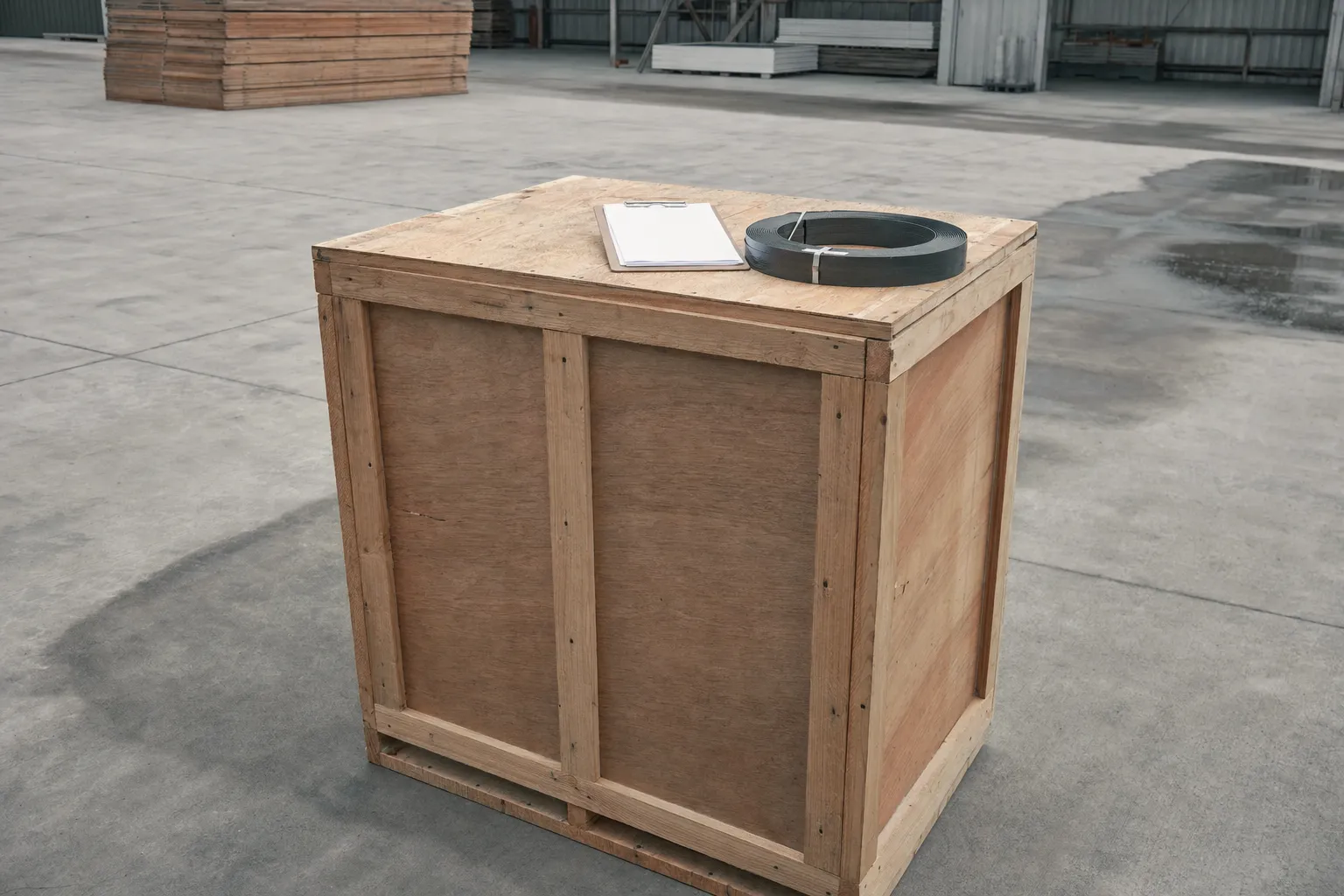
Two habits separate a quote from a revision. Declare dimensions as packed — crating and lashing protrusions included; the bounding box, not the machine. And record weight per piece: a total says nothing about whether any item can be lifted. Our guide to what CBM means covers the volumetric side; chargeable weight versus actual weight explains why the heavier or larger governs elsewhere.
Then ask of every quotation: what is the basis, and what would change it?
The document set has to describe one object
Most out-of-gauge problems at a port are documents describing three different objects, not cargo problems.
Document | Must state | Goes wrong when |
|---|---|---|
Packing list | Dimensions per piece as packed; gross weight per piece | Machine dimensions, not the crate; no per-piece split |
Cargo marking | Centre of gravity, lifting points, gross weight | Marks on the cargo absent from the file, or the reverse |
Shipping instruction | In-gauge or out-of-gauge with bounding dimensions | Declared in gauge because the form defaults to it |
Verified gross mass | The verified figure and the method | An estimate, or a figure arriving after cut-off |
Commercial invoice | Description and quantity the entry will repeat | Matching cargo, not the tariff line |
Packing list
Must state
Dimensions per piece as packed; gross weight per piece
Goes wrong when
Machine dimensions, not the crate; no per-piece split
Cargo marking
Must state
Centre of gravity, lifting points, gross weight
Goes wrong when
Marks on the cargo absent from the file, or the reverse
Shipping instruction
Must state
In-gauge or out-of-gauge with bounding dimensions
Goes wrong when
Declared in gauge because the form defaults to it
Verified gross mass
Must state
The verified figure and the method
Goes wrong when
An estimate, or a figure arriving after cut-off
Commercial invoice
Must state
Description and quantity the entry will repeat
Goes wrong when
Matching cargo, not the tariff line
A mismatch is not a fine at first. It is a terminal refusing to load, or a unit shut out because booked dimensions do not match what arrived at the gate — a safety decision taken by people who will not argue at the quay. Found at destination, the cargo joins the queue in our page on why cargo gets held at Indonesian customs.
Indonesia: the permit question is asked twice
On this route "permit" covers two unrelated conversations, and a shipment can pass one and stall on the other.
The permit about the goods is import control. Whether a tariff line is restricted is looked up line by line in Indonesia's National Trade Repository; where it is restricted, an Import Approval is issued to an Indonesian importing entity — not to the exporter, not to the forwarder. That layer has its own guides for machinery and steel. Here only sequencing matters: answer this before booking equipment, because a line that cannot be approved makes the flat rack irrelevant.
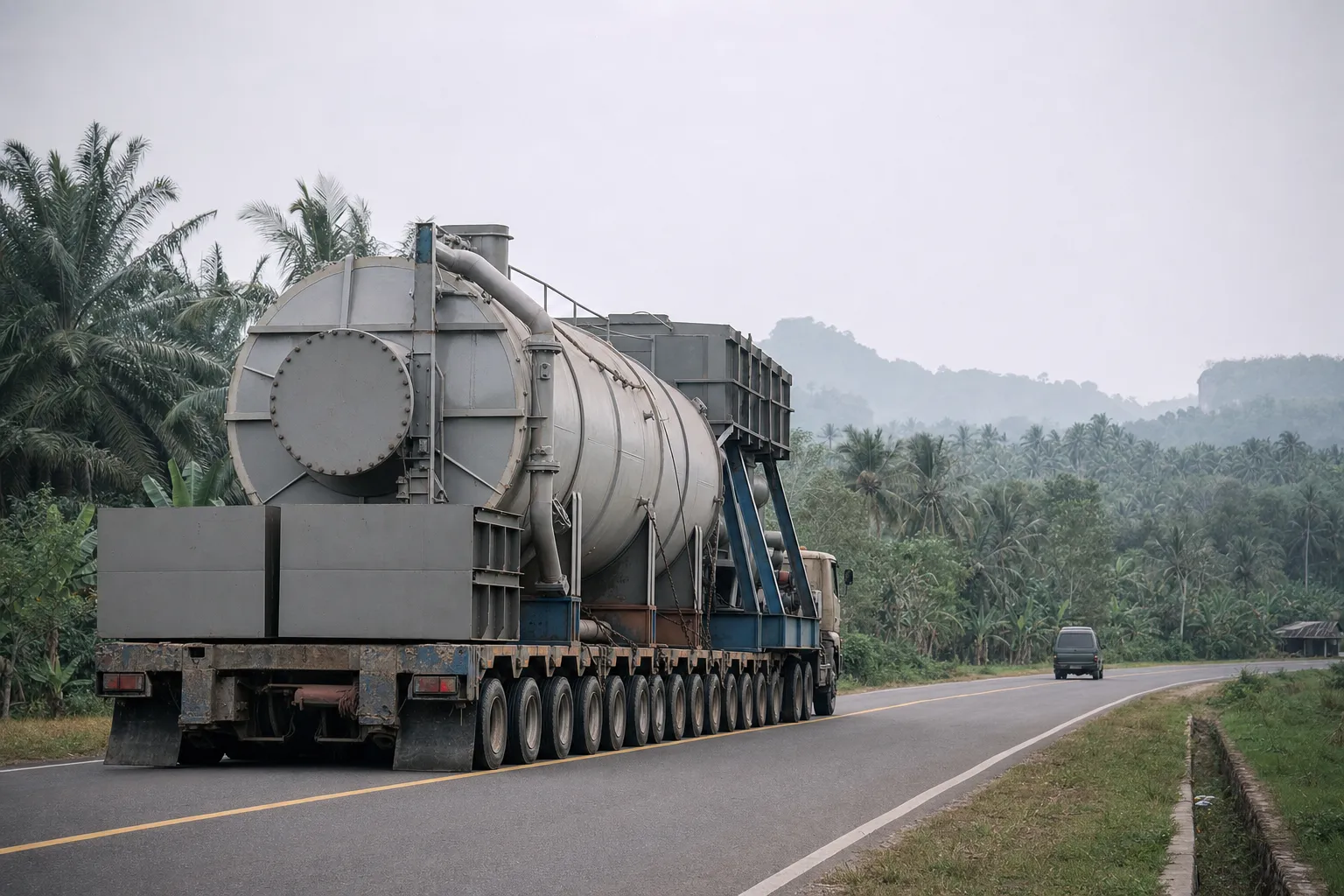
The permit about the truck is road transport. An over-dimension or over-weight load raises route selection, axle distribution, bridge and height clearances, travel windows and sometimes escorts — arranged with licensed local transport and the road authorities, and route-specific in a way no rate table settles. What can be settled early is the survey: the route from port to site, including the last kilometre into a plant, where gates, turning circles and ground bearing often constrain.
A port checkpoint, not a permit. Confirm the discharge port can handle the unit — crane capacity, yard space, receiving hours. Oversized cargo is often delivered direct rather than stored, so the truck must be there when the vessel is.
What to send at quotation time
A quotation is only as good as its input; this set makes a first answer possible:
- Dimensions per piece, as packed — crating, pallets, lashing protrusions, dunnage — plus lifting points and handling method.
- Weight per piece, the total, and the centre of gravity if marked.
- Photographs of the cargo and the packed unit. One image prevents three rounds of questions.
- Whether it can be dismantled — often the cheapest engineering decision in a project, and take it before crating.
- Origin and destination, plus site access: gate width, ground surface, whether a low loader can turn.
- The date window, and which end is fixed: vessel or site.
- The importing entity and its readiness, so the goods-side question runs in parallel.
What we coordinate, and what we do not decide
We assemble the file and organise the movement: checking cargo information, packed dimensions and weights, classification basis and transport documents against each other while the goods are at origin; booking special equipment and confirming what that unit is rated for; coordinating lashing and surveyor attendance; and coordinating with the licensed importer, its broker, and local transport.
We do not own the vessels, containers, terminals or trailers, and we do not issue permits, approvals or certificates — those are determined by carriers, terminals, road authorities and Indonesian regulators. We get the questions to the right party, in order, and make sure the file they judge agrees with itself.
This article sits in our cargo requirements hub, with the guides for goods that most often arrive out of gauge.
If a unit is coming that will not fit a box, send the packed dimensions, weight per piece and photographs through our contact page. We respond within two hours on working days, and a preliminary quotation normally follows within 48 hours of complete documents. Out-of-gauge movements are confirmed after review, because equipment and route must be checked before a number means anything.