
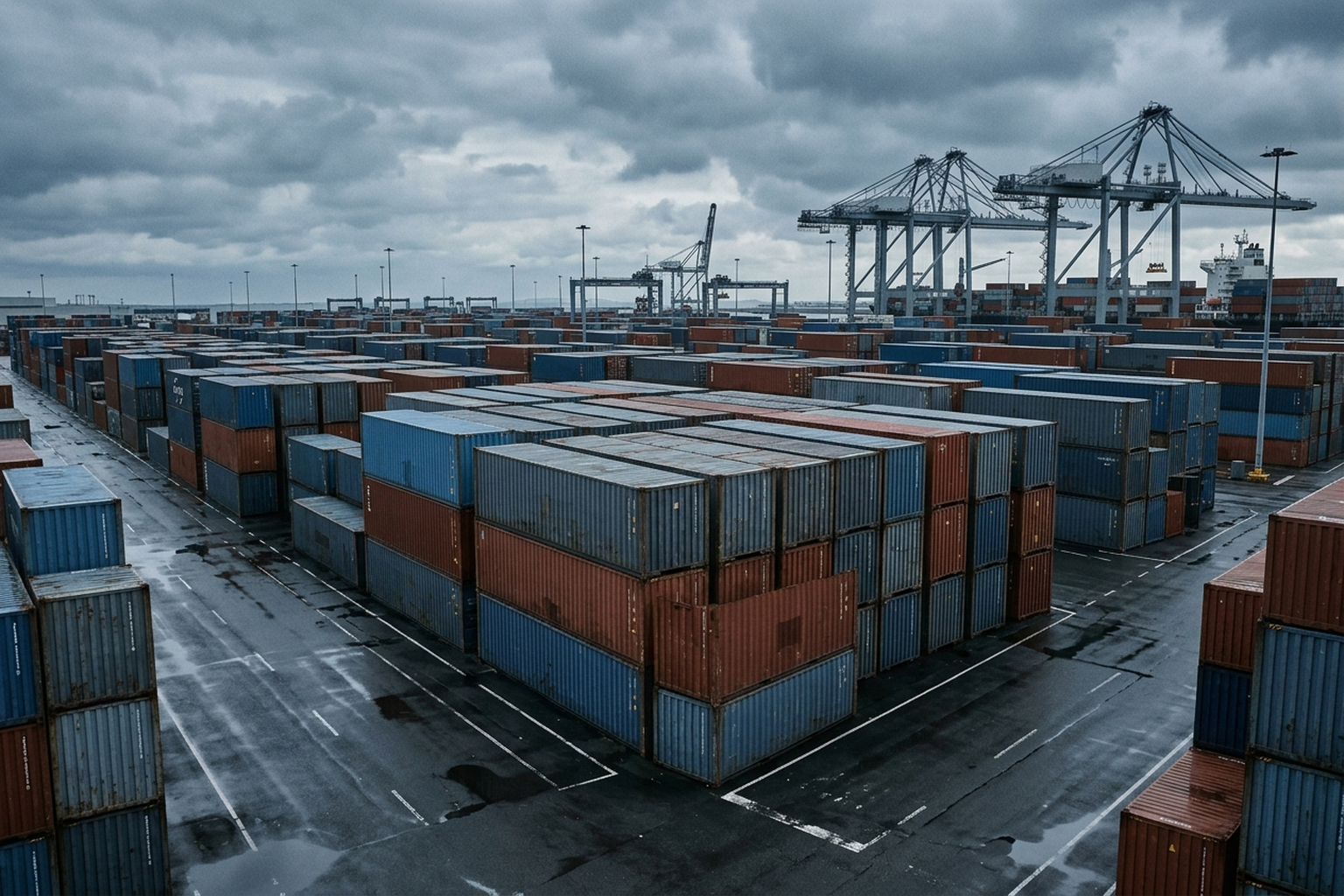
Container types in freight planning come down to three: the 20GP, the 40GP and the 40HQ. The letters describe what the box is, and the numbers describe how long it is. 20GP is a 20-foot general purpose container, 40GP is its 40-foot equivalent, and 40HQ is a 40-foot high cube that is taller by roughly 300 mm and holds about 8.6 cubic metres more. Which one is right is not decided by the size chart. It is decided by three things: whether your cargo physically goes in, whether the weight stays inside the box's payload limit, and whether the container can be handled at the destination.
Almost every shipment of general goods from China to Indonesia travels in one of those three boxes. Special equipment exists and matters, and this article covers when it becomes the answer, but the decision most importers actually face is between those three.
The examples in this article are illustrations. None of them is a customer case, and none of them is a quotation.
Container types: the three that carry most cargo
The naming looks cryptic and is not. Before you compare container types, it helps to read the code itself. The first part of the code is the container's nominal length in feet, which is an external measurement taken over the corner castings. The second part is the type.
GP stands for general purpose, which in everyday use is the same thing as a dry container: fully enclosed, steel, weatherproof, no temperature control. HQ stands for high cube, written just as often as HC. A 40HQ is a 40-foot high cube container; a 40HC is the same box, and the two spellings appear on the same quotation without any difference in meaning.
Two consequences follow from that naming, and both matter more than they look. First, the nominal length tells you nothing about the inside. Second, a "40-foot container" on a quotation can mean either the standard 40GP or the taller 40HQ, and the two do not carry the same weight. If a quotation says only "40ft", that ambiguity is worth resolving before you compare anything.
Standardisation is what makes this system workable across carriers and borders. The Digital Container Shipping Association's guide to container types sets out the type codes that identify each equipment family, and container owner codes are administered through the Bureau International des Containers, which keeps the international register behind the prefix painted on every box. Different types within the same family may still vary in weight and internal dimensions depending on the manufacturer, so the equipment specification matters more than the family name.
What the numbers on a container actually measure
A size chart is only useful if you know which surface each column refers to, and this is where most published charts stay silent. There are four different sets of measurements on any dry container, and only one of them sets what you can load.
20GP | 40GP | 40HQ | |
|---|---|---|---|
Internal length | 5.90 m | 12.04 m | 12.03 m |
Internal width | 2.35 m | 2.35 m | 2.35 m |
Internal height | 2.39 m | 2.39 m | 2.70 m |
Door opening (width × height) | 2.34 × 2.28 m | 2.34 × 2.28 m | 2.34 × 2.58 m |
Nominal capacity | 33.2 m³ | 67.7 m³ | 76.3 m³ |
Tare weight | 2,230 kg | 3,700 kg | 3,968 kg |
Maximum cargo weight | 21,770 kg | 26,780 kg | 26,512 kg |
Internal length
20GP
5.90 m
40GP
12.04 m
40HQ
12.03 m
Internal width
20GP
2.35 m
40GP
2.35 m
40HQ
2.35 m
Internal height
20GP
2.39 m
40GP
2.39 m
40HQ
2.70 m
Door opening (width × height)
20GP
2.34 × 2.28 m
40GP
2.34 × 2.28 m
40HQ
2.34 × 2.58 m
Nominal capacity
20GP
33.2 m³
40GP
67.7 m³
40HQ
76.3 m³
Tare weight
20GP
2,230 kg
40GP
3,700 kg
40HQ
3,968 kg
Maximum cargo weight
20GP
21,770 kg
40GP
26,780 kg
40HQ
26,512 kg
Figures are representative published values, rounded. The 20GP and 40GP columns and all three weight rows are as published in the container specification tables of a global freight forwarder; the 40HQ dimensions and capacity (12,032 × 2,350 × 2,700 mm and 76.3 m³) follow the equipment specifications carriers publish for their own high-cube fleet. Values vary by manufacturer and by individual box — the high cube is the type where published figures diverge most — so confirm the equipment the quotation assumes.
Four readings from that table are worth stating plainly.
The length you are buying is external. A 40-foot container gives you an internal length of about 12 metres, not 12.2, because the walls and the corner castings take the difference.
The door is smaller than the interior. Every box in the table has a door opening shorter than its internal height: the 20GP and the 40GP both lose about 110 mm, and the high cube loses about 120 mm of its extra headroom again. Cargo that just fits the inside dimensions may still not pass through the doorway, and that is a loading problem you find out about at the warehouse rather than at the quotation.
Weight and volume move in opposite directions as the box grows. A 40GP offers roughly twice the nominal capacity of a 20GP for a payload that is only a little larger. Put a dense cargo in and the 40-footer's extra volume is unusable, because you run out of permitted weight first.
The high cube trades payload for height. The 40HQ gives you about 300 mm more internal height and more than 8 cubic metres more volume than a 40GP, and its maximum cargo weight is slightly lower. It is not simply the bigger 40-footer. It is a different set of limits.
If your measurement vocabulary is still forming, the volume figures in this table are cubic metres, the unit freight pricing normally uses; our guide to how cargo is measured in CBM covers how that quantity is derived from a packed shipment.
Why nominal capacity is not what you can load
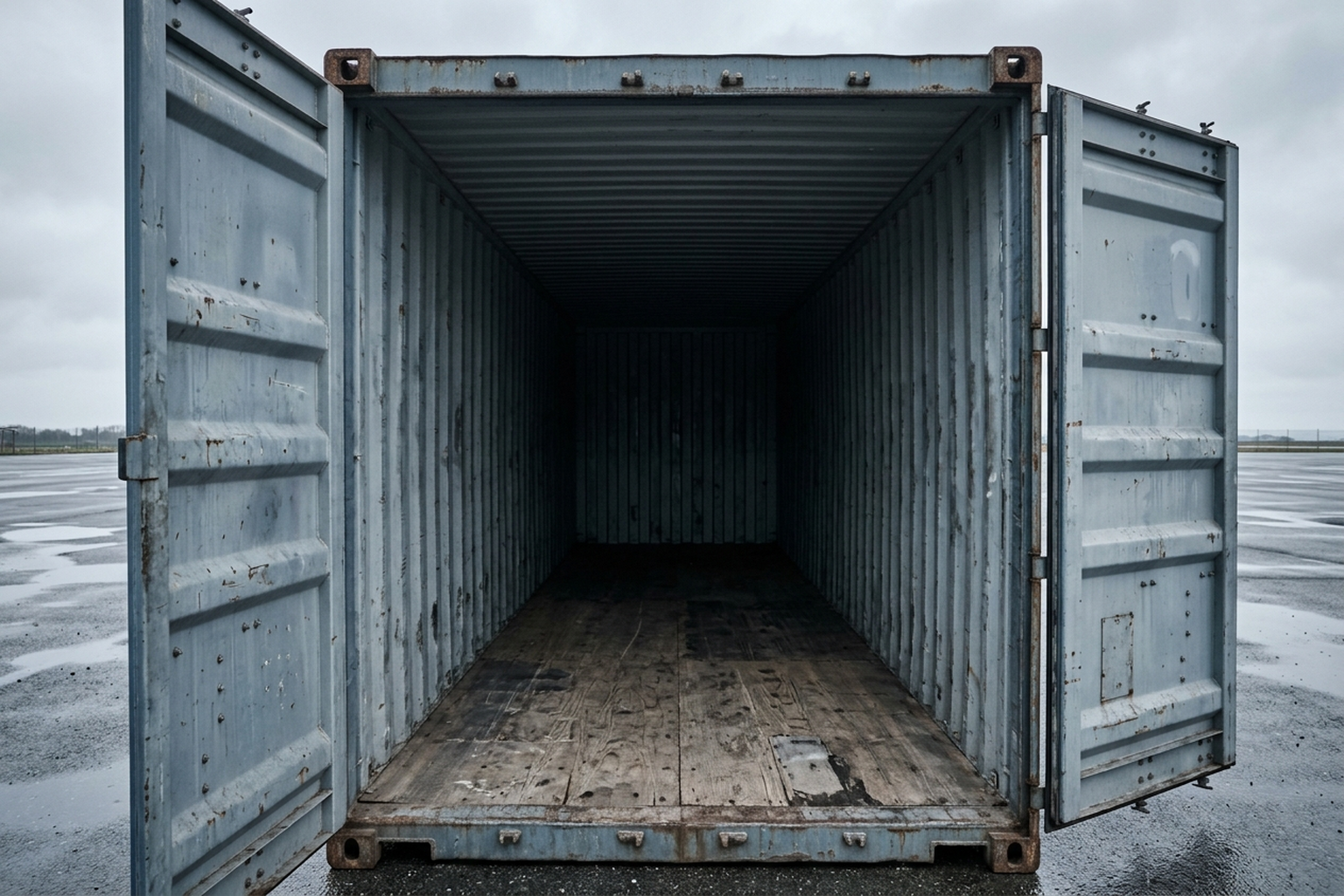
A 20GP is listed at 33.2 m³, and a shipper with 30 m³ of cargo will reasonably assume the box is nearly full when it is booked. In practice, palletised cargo fills only a part of that figure, and the gap is not caused by measuring errors.
Take a standard European pallet at 1,200 × 800 mm and the 20GP's internal floor of 5.90 × 2.35 m. As an illustration, not a customer case and not a quotation:
- Two pallets set across the 800 mm side take 1.60 m of the 2.35 m internal width. A third would need 2.40 m, so two across is the maximum.
- Along the 5.90 m internal length, pallets at a 1.20 m pitch give four rows, using 4.80 m. A fifth row needs 6.00 m and does not fit.
- Eight pallet positions remain. Their footprint is 7.68 m² of a floor that measures 13.87 m².
So the floor is barely more than half covered before height is considered. If each pallet is built to 1.10 m and the cargo allows a second layer, the stack reaches 2.20 m inside a box with 2.39 m of internal height, and eight positions double to sixteen pallets, around 16.9 m³. That is about half of the nominal figure. Without double stacking it is closer to a quarter.
Three things break the arithmetic further. The cargo has to be stackable, and a great deal of what China exports to Indonesia is not. The weight has to permit the second layer, which a dense product may not. And the door restricts the last few centimetres, because anything loaded through a 2.28 m opening is limited by that opening rather than by the 2.39 m ceiling behind it.
The receiving, sorting and consolidation work that happens before a container is loaded is described on our warehousing and bonded logistics page.
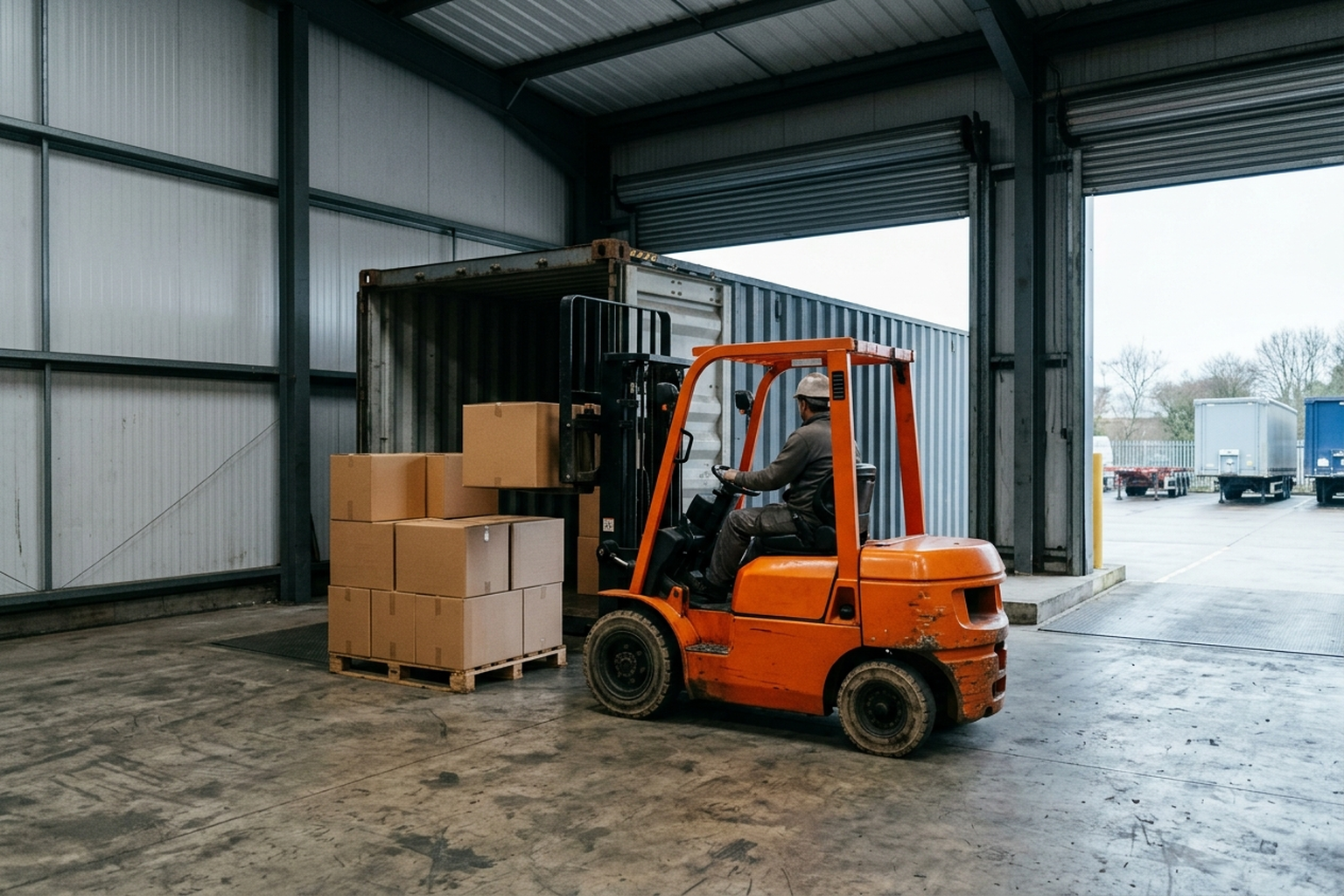
The useful habit is to measure your cargo as it will actually be packed, not as it was invoiced, then treat the nominal capacity as a ceiling that you will not reach.
Nominal capacity is what the box holds in theory. What you load is what survives the pallet grid, the stacking rule, the weight limit and the door opening.
The 40HQ trade-off that the spec tables leave out
Higher capacity figures send most shippers straight to the high cube. Before that decision, read the weight column again.
The 40HQ carries marginally less maximum cargo weight than the 40GP, while offering substantially more volume. The mechanism is worth stating: the two boxes share the same maximum gross weight, and the high cube's own tare is higher, so less of that gross weight is left for your cargo. The direction is the durable part rather than the number, because a carrier whose high cube carries a different tare or gross rating will publish a different payload figure. That is the whole trade-off in one line, and it decides the question for two different kinds of cargo.
Dense cargo — steel, tiles, stone, machinery parts, bagged materials — runs out of weight before it runs out of space. For these shipments the 40HQ's extra height is dead space you are paying to move, and the honest options are usually a 20GP, which puts 21,770 kg of payload in a much smaller box, or a 40GP used well short of full. Splitting a dense consignment across two 20-foot containers is a normal answer, not a failure of planning.
Light and bulky cargo — packaging, foam products, furniture, assembled goods, anything that is mostly air — hits the volume limit long before the weight limit. Here the 40HQ is the efficient box, and the height difference is what converts into usable cargo.
There is a third case that the tables never mention and it is the one most often missed. A 40HQ can swallow a stacked pallet that a 40GP cannot. A pallet built to 1.30 m stacked two high reaches 2.60 m, which fits inside the 40HQ's 2.70 m internal height and does not fit inside the 40GP's 2.39 m. If your supplier builds tall pallets and the cargo tolerates stacking, the high cube is not buying you the extra 300 mm as spare headroom. It is buying you a second layer.
For most general cargo moving to Jakarta, the 40HQ is a strong default. It becomes the wrong answer mainly when weight, not volume, is the binding constraint.
If your volume is far below a full container, no 40-foot box is the right answer and the comparison changes entirely; that half of the line is covered by our LCL sea freight service.
When a dry container is the wrong box
Dry containers are the default because they suit cargo that is boxed, palletised or bagged and fits through the doors. Four situations put your shipment outside that description, and in each one the answer is a different equipment family rather than a different size.
Overheight cargo that will not pass the door is loaded from the top in an open top container, which has a removable tarpaulin instead of a steel roof. The cargo still sits on a floor and inside walls, so weight limits stay broadly similar, but the roof has to be lashed back down and the box is handled differently at the terminal.
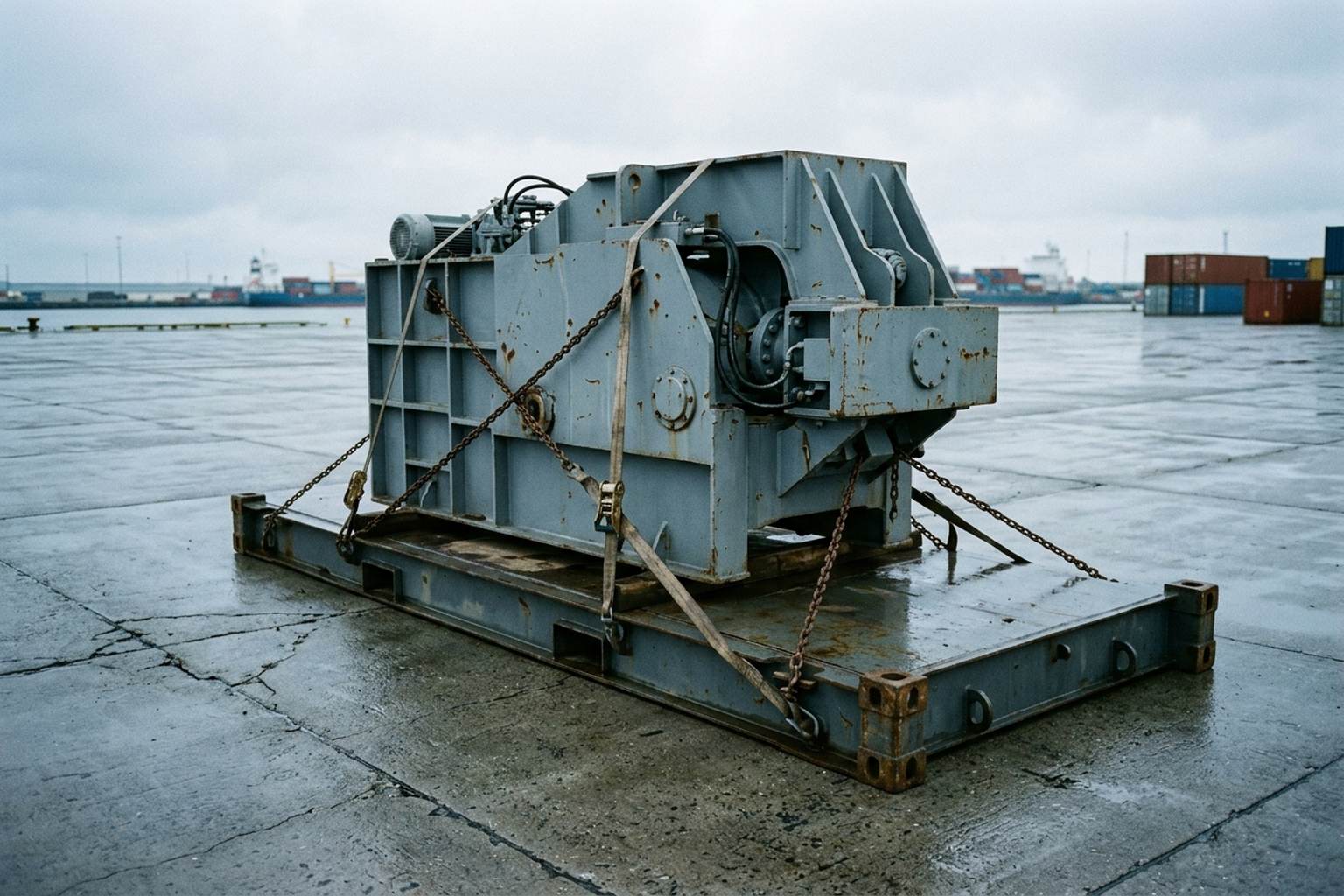
Oversized or extremely heavy pieces that exceed the internal width or cannot be lifted over a wall go on a flat rack, which is a platform with two end walls and no sides or roof. Loads extending beyond the box's outline are out-of-gauge cargo, and they change the booking rather than the packing.
Temperature-sensitive goods travel in a reefer, also called a refrigerated container, which has its own cooling unit and needs a power supply at every stage. Reefers are typically limited in the space you can use, because air has to circulate around the cargo.
Two further families round out the list, and neither is a different size of dry box: a half height container, whose internal height is roughly halved so that dense material can be dug out rather than lifted over a wall, and an open side container, which loads from the long side and therefore takes pieces longer than the doorway diagonal.
Liquids and gases in bulk, including many classified as dangerous, go into a tank container. As with all dangerous goods, the declaration and packing have to meet the applicable code before the cargo can be booked; the International Maritime Organization's dangerous goods programme is where the IMDG Code sits. Whether we can carry a specific classified product is decided by classification review on each shipment, not by general statements about a cargo category.
There is also a commercial version of this question. Incoterms 2020 determines where the handover sits and which party arranges and pays each leg, so the same container choice produces different costs depending on the rule and the named place in your contract.
What the container choice changes about cost structure
Container choice is treated as a technical decision and it is a commercial one as well. Three structural effects follow from the box you book, and none of them is about a rate.
Full container freight is quoted per container, not per unit of volume. A 20GP and a 40HQ are both one container, so the cost of moving them sits in the same structural category even though the volumes differ substantially. The figures themselves differ by equipment type and by trade lane; what the two share is the basis of the quotation rather than its level. That is why the cost per cubic metre falls as a container is filled, and why a half-empty box is expensive in a way that never appears on the invoice as a line item.
Special equipment carries more handling, quoted separately. An open top or a flat rack adds operations that a standard box does not need: different lifting equipment, securing of an out-of-gauge load, and often a separate booking process. These are normally quoted as a distinct scope, not bundled into an all-in figure.
Weight and dimensions can add charges of their own. Cargo that pushes a container past a permitted weight, or beyond the box's outline, sits outside the ordinary scope. The discipline is to know before booking whether your shipment is inside or outside it, because discovering it at the terminal is when it becomes expensive.
Two softer effects are worth as much as the hard ones. The type of box you book determines how many times the cargo is handled between the factory and the vessel, and each handover is a chance for damage and documentation mismatch. It also sets the rhythm of the container's free time at the destination: a box that cannot be unpacked quickly accrues charges that have nothing to do with the freight you were quoted. Free time, what follows it and who bears it are set out in the booking terms, so ask for the free-time and demurrage terms in the booking confirmation before the container sails.
The destination end of the choice
The container type decision is usually made entirely at the origin, against cargo that is already packed. The costs of getting it wrong surface at the other end.
Jakarta cargo is handled at the container terminals around Tanjung Priok before it moves inland. From that point the shipment stops being a box and becomes a delivery, and the questions change. What vehicle can reach the delivery address, and can it carry the load? Is there a forklift or a crane at the receiving end, and does it reach high enough to unload the second layer of a stacked container? Is the access road suitable for a container truck, and are there delivery windows at the site?
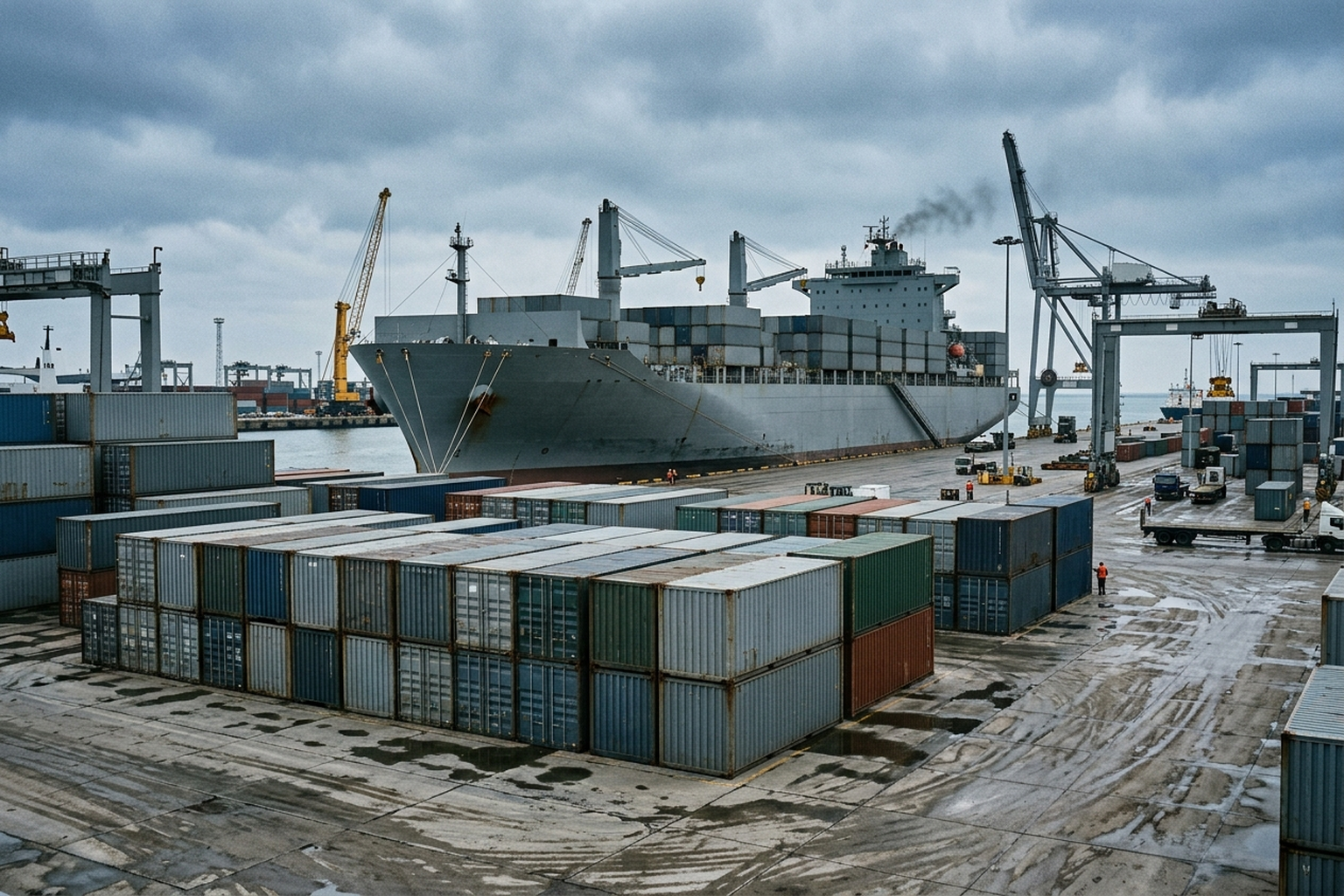
A 40-foot container on a chassis takes more road space and reaches more weight than a 20-footer. If the last leg is a narrow street or a lightly built yard, that constraint can decide the container type more firmly than anything on the cargo side. A second layer that has to be lifted out by hand at the destination is not the saving it looked like at the factory.
On the Indonesian import side, we coordinate with local resources rather than acting as the importer: our role is to coordinate the clearance steps and the inland movement so that the container leaves the terminal against a plan rather than a queue. Delivery beyond the Jakarta area is arranged per shipment through the available network, and it is settled when the route is confirmed rather than assumed from the box type.
Timing reference points from our own operations are sea and consolidated sea freight at roughly 15–25 days, excluding public holidays and red-flag clearance periods. On the clearance side, a green-lane release typically allows delivery to be scheduled within about three working days, while a red-lane inspection reserves about five to seven working days. These are reference points for planning rather than per-shipment promises, and they are not affected by which container type you book.
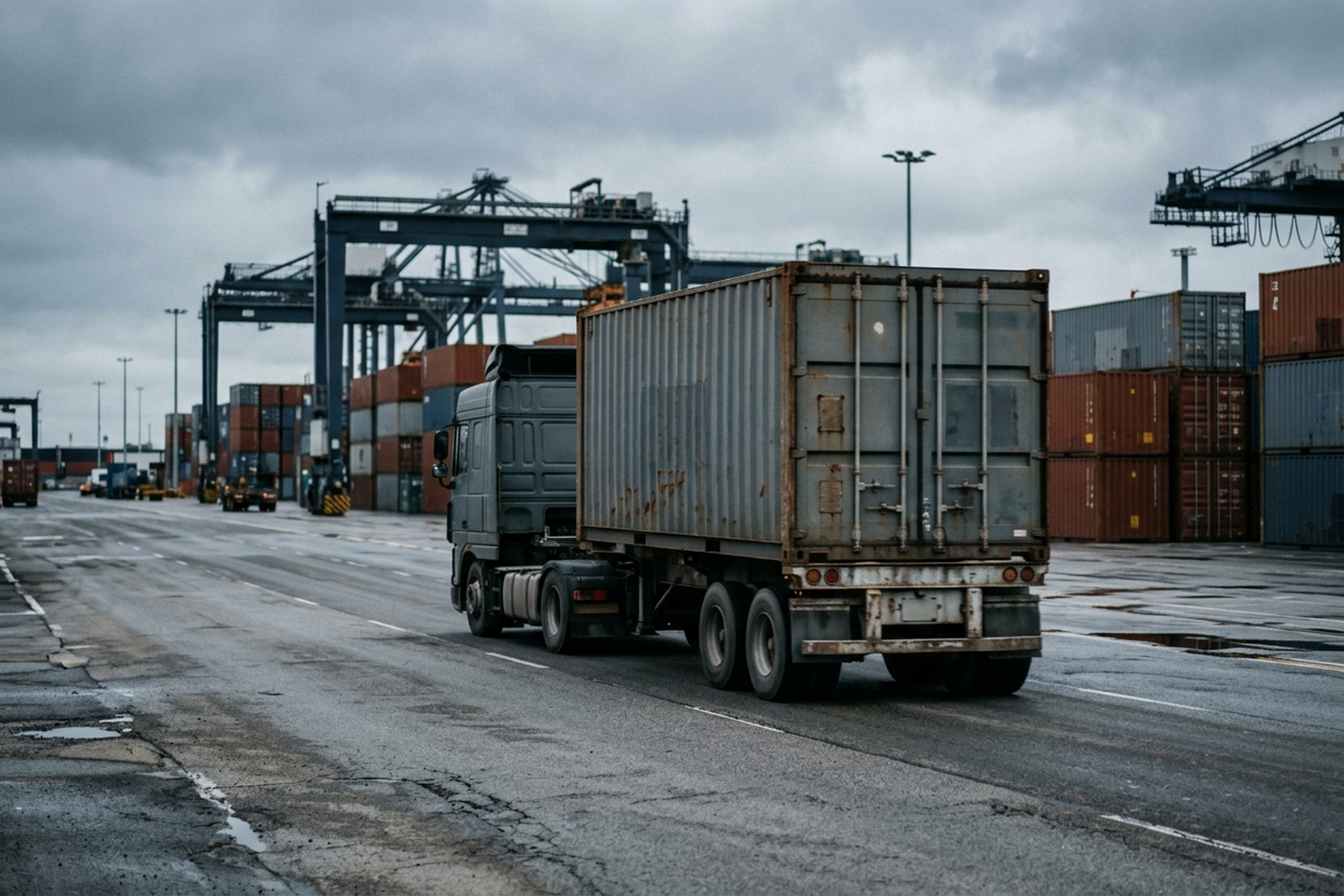
Inland movement is the constraint that turns a container type decision into a delivery plan, and our Indonesia inland transport page sets out how that leg is organised.
Running the three checks on one shipment
The method is short enough to write down and use on your next shipment.
As an illustration, not a customer case and not a quotation: an importer is moving household goods from Guangzhou to a warehouse in Jakarta, packed onto 26 pallets built to 1.10 m, with a total gross weight of 6,800 kg. The pallets measure about 27 m³ once built.
- Does it go in? 26 pallets at 1.20 × 0.80 m need 13 floor positions once they are stacked two high. A 20GP offers only eight positions, so the pallet count by itself removes the 20-foot container; a 40-foot floor offers twenty positions and takes the load with room to spare. The packed volume of about 27 m³ sits comfortably inside a 40GP's 67.7 m³, which is the useful lesson here: in this shipment the pallet footprint is the binding constraint, not the cubic metres. The cargo is not overheight and passes through the door opening.
- Does the weight allow it? At 6,800 kg gross the shipment is nowhere near the payload of any of the three boxes, so nothing here rules out the larger container. Bulk, not mass, is the limit — a light-cargo profile.
- Can the destination take it? The delivery address and the receiving equipment decide. If the warehouse has a forklift and access for a 40-foot vehicle, the larger box is the efficient answer. If the final approach cannot take a 40-footer, the workable alternative is two 20-foot containers, at the cost of handling the whole load twice and booking two slots instead of one.
Step 3 changed the recommendation, and it is the step that most quotations never ask about. The same shipment could reasonably be quoted as a 40GP, a 40HQ or a pair of 20-footers, and only the third check separates them.
The check order matters: eliminate on the physical constraint, then on weight, then on the destination. Answering them in the other order produces a box that loads easily and cannot be delivered.
Before you go further up the chain, be clear on where container choice sits. It is a decision inside sea freight; whether sea freight is the right mode at all is a separate question, which our comparison of sea and air freight covers. The forwarding scope that ties the booking, the clearance and the delivery together is set out in our international freight service.
Container types: questions we get asked
Is a 40HQ the same as a 40HC?
Yes. HQ and HC both stand for high cube and describe the same 40-foot container, which is about 300 mm taller internally than a standard 40-footer. Both spellings appear on quotations and booking confirmations, and some carriers write the ISO type code instead, where the last two characters identify the type rather than the size.
What is the difference between 20GP and 40GP?
The 20GP is a 20-foot general purpose container with a nominal capacity of about 33 m³ and a payload near 21,770 kg. The 40GP is its 40-foot counterpart at about 68 m³ with a payload near 26,780 kg. The 40-footer roughly doubles the volume while adding only a modest amount of carrying weight, which is why dense cargo often suits the 20GP better.
How many CBM does a 40-foot container hold?
No single container size chart tells you this, because the answer is not a container property: a 40GP is listed at 67.7 m³ and a 40HQ at 76.3 m³ of nominal capacity, and neither figure is what a palletised shipment will actually load. Practical loading depends on pallet footprint, stackability and whether a second layer is possible, and the arithmetic in the sections above shows how far the usable volume can sit below the nominal one.
Is a 20GP or a 40HQ better for my cargo?
They solve opposite problems, which is why the question has no single answer. A 20GP is the better box when the cargo is dense, because it carries almost as much weight as a 40-footer in about half the volume. A 40HQ is the better box when the cargo is light and bulky, or when a stacked pallet needs the extra internal height that a 40GP lacks. If your shipment has already outgrown a 20GP's eight pallet positions but is too light to approach a 40-foot payload, the choice between the two is decided by the destination rather than by the cargo.
When should I use a 40HQ instead of a 40GP?
When your cargo is light and bulky, or when a stacked pallet needs the extra internal height. The clearest signal is a pallet built to around 1.30 m: two layers reach 2.60 m and fit inside a 40HQ but not inside a 40GP. If your cargo is dense enough to approach the weight limit first, the high cube is the wrong box and a 20GP or 40GP is the better answer.
What is a TEU?
A twenty-foot equivalent unit. It is a measure of capacity rather than a container you can book: one 20-foot container is one TEU and one 40-foot container, of any height, counts as two. Carriers, terminals and analysts quote volumes and capacity in TEU, so the figure you will meet in most market reporting is a count of 20-foot-equivalents, not a description of the boxes your cargo will travel in.
Do I have to specify the container type when I book?
You should, or your quotation should. "40ft" alone does not say whether the rate is for the standard 40GP or the taller 40HQ, and the two differ in both volume and payload. Name the type, and ask the provider to confirm the equipment the quotation assumes.
What about container dimensions I find online?
Published tables are indicative. Internal dimensions, tare weight and payload vary between manufacturers and between individual boxes, and a container's history of repairs can shift its tare weight. Treat any published figure as a planning number and ask for the equipment specification behind a quotation. More guides on container, freight and delivery decisions are collected in the freight planning section.
Deciding your own container type
Write down three answers before you compare anything: the packed volume and how it can be loaded, the gross weight against the payload limit, and what the delivery address can physically receive. Then ask for the container type that survives all three, and ask the provider to name the equipment the price assumes.
The decision is rarely about which box is largest. It is about which constraint binds first, and the answer changes from shipment to shipment, which is why a size chart alone will not settle it. Run the three checks in order and the container types sort themselves out. When the three answers are in hand, our team can confirm the container type and the door-to-door scope for a China–Indonesia shipment on those figures.