
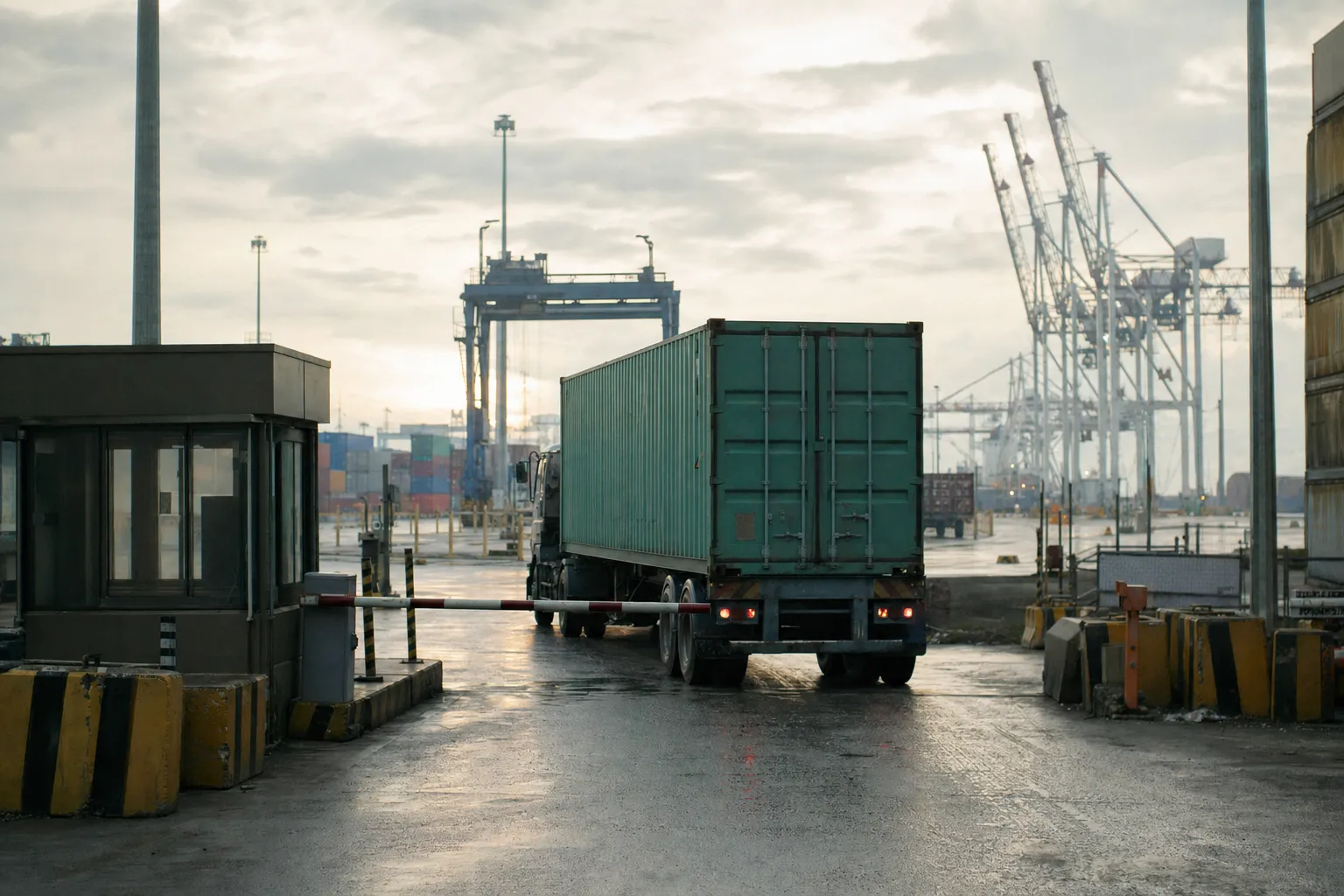
The release notice arrives on a Thursday afternoon. The container has been sitting in the terminal since the vessel berthed, and until that notice existed there was nothing anyone could legally do with it. Now there is. The forwarder sends the release across, the importer forwards it to a colleague, the colleague asks which truck is coming — and nobody has an answer, because the truck was never booked.
Nothing dramatic happens next. The container simply stays where it is, and the terminal keeps counting. When the invoice eventually arrives, it is itemised as storage, demurrage, or "port charges", and by then every decision that caused it is several weeks in the past.
That is the specific failure this page is about. Port storage charges are usually discussed as a pricing question — rate per container per day, whose tariff applies, whether free time can be extended. Almost every page ranking for the phrase publishes a table of rates. Very few explain the part you can actually control: the sequence of decisions that has to be finished before the release notice lands.
This page quotes no prices. It contains no rate, tariff, tax figure, percentage, free-time count, compensation amount or promised deadline, and every situation described is hypothetical: these are not client cases and they are not quotations. Which charges apply, who bears them and how long free time runs are decided by the terminal tariff, the carrier's contract and the terms you agreed — never by this page. Nor is it legal advice: the customs procedure described below is stated as at November 2026, and the procedure that governs your shipment is the one applied to your declaration.
Port storage charges are a planning failure before they are a cost
Port storage charges are rent. They are billed because cargo occupied space somebody else could have used, for longer than the arrangement allowed. The amount is set by a tariff you did not write, on a clock you did not start, and it is almost always avoidable — not by arguing afterwards, but by having the next step ready before the clock begins.
One clock is running and one window opens, and confusing the two is what produces the invoice. The clock is the terminal's occupancy count, which usually starts once the container has been discharged and is available for collection. The window is the part you control: from the moment the box could have moved to the moment it did, which on the Indonesian route opens at customs release, the moment the goods may leave the customs area. What release changes is not the clock but whether anyone can act on it.
The trade has a name for the whole interval — dwell time — and the only part of it you control is the part you arranged before the vessel arrived.
The release document is a permission, not a pickup
Under the Indonesian import procedure, goods can be removed from the customs area — or from a temporary storage place treated as one — only after the release approval has been issued by the customs officer or by the customs service computer system. The approval is the SPPB; where a physical inspection is carried out at the importer's premises, the inspection order (SPPF) plays the equivalent role. The official description, including the green-channel and red-channel difference, is on the Directorate General of Customs and Excise site (Bea Cukai, Impor Untuk Dipakai).
Two consequences follow, and both are routinely missed.
The first is that the release date is decided upstream, not at the gate. It is a function of the declaration (see what a PIB actually is), of which channel the declaration is routed to (see green line versus red line), and of whether the documents agree with each other. If the packing list, the invoice and the declaration describe the cargo differently, the red channel is where the time goes, and no amount of truck booking fixes it.
The second is that an SPPB permits removal; it does not arrange it. Between the approval and the box leaving the terminal there is a separate queue that customs has nothing to do with: the delivery order that releases the cargo from the carrier's control, the terminal operator's account, the haulier's slot, and a receiving site that will accept the cargo. The release notice opens the first gate; the other three conditions in the next section still have to be met.
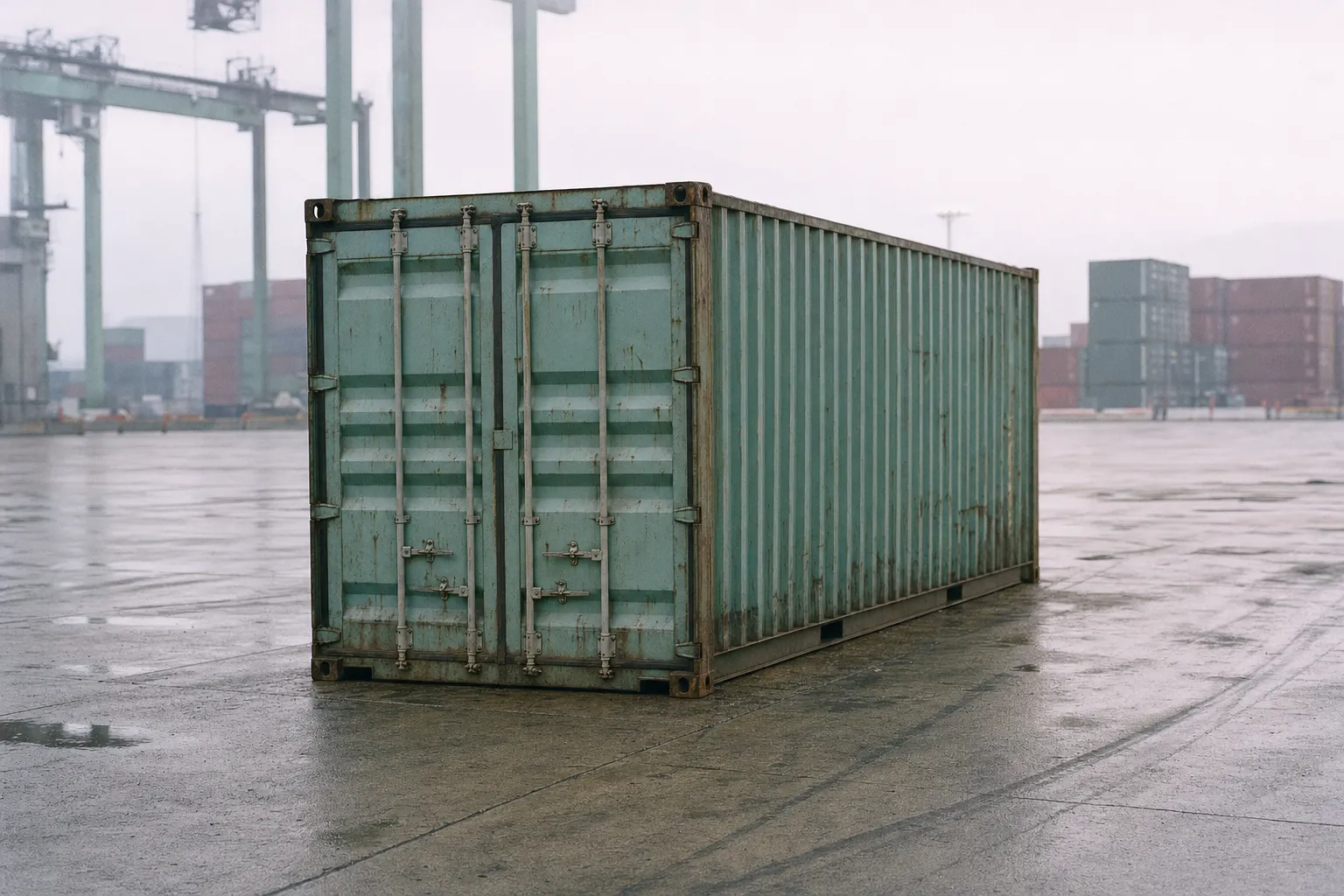
Illustrative photograph. It does not show a client shipment, a client facility or any operator's equipment.
Four conditions, and only one of them belongs to customs
Delivery after release is not one task. It is four conditions that have to be true at the same time, held by four parties. When one is missing, the container does not move, and the period of immobility is what gets billed.
Condition | Held by | What happens when it is missing | Evidence to have on file |
|---|---|---|---|
Release issued | Customs, through the declaration filed by the importer of record and its broker | The box cannot leave the customs area at all; nothing else in this table matters yet | SPPB or SPPF number and date; the declaration it refers to; the consignee named on it |
Terminal account settled | The party the operator bills, per your commercial terms | The gate will not process the removal, and the occupancy continues to accrue | The operator's statement or invoice; proof of payment; the name the account is held in |
Truck and slot nominated | Whoever arranges inland haulage on your side | The slot lapses, the haulier re-queues, and the queue is not the same length the second time | Slot confirmation; vehicle plate; driver identity; the address the driver is told to go to |
Receiving site ready | The consignee or the end user | The box is collected and then waits again — this time on your premises, or on the haulier's | Dock hours; unloading equipment and crew; any site permit; who signs for the cargo |
Release issued
Held by
Customs, through the declaration filed by the importer of record and its broker
What happens when it is missing
The box cannot leave the customs area at all; nothing else in this table matters yet
Evidence to have on file
SPPB or SPPF number and date; the declaration it refers to; the consignee named on it
Terminal account settled
Held by
The party the operator bills, per your commercial terms
What happens when it is missing
The gate will not process the removal, and the occupancy continues to accrue
Evidence to have on file
The operator's statement or invoice; proof of payment; the name the account is held in
Truck and slot nominated
Held by
Whoever arranges inland haulage on your side
What happens when it is missing
The slot lapses, the haulier re-queues, and the queue is not the same length the second time
Evidence to have on file
Slot confirmation; vehicle plate; driver identity; the address the driver is told to go to
Receiving site ready
Held by
The consignee or the end user
What happens when it is missing
The box is collected and then waits again — this time on your premises, or on the haulier's
Evidence to have on file
Dock hours; unloading equipment and crew; any site permit; who signs for the cargo
Read the third and fourth rows together: they are where the plan usually fails. A container can be released, paid for and collected, and still generate a second charge because the factory gate closes at noon, the forklift is broken, or the site cannot take a container-sized vehicle. The clock does not care whose fault it is.

Illustrative photograph. It shows generic haulage equipment, not a client vehicle or a client load.
Free time is a contract term, not a courtesy
The free period — the window before charges begin — is not universal and not fixed. It comes from the arrangement between the parties: the carrier's tariff and the contract of carriage for the container, the terminal operator's tariff for occupancy of the terminal, and the warehouse or freight station tariff where loose cargo is stored. Where a shipment is consolidated, the storage arrangement is usually a station tariff applied to the cargo itself rather than to a container.
The useful industry distinction is between demurrage and detention, and it is worth holding onto because it splits one confusing bill into two clocks. Demurrage relates to time inside the terminal, from discharge until the container is gated out. Detention relates to time outside the terminal, from collection until the empty is returned. Free time is the allowance attached to each. The carrier-side explainer from Maersk sets the split out plainly (Maersk, What is demurrage and detention in shipping).
Three practical points follow.
- The free period that matters is the one written into your booking, for this container, at this terminal, for this cargo type. A figure remembered from another shipment, or quoted on a forum, is not a fact about your shipment.
- Ask when the clock starts, not just how long it is. A free period measured from discharge and one measured from the release notice describe different amounts of usable time — the gap between them is exactly the period you cannot control.
- A combined allowance is not extra time. Where the same allowance covers the terminal period and the empty-return period, spending it at the terminal spends it everywhere. This is the single most common way a shipment that looked comfortable becomes a claim.
Where delivery plans break
Five failures account for most of the storage billed on this route. None are exotic, and all are visible before the vessel arrives.
Failure | How it appears | What prevents it |
|---|---|---|
The release lands after the last slot of the week | Approval issued on a Friday afternoon, with the terminal gate and the haulier already closed | Knowing which channel the declaration is likely to take, and holding the next available slot explicitly instead of assuming same-day collection |
The release names a different party from the one collecting | Four entities — declaration, terminal account, receiving site, bill of lading — that do not match | Settling who the importer of record is and who instructs the haulier before the cargo sails |
The documents disagree, and the release becomes an inspection | A mismatch that can only be answered by looking at the cargo, which consumes the terminal's time as well as yours | Checking packing list, invoice and declaration against each other early; the mechanics are in why cargo gets held at Indonesian customs and in the customs inspection FAQ |
The destination is agreed but the site is not ready | A truck arriving at a gate that cannot take it, at an hour nobody staffs | Confirming vehicle access, hours, unloading equipment and the signing party when the delivery is quoted, not when it is due |
Nobody has authority to pay at the gate | Custody held while an invoice waits for approval in another time zone | Naming the payer for each destination-side charge in the booking, not after the event |
The release lands after the last slot of the week
How it appears
Approval issued on a Friday afternoon, with the terminal gate and the haulier already closed
What prevents it
Knowing which channel the declaration is likely to take, and holding the next available slot explicitly instead of assuming same-day collection
The release names a different party from the one collecting
How it appears
Four entities — declaration, terminal account, receiving site, bill of lading — that do not match
What prevents it
Settling who the importer of record is and who instructs the haulier before the cargo sails
The documents disagree, and the release becomes an inspection
How it appears
A mismatch that can only be answered by looking at the cargo, which consumes the terminal's time as well as yours
What prevents it
Checking packing list, invoice and declaration against each other early; the mechanics are in why cargo gets held at Indonesian customs and in the customs inspection FAQ
The destination is agreed but the site is not ready
How it appears
A truck arriving at a gate that cannot take it, at an hour nobody staffs
What prevents it
Confirming vehicle access, hours, unloading equipment and the signing party when the delivery is quoted, not when it is due
Nobody has authority to pay at the gate
How it appears
Custody held while an invoice waits for approval in another time zone
What prevents it
Naming the payer for each destination-side charge in the booking, not after the event
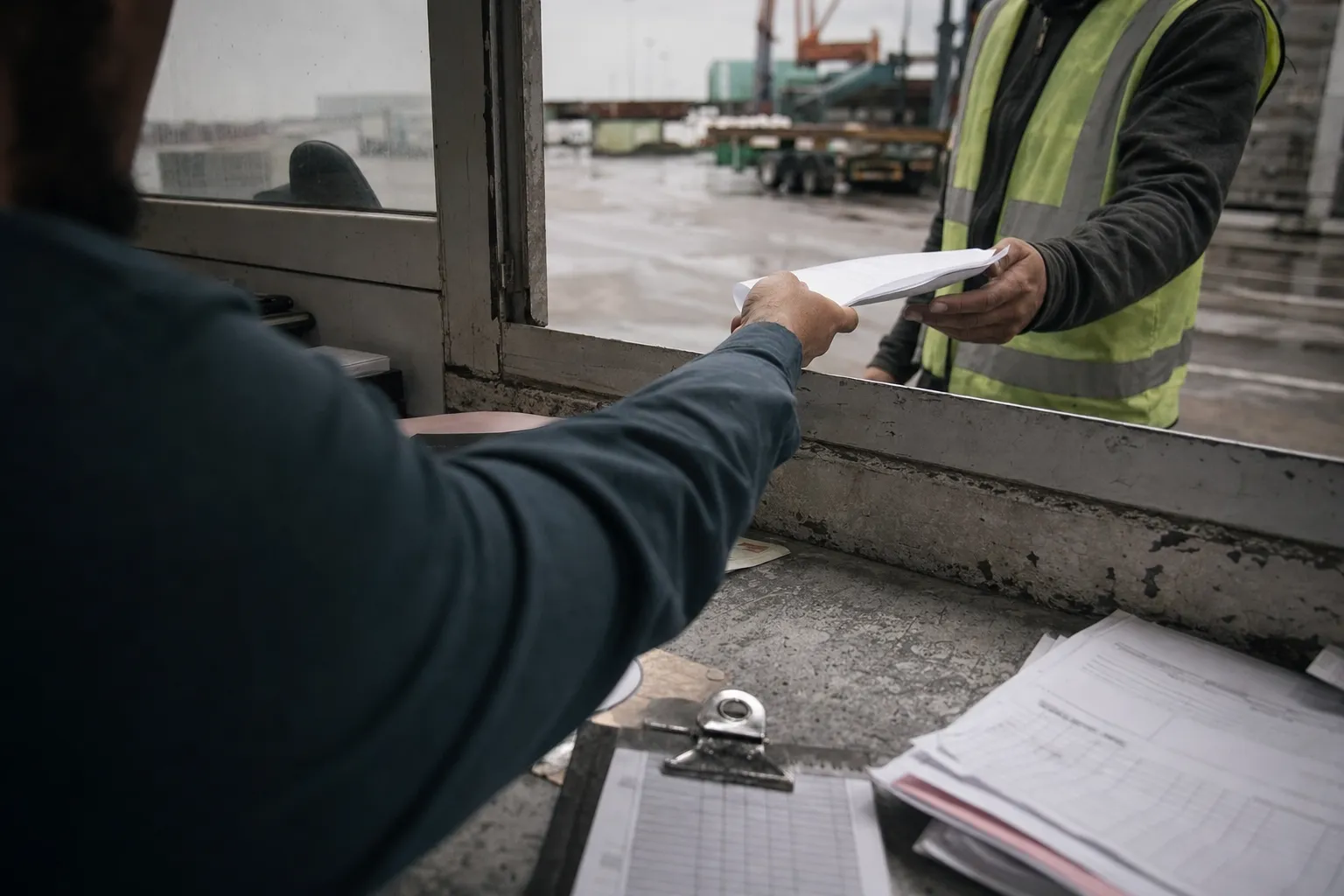
Illustrative photograph. It does not depict a client transaction, a named operator or a real document set.
The sequence to write down before the vessel arrives
The plan can be a single page, as long as each line has an owner and a trigger, and none depends on a document that does not exist yet.
- Name the four parties. Consignee on the declaration, importer of record, the party the terminal will bill, and the party receiving the cargo. If any two of them differ, write down who instructs whom.
- Confirm the delivery point physically, not just its address. Vehicle access, gate hours, unloading equipment, storage space at the destination, and the name of the person who signs.
- Choose the exit route deliberately. Direct delivery from the terminal is one route. Stripping at a freight station and delivering loose cargo is another. Moving the goods into a bonded logistics centre and deferring the duty point is a third — the mechanism is explained in PLB Indonesia: how duty deferral works. Each route has a different clock and a different party holding the cargo.
- Book the haulage conditionally. Instruct the haulier for a window that begins the day release is expected, with the instruction to hold until the release number exists. Whether a held or cancelled slot carries a charge depends on the haulier's terms, so confirm them when you book. A missed slot leaves the box sitting and the occupancy accruing.
- Fix the document handover list. Who sends the release to whom, in what format, and who confirms receipt. A release sitting unread in an inbox is indistinguishable from a release that was never issued.
- Settle the money question before the box moves. Which charges must be paid to release custody, by whom, through which account, and what evidence comes back afterwards.
- Record gate-out and empty return as events, not as memories. The two timestamps are what any later dispute is argued on — the same evidence logic that governs a damage or shortage claim.
- Write the fallback. If release slips, what happens to the truck slot, the site booking and the storage exposure. A plan without a fallback is a plan that assumes the good case.
Steps two and three are where the scope of the service becomes visible. A door-to-door arrangement covers more of this sequence than a port-to-port booking and less than most buyers assume, and the difference is exactly the set of steps listed above.
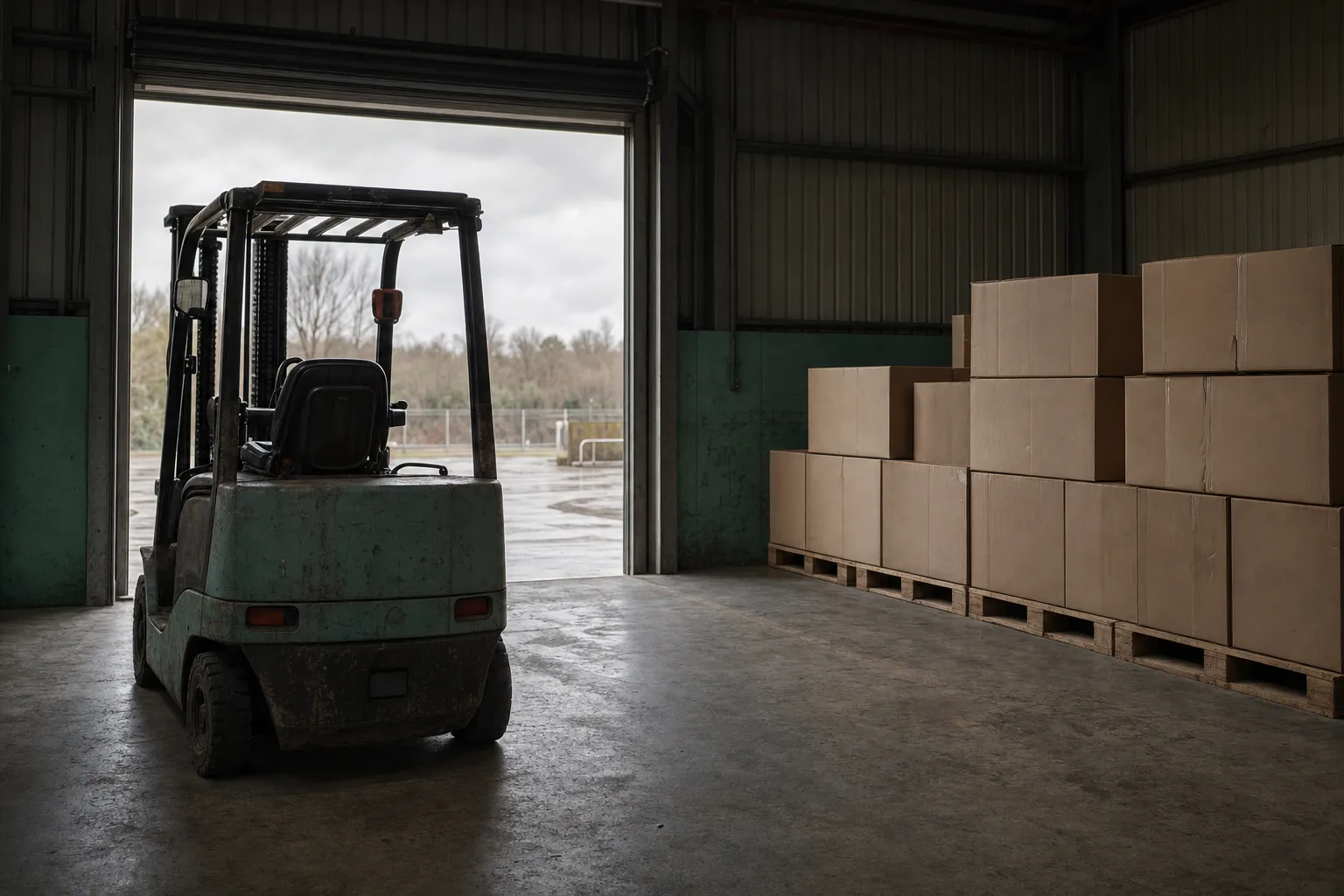
Illustrative photograph. It shows a generic loading bay, not a client-owned warehouse.
Who pays when the clock runs out
This question cannot be answered from a blog post, and any page that answers it confidently for your shipment is guessing. What you can do is establish, before booking, which of the four common arrangements you are actually in.
Arrangement | Who typically carries the destination-side cost | What to check before you book |
|---|---|---|
Port-to-port, buyer clears | The buyer, from the moment the cargo is at the named destination | Whether your quote ends at the terminal gate or at the ship's rail |
Delivered to a named place, duty unpaid | Set by the trade term and the named place, not by the word "delivered" | Which of the two delivery rules was used, and what the named place actually is |
Delivered duty paid | The seller, up to the named place — but only what the term and contract say | Exclusions written into the offer, and who is named as importer of record |
Consolidated cargo under a single clearance arrangement | Set by the commercial terms of that arrangement | Whether storage and inspection costs are inside the price or billed afterwards |
Port-to-port, buyer clears
Who typically carries the destination-side cost
The buyer, from the moment the cargo is at the named destination
What to check before you book
Whether your quote ends at the terminal gate or at the ship's rail
Delivered to a named place, duty unpaid
Who typically carries the destination-side cost
Set by the trade term and the named place, not by the word "delivered"
What to check before you book
Which of the two delivery rules was used, and what the named place actually is
Delivered duty paid
Who typically carries the destination-side cost
The seller, up to the named place — but only what the term and contract say
What to check before you book
Exclusions written into the offer, and who is named as importer of record
Consolidated cargo under a single clearance arrangement
Who typically carries the destination-side cost
Set by the commercial terms of that arrangement
What to check before you book
Whether storage and inspection costs are inside the price or billed afterwards
The ICC's Incoterms rules allocate cost and risk between seller and buyer, and the allocation depends on which rule was chosen and where the named place sits (ICC, Incoterms 2020). Two offers that both say "delivered" can put the terminal account on different parties. That is a contract question, and it is settled at the point of quotation, not at the gate.
Four questions, asked in writing before the booking is confirmed, will do more for your exposure than any rate comparison:
- Which free period is being quoted, and from which event does it start?
- Who does the terminal bill, and who must pay before custody is released?
- What events during the shipment would create a charge that is not in the price — an inspection, a document correction, a missed slot, a change of destination?
- What evidence will be produced at the end — gate-out timestamps, the operator's statement, the tariff line applied?
If an answer to any of these is "we will see", that is the gap where the invoice will eventually appear.
One thing should be said plainly about our own position. Our standard offer does not publish a storage or abnormal-cost figure, because the amount depends on the operator, the terminal, the cargo and the day. Who bears a storage or abnormal charge on a given shipment is confirmed shipment by shipment, against the terms agreed for that shipment — it is not a standing commitment, and it is not implied by a quotation that was silent on the point.
What we coordinate, and what stays with the importer
On this route the work we do sits around the sequence above: reviewing the pre-alert before the vessel sails, checking that the documents describe the same cargo, booking and re-booking inland haulage, and coordinating delivery through partner facilities rather than facilities we own. We are a freight forwarder and logistics coordinator: we do not own vessels, terminals, containers or warehouses, and the capacity behind any booking is a partner's.
On the Indonesian import side, the declaration is filed with customs by a licensed importer of record and the broker it appoints. Which entity that is depends on the arrangement agreed in writing: where you clear in your own name it is you; under a Delivered duty paid arrangement it is the entity named in the offer, with the licence and tax number it declares under. Our role is to assist and coordinate — to prepare the information the declaration is built from and make sure the release, once issued, has a next step waiting for it. We do not decide the customs outcome.
If the destination is outside the main Jakarta delivery area, the options and constraints change again; see last-mile delivery in Jakarta and beyond. The full set of pages on this part of the route is collected under warehousing and delivery.
Check your next shipment against this page
If a container is already on the water, the only useful question is which of the four conditions in the table above is not yet true — and who is responsible for making it true.
- Is the release expected in time for a slot that actually exists, or is the slot hypothetical?
- Does the party named on the declaration match the party who will collect?
- Has the terminal account been discussed, or is it assumed to be inside the freight?
- Will the receiving site accept the vehicle, at the hour the vehicle will arrive?
- If the release slips at all, what happens to the truck, the site and the storage?
Answer those five before the vessel berths and the storage question largely stops being a question. Leave them until the release notice arrives, and the answer gets written by a tariff.