
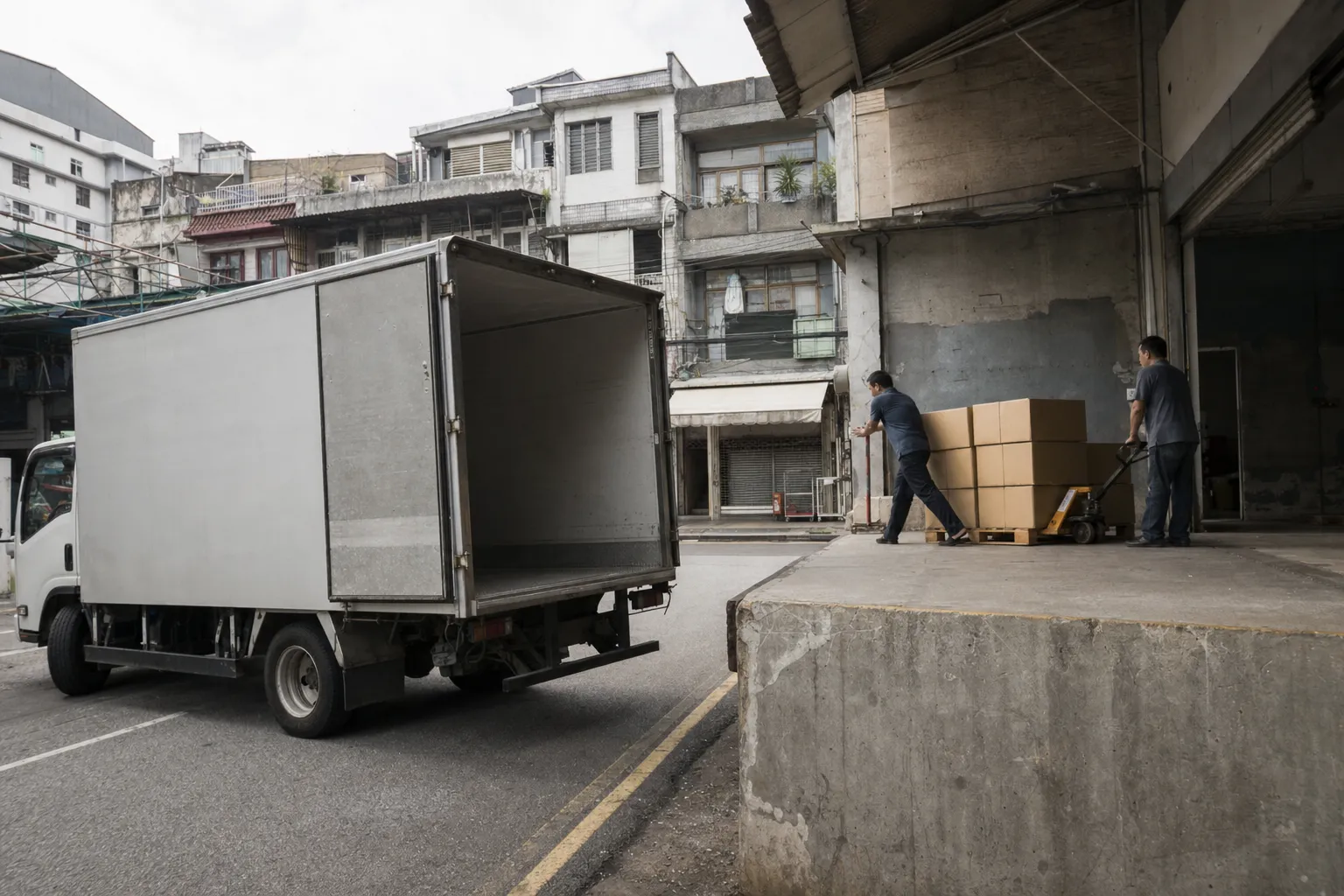
Two importers book the same container in the same week. One takes delivery at a warehouse in North Jakarta, the other at a factory gate two hours outside the city. The cargo is identical. The delivery is not: a different vehicle, a different break-down point, a different person at the door with a forklift, and a different cost structure underneath all three.
That is what the phrase last mile delivery in Indonesia conceals. The last mile is not one product with a distance attached. The address chooses which product you get.
Nothing on this page is a quotation. No rate, tax figure, percentage, delivery charge or promised transit time appears in it, and the situations described are hypothetical: they are not client cases and they are not quotations. What your address requires is settled by the site, the carrier and the documents — not by this page.
The address is a specification, not a line on the invoice
"How much more does it cost outside Jakarta?" is the last question, not the first. The address changes the product in five ways before it changes the price.
Mode. Inside the city, cargo moves as parcels or units on a light vehicle, on a route re-planned the same morning. Outside it, the same cargo becomes a line-haul consignment between two points.
Vehicle. A van or light truck inside the city; a rigid truck or trailer outside it, because distance makes a small vehicle uneconomic and because there is somewhere for a large one to stand.
Break-down point. Loose cargo is devanned before it can be delivered as units, normally at a warehouse or CFS near Jakarta. Outside the city it is broken down twice or kept whole — which does more to your goods than the price difference does.
Access. A Jakarta address brings local rules: which corridors heavy vehicles may use and when, which streets a trailer fits down, which buildings have a dock. Outside, the constraints are gate hours, a yard, an unfinished road.
Unloading. At a dock with a forklift, minutes. At a shop-house on a two-lane street, a crew and an argument about whose crew it is.
Cost is the sixth thing, and it follows.
What changes when the address is inside Jakarta
Inside Jakarta the leg is short, dense and interruptible: many drops in a small area, so the vehicle's day goes on delivering rather than driving. An urban delivery can therefore be the same working day as the release, when receiving hours allow.
The city sets its own terms. Research on two-wheeler courier operations in Indonesia finds couriers in Greater Jakarta working within a radius of roughly five kilometers, against ten to twenty in other cities. That is parcel logistics, not pallets, but it shows where the constraint moves: distance stops binding and time at the curb starts. The same logic runs the other way elsewhere in the country — Surabaya, Medan and Batam are not simply Jakarta runs with a longer tail.
Dimension | Address inside Jakarta | Address outside Jakarta |
|---|---|---|
Vehicle | Van or light truck; sometimes a courier network | Rigid truck or trailer, sized to the load |
Break-down | At a Jakarta warehouse or CFS, delivered as units | Kept as a unit load, or broken down twice |
Access | Corridor and time rules, street width, dock or lift | Gate hours, yard space, road condition |
Unloading | Often part of the urban service, by the truck crew | Frequently the receiver's job, with their equipment |
Cost driver | Drops per run, waiting time, failed attempts | Vehicle utilization, distance band, shared or dedicated |
Typical failure | Nobody at the address, or nowhere to stop | Vehicle cannot reach the gate, or nobody can unload |
Vehicle
Address inside Jakarta
Van or light truck; sometimes a courier network
Address outside Jakarta
Rigid truck or trailer, sized to the load
Break-down
Address inside Jakarta
At a Jakarta warehouse or CFS, delivered as units
Address outside Jakarta
Kept as a unit load, or broken down twice
Access
Address inside Jakarta
Corridor and time rules, street width, dock or lift
Address outside Jakarta
Gate hours, yard space, road condition
Unloading
Address inside Jakarta
Often part of the urban service, by the truck crew
Address outside Jakarta
Frequently the receiver's job, with their equipment
Cost driver
Address inside Jakarta
Drops per run, waiting time, failed attempts
Address outside Jakarta
Vehicle utilization, distance band, shared or dedicated
Typical failure
Address inside Jakarta
Nobody at the address, or nowhere to stop
Address outside Jakarta
Vehicle cannot reach the gate, or nobody can unload
The break-down row is the one buyers underestimate. Inside Jakarta the strip-out is already in the plan; outside it, the cheap-looking option is to keep the cargo intact and haul it from the port area — one handling step saved, no flexibility, because a load that cannot be split must be unloaded whole, in one place, at one time. The unloading row is where disputes start: under the Incoterms rules that dominate this route, delivery can happen before unloading.
A third option is neither: sending the cargo through a parcel network. Networks such as J&T Express run sorting depots, two-wheeler and van delivery, and collection points — good at parcels, structurally wrong for a pallet of a metric ton or a machine an engineer must sign for.
None of it starts until the import is released: the leg begins after the entry is cleared at the port of entry — Tanjung Priok for a Jakarta address — by the customs office supervising it, and Bea Cukai is the authority on that side. What the door-to-door scope includes is set out in what door-to-door shipping covers.
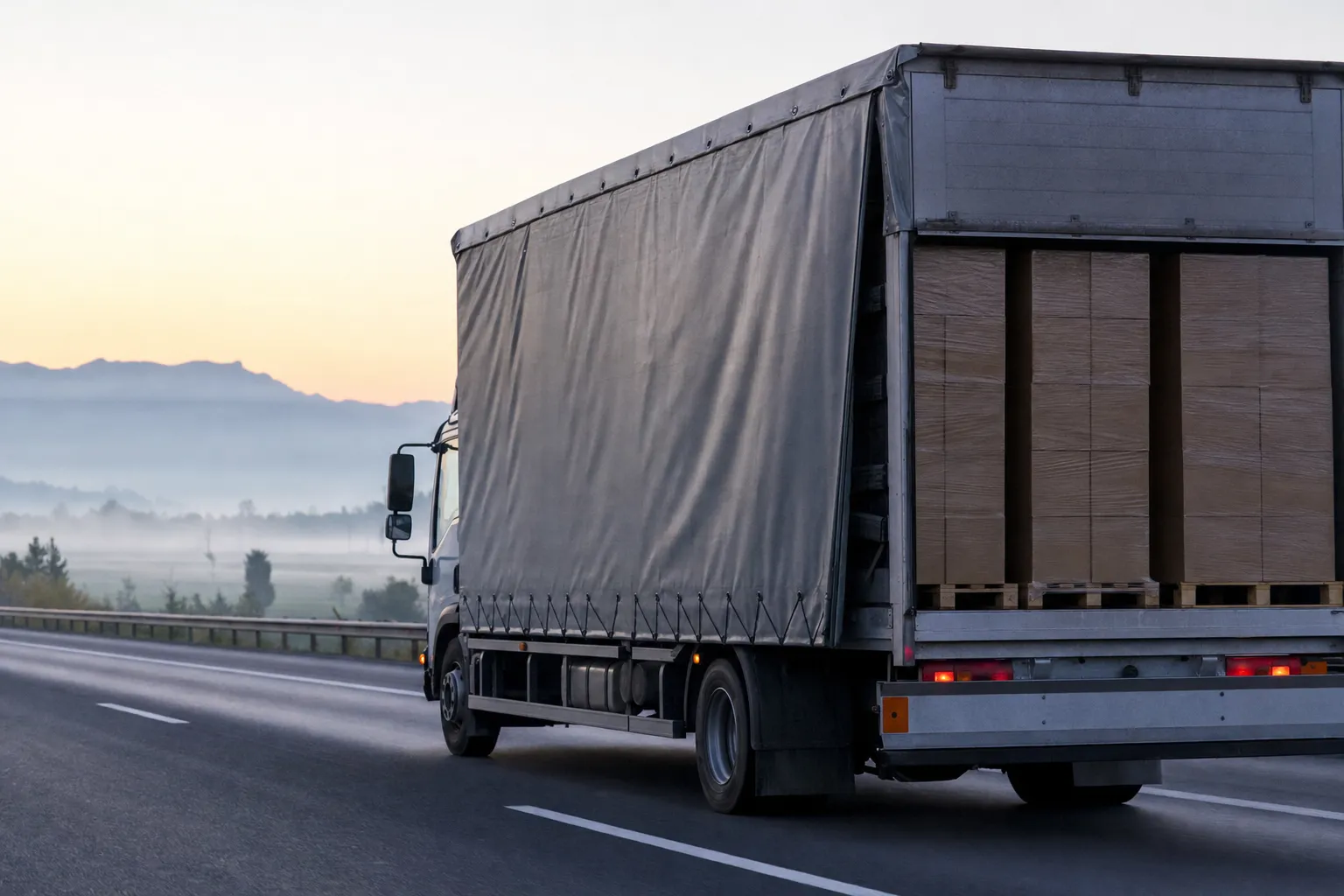
Illustrative image. Not a client facility or vehicle.
Why the cost line moves
Cost follows the job, not the kilometers. Five things move it.
- Distance as a band. Rate cards run in zones, so the question is which zone the address falls in and whether the carrier already runs there. A route that must avoid certain corridors at hours is longer and worse.
- Vehicle utilization. A dedicated truck costs what it costs half empty or full. Two pallets on a twelve-pallet truck carry the whole truck's cost.
- Shared or dedicated. A shared run is cheaper per consignment and waits for other people's cargo; a dedicated run leaves when you say. That is a different promise, not a discount — and every hour at a gate is a day being consumed.
- Unloading equipment. A tail-lift, a forklift and two laborers are three separate costs, and none are free at destination.
- The failed attempt. Every re-delivery is a second run with the first already paid for. It is the line nobody quotes and everybody pays.
Density works the same way: where a courier's radius is a few kilometers, a vehicle completes many handovers a day, and where it is two to four times longer, a vehicle is working one consignment, not a route of drops. The delivery does not cost more because the road is longer. It costs more because the day is spent differently — which is why "Jakarta plus a bit" is not a way to price an outside address. A number without its assumptions is not a price.
Deciding where the cargo should land
The decision is not "where would I like the goods?" It is "which address can actually receive this cargo, in this configuration, on this date?"
The question | Favors a Jakarta address when… | Favors a direct outside address when… |
|---|---|---|
How is the cargo built? | It is mixed and must be split across destinations | It is one indivisible unit that should be touched as little as possible |
Who can receive it? | Your team is not in Indonesia yet, or a Jakarta warehouse takes daily deliveries | A named person can sign, with equipment to unload |
How fixed is the date? | The onward date is undecided, and staging buys you the decision | An installation, a production line or a handover is already booked |
What does the site look like? | A commercial building or a dock you have seen | A factory yard, a project gate, a road a trailer can reach |
What happens next? | Goods will be allocated or sold from Jakarta | Goods are consumed or installed where they land |
How is the cargo built?
Favors a Jakarta address when…
It is mixed and must be split across destinations
Favors a direct outside address when…
It is one indivisible unit that should be touched as little as possible
Who can receive it?
Favors a Jakarta address when…
Your team is not in Indonesia yet, or a Jakarta warehouse takes daily deliveries
Favors a direct outside address when…
A named person can sign, with equipment to unload
How fixed is the date?
Favors a Jakarta address when…
The onward date is undecided, and staging buys you the decision
Favors a direct outside address when…
An installation, a production line or a handover is already booked
What does the site look like?
Favors a Jakarta address when…
A commercial building or a dock you have seen
Favors a direct outside address when…
A factory yard, a project gate, a road a trailer can reach
What happens next?
Favors a Jakarta address when…
Goods will be allocated or sold from Jakarta
Favors a direct outside address when…
Goods are consumed or installed where they land
The answers conflict: a machine bound for a plant outside the city is a direct delivery by any reasonable reading — unless the plant cannot unload it.
A hypothetical, to show the shape rather than a number. Not a client case and not a quotation. An importer brings two pallets of spare parts and one crate of tooling: the pallets for a distributor's shop-house in Central Jakarta, the crate for a factory in Bekasi. One truck, two drops, fails on inspection — the shop-house has no dock and its street will not take the truck, and the factory accepts the crate only in a morning window when its forklift is free. Two jobs work instead: the pallets broken down at a Jakarta warehouse and delivered by light vehicle, the crate on a dedicated run.
There is also a third destination that is neither: a Jakarta warehouse, where cargo is staged and forwarded later. It fits when the goods have several destinations, when your receiving capability is thin, or when the date is still moving. It costs an extra handling step and a second document set, and it turns cargo consolidated from several suppliers into one receiving event. Where the timing of the import charges matters, the staging point can be bonded: how a bonded logistics center defers duty covers that mechanism, which is a customs question rather than a delivery one.
What to agree in writing before the cargo sails
Most delivery disputes are settled by sentences nobody wrote. Five clauses are worth ten minutes.
Clause | What to write | Why it decides the argument |
|---|---|---|
Delivery point | Address down to the gate, the receiving entrance, a landmark, the contact and their hours | "Jakarta" is not an address; a district and a building name still leave a driver guessing |
Who unloads | Which party supplies labor and equipment, and what equipment is assumed | Delivery can happen before unloading under DAP, so "delivered" and "off the truck" differ |
Waiting time | Free waiting, what happens after it, and who is told when the window slips | Waiting is the most common unbudgeted line on a delivery invoice |
Re-delivery | What a failed attempt costs, who pays, how soon the next attempt runs | Without it, the second run is negotiated at the gate |
Proof of delivery | Date and time, name and role of the signatory, quantity and condition noted, photographs for bulky cargo | A bare signature proves something was handed over, not what |
Delivery point
What to write
Address down to the gate, the receiving entrance, a landmark, the contact and their hours
Why it decides the argument
"Jakarta" is not an address; a district and a building name still leave a driver guessing
Who unloads
What to write
Which party supplies labor and equipment, and what equipment is assumed
Why it decides the argument
Delivery can happen before unloading under DAP, so "delivered" and "off the truck" differ
Waiting time
What to write
Free waiting, what happens after it, and who is told when the window slips
Why it decides the argument
Waiting is the most common unbudgeted line on a delivery invoice
Re-delivery
What to write
What a failed attempt costs, who pays, how soon the next attempt runs
Why it decides the argument
Without it, the second run is negotiated at the gate
Proof of delivery
What to write
Date and time, name and role of the signatory, quantity and condition noted, photographs for bulky cargo
Why it decides the argument
A bare signature proves something was handed over, not what
Write the landmark down. Indonesian addresses run from province through district and neighborhood to a community unit a map application may not resolve, and drivers work from what they can see.
The unloading clause is where the standards help. The ICC's Incoterms 2020 rules put the unloading obligation in different places under DAP and DPU, and the rule named on the invoice settles who is obliged — not who is able. A receiver with no forklift can be obliged to unload and unable to, and that gap closes at the gate.
How the cargo is built decides whether any of this is quick. A load palletized for the vehicle it travels in comes off in one move; a load built for a container and re-handled at a shop-house comes off in pieces.

Illustrative image. Not a client facility.
The five ways a delivery fails
Failures are predictable, and each has a signal you can check before booking.
The address is undeliverable. Not fictional — underspecified: a warehouse address that is really an office, a plot with no gate, a district name shared by two districts. Signal: nobody on your side can describe how a truck reaches the door.
The vehicle cannot access the site. Street too narrow, bridge too low, lobby instead of dock, corridor closed to heavy vehicles in the hours the delivery would run. Signal: nobody has measured the approach, only the address. Loads that are out of gauge fail here first, and overweight and oversized cargo needs the approach checked before the booking, not after.
The appointment is missed. Site closed early, receiver at another plant, a public holiday nobody planned for, a guard who was not told. Signal: the receiving hours exist only in someone's memory.
Nobody can unload. Truck arrives, crew is one person, forklift is down, the pallet is heavier than the equipment. Signal: the unloading clause was never written, so it defaulted to whoever was standing there.
The cargo is refused or noted as damaged at the tailgate. Surface damage from earlier is found at the last moment, or a receiver signs without inspecting and the dispute begins a week later with no evidence. Signal: no agreed inspection routine and no photograph at handover.
Four of the five are answered by questions asked before the shipment leaves; the fifth by a document that takes a minute to fill in properly.
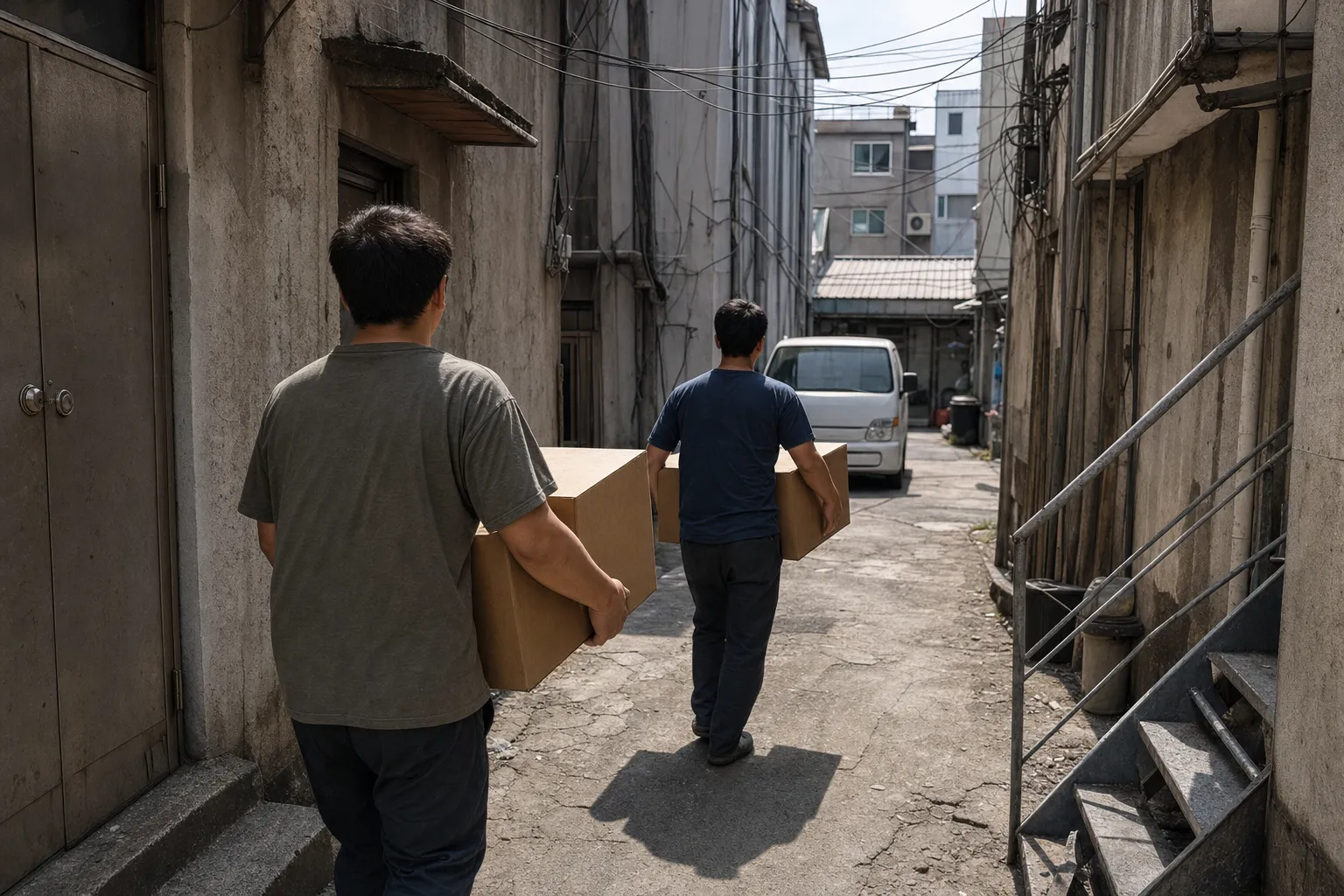
Illustrative image. Not a client case.
What we coordinate, and what stays with you
The vehicles here are not ours. Deliveries run through partner carriers and the receiving site's own equipment, and on the Indonesian side our work is coordination: booking the movement, assembling the documents both ends will ask for, keeping carrier, warehouse and receiver on the same address and the same window, and saying early when an address cannot take what is coming.
Coverage should be read the same way. Jakarta city addresses are handled within the service; outside Jakarta, options can be coordinated across many regions, by courier network or by a vehicle engaged for the shipment, with the cost settled per shipment on the actual job. We do not claim our own fleet, and we would rather raise a difficult address before booking than discover it at the gate.
If you are choosing where a shipment should land, the useful first message is short: what the cargo is and how it is built, the address with its landmark and receiving hours, whether anyone there can unload, and who will sign. The options we coordinate are described on the Indonesia inland transport and local delivery page.
The decisions stay with you — which address, which vehicle, which clauses — and they are cheaper before the container is booked than after the truck is at the wrong gate.