

The bill of lading says the container was received in apparent good order and condition. It is opened outside Jakarta with four pallets crushed at one end and a water line across the floor. The forwarder says not to worry, the carrier is insured. The carrier's claims desk says the damage falls outside its responsibility. Somewhere between those two sentences, a shipper in Guangdong and an importer in Jakarta are both waiting to hear who actually pays.
The unsatisfying part is that both statements can be true at once. That is the whole subject of this page, because cargo insurance vs carrier liability is not a choice between two equivalent protections — it is a choice between a capped legal claim and a policy you own.
This page quotes no prices. It contains no rate, premium, tax figure, percentage, compensation amount or promised deadline, and every situation described is hypothetical: these are not client cases and they are not quotations. Whether a given shipment is paid for, and how much, is decided by the contract of carriage, the bill of lading and the insurance policy — not by this page. Nor is this legal advice: the statutory points below are stated as at November 2026, and the limits, exclusions and deadlines that matter are the ones written in your own documents.
Cargo insurance vs carrier liability: the short answer
Carrier liability is a legal duty the carrier owes you under the contract of carriage. It is capped, it is subject to a list of defences, and it is enforced by a claim against a counterparty whose interests are adverse to yours. Cargo insurance — often called freight insurance or marine cargo insurance, depending on who is selling it — is a contract you own. It pays according to the policy rather than according to the carrier's fault, for the value you insured, and the insurer then pursues the carrier in your name.
Carrier liability | Cargo insurance | |
|---|---|---|
What triggers payment | Loss or damage inside the carrier's period of responsibility, and only if no defence applies | The perils the policy covers, whoever was at fault |
How much | A ceiling fixed by the carriage regime and your bill of lading, not by your invoice | The insured value you agreed |
Who you deal with | The carrier, or the carrier's liability insurer defending the carrier's position | Your own insurer |
What it does not do | Make you whole when your cargo is worth more than the ceiling | Answer every cause of loss — policies have exclusions too |
What triggers payment
Carrier liability
Loss or damage inside the carrier's period of responsibility, and only if no defence applies
Cargo insurance
The perils the policy covers, whoever was at fault
How much
Carrier liability
A ceiling fixed by the carriage regime and your bill of lading, not by your invoice
Cargo insurance
The insured value you agreed
Who you deal with
Carrier liability
The carrier, or the carrier's liability insurer defending the carrier's position
Cargo insurance
Your own insurer
What it does not do
Carrier liability
Make you whole when your cargo is worth more than the ceiling
Cargo insurance
Answer every cause of loss — policies have exclusions too
Two promises, two payers, two very different amounts of money. Neither one is a warranty, and both can legitimately end in nothing.
Carrier liability is a legal duty, and it comes with a ceiling
Start with who owes it. On an ocean shipment the party that issues the bill of lading is the party you have a contract of carriage with — which may be the shipowner, or an NVOCC that has taken the space and issued its own document. The distinction matters when a claim starts, because the entity you sue is the one named on that document, not the brand on the container. The role of each party on a China–Indonesia shipment is worth settling before there is a dispute rather than after.
The duty itself is old and simple: receive the goods, care for them, and deliver them. Break it and the carrier is liable — but the same regime that creates the duty also caps it and lists the situations in which it does not apply. That is not a loophole; it is the bargain the conventions were built on, and it is why a carrier can be entirely at fault and still pay a fraction of your invoice.
The second thing to get straight is whose insurance is whose. Most carriers carry cargo liability insurance, and it is easy to read that as cover for your cargo. It is not. As TT Club puts it when separating the two products, liability insurance is negligence-based and limited either by convention or by contract, and it protects the freight operator rather than the cargo owner. Cargo insurance indemnifies the cargo interest for the value of the goods.
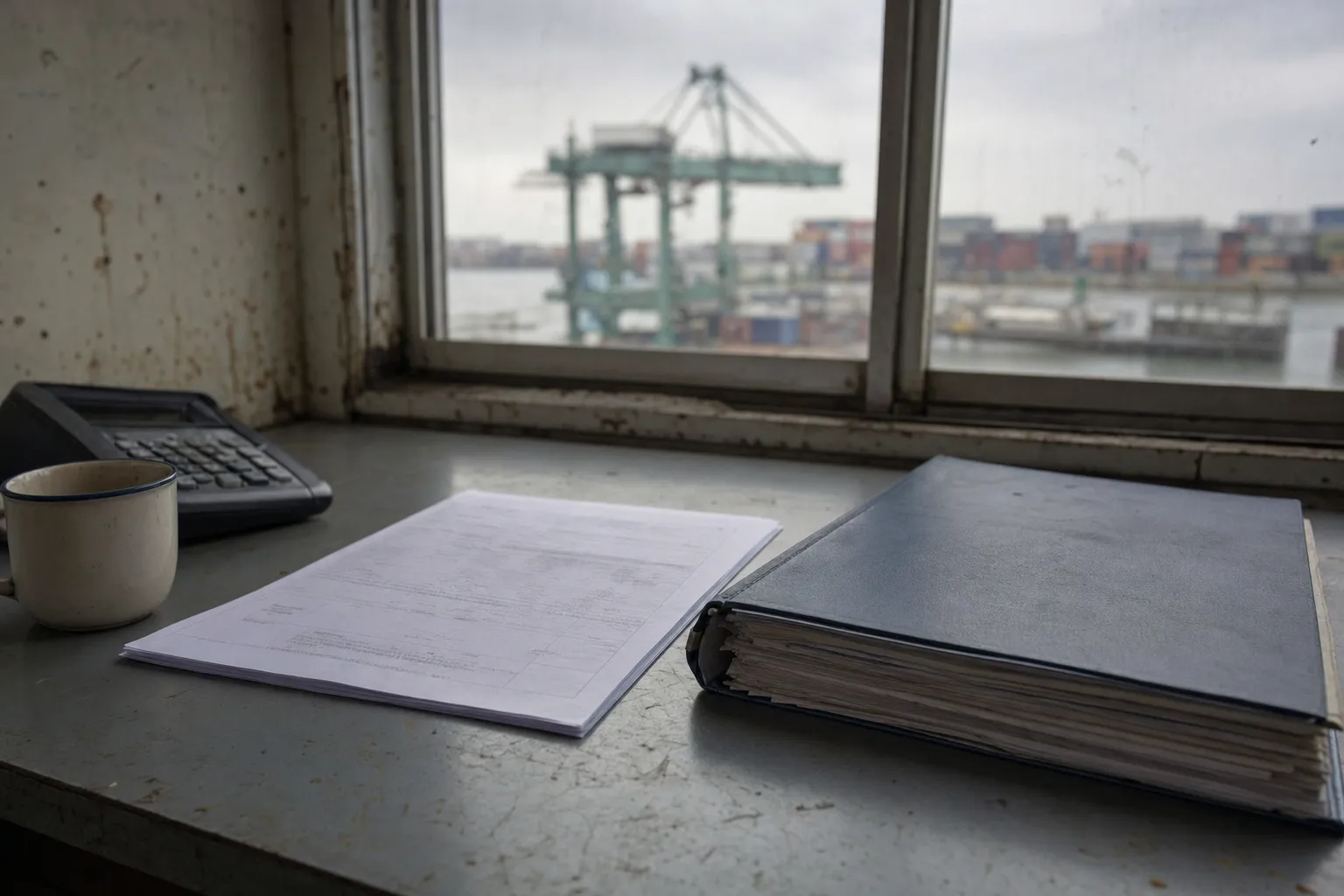
This is where the idea of insurable interest earns its keep. Insurance responds to whoever would be financially worse off if the goods were lost — and that person is decided by the sale, not by who is standing at the port. On an FOB shipment the seller carries the risk until the goods are on board and the buyer carries it from that moment; on an EXW shipment the buyer carries it from the seller's door. If you are not the one carrying the risk, buying cover is not straightforwardly possible, and if you are carrying the risk without cover, the carrier's ceiling is all that stands behind you.
What sets the ceiling — and why your bill of lading matters more than the convention
Three regimes do most of the work on ocean cargo, and they do not produce the same ceiling. The Hague-Visby Rules, incorporated into most ocean bills of lading, cap liability per package or per kilogram of gross weight, whichever produces the higher figure, and they carry a set of excepted perils. The Hamburg Rules shift the balance — liability is presumed unless the carrier disproves fault, and the nautical fault defence disappears. The Rotterdam Rules were meant to modernise the whole framework and are not in force. UNCITRAL publishes the texts and is the place to read them rather than a summary.
Notice what that paragraph did not do: give you an amount. The figures are set by the regime and by the national law that implements it, and they change. Anyone quoting you a per-kilogram number without telling you which instrument and which implementing statute it came from is quoting a number from somewhere else. Read the clause on your bill of lading and the law it incorporates; that is the only ceiling that applies to your shipment.
What you can control is how that ceiling is calculated, and the calculation is decided by paperwork:
- The package count. Where goods are consolidated in a container, the packages enumerated in the bill of lading count as packages for limitation. If the document says eight hundred cartons, the arithmetic starts at eight hundred. If it says one container said to contain eight hundred cartons, the carrier will argue the container is the package. The same cargo, the same loss, two very different answers — and the choice was made at booking, not at the claims desk. Gard's note on the container clause and package limitation sets out how that description has been argued in practice.
- The declared value. A shipper can declare the nature and value of the goods and have it inserted in the bill of lading, which takes the cargo outside the cap. That is a commercial decision with a freight consequence, and it has to be made before the ship sails.
- The weight. Heavy, low-count cargo often hits the per-kilogram limb rather than the per-package limb, which is why the "whichever is higher" wording exists. Steamship Mutual's note on package limitation walks through how the two limbs interact when a claim is actually argued.
The defences that end most claims before the money question is reached
Ask a claims handler what happened to a cargo claim and the answer is rarely "we disputed the amount". It is usually "the defence applied". The Hague-Visby list is short enough to read in a sitting, and every item on it is a place where a shipper's assumption quietly fails:
- Error in navigation or management of the ship. The carrier is not liable for loss caused by a mistake in how the vessel was handled. No road or air regime gives a carrier an equivalent escape, which is why lessons learned from trucking claims transfer badly to a sea shipment.
- Fire, unless it was caused by the carrier's actual fault — a defence that has produced some of the largest general average declarations in modern shipping.
- Perils, dangers and accidents of the sea, and acts of God: the swell that shifts a poorly secured load, the weather that no schedule predicted.
- Insufficient packing or preparation. One of the most common reasons a legitimate claim fails, and one of the few items on this list you can still do something about. The defence sits in the convention, and the same failure appears as an exclusion in the standard cargo clauses, which treat stowage inside a container as packing — so it follows the cargo into the policy as well as into the carriage claim.
- Inherent vice, quarantine or legal restraint — and delay, which the convention does not compensate at all.
The practical consequence is uncomfortable, and it is not quite the one the sales literature suggests. The carrier's list and the policy's exclusions overlap in part: insufficient packing and inherent vice are excluded by the standard cargo clauses as well, delay is compensated by neither, and restraint and seizure are excluded from the policy just as they are defended by the carrier. So buying cover does not move those risks anywhere. What cover does answer is the core of the carrier's list — the error in navigation, the fire, the perils of the sea, the accident no clause predicted. Packing is the one item on the list you can still influence at the factory, and it is decided long before anyone reads a policy — the difference between packing cargo for the voyage rather than for the truck is often the difference between a claim that survives at all and one that does not.
General average: the bill that arrives when nobody was at fault
Here is the part of sea carriage that has no real equivalent on a domestic move, and the part most often missing from the "carrier versus insurance" comparison.
When an extraordinary sacrifice or expenditure is made intentionally and reasonably for the common safety, to preserve ship and cargo from a peril, everyone whose property was saved shares the cost in proportion to the value saved. That is general average, and the rules most contracts incorporate are the York-Antwerp Rules maintained by the Comité Maritime International. The sacrifice may be cargo jettisoned, or water poured into a hold to fight a fire, or the cost of a tug and a port of refuge. Your container may be untouched, dry, and perfectly sound. You still contribute.
The mechanism is what makes it a cash event rather than a paper one. Cargo is not released until each cargo interest has given security — an average bond, and a guarantee for the contribution. Where the cargo is insured, the insurer ordinarily provides that guarantee. Where it is not, the owner is looking at a cash deposit, set by an average adjuster, found immediately, while the container sits and storage runs. Nothing was damaged. Nobody was negligent. The carrier has no liability payment to make for the sacrifice itself, because a general average contribution is not damages.
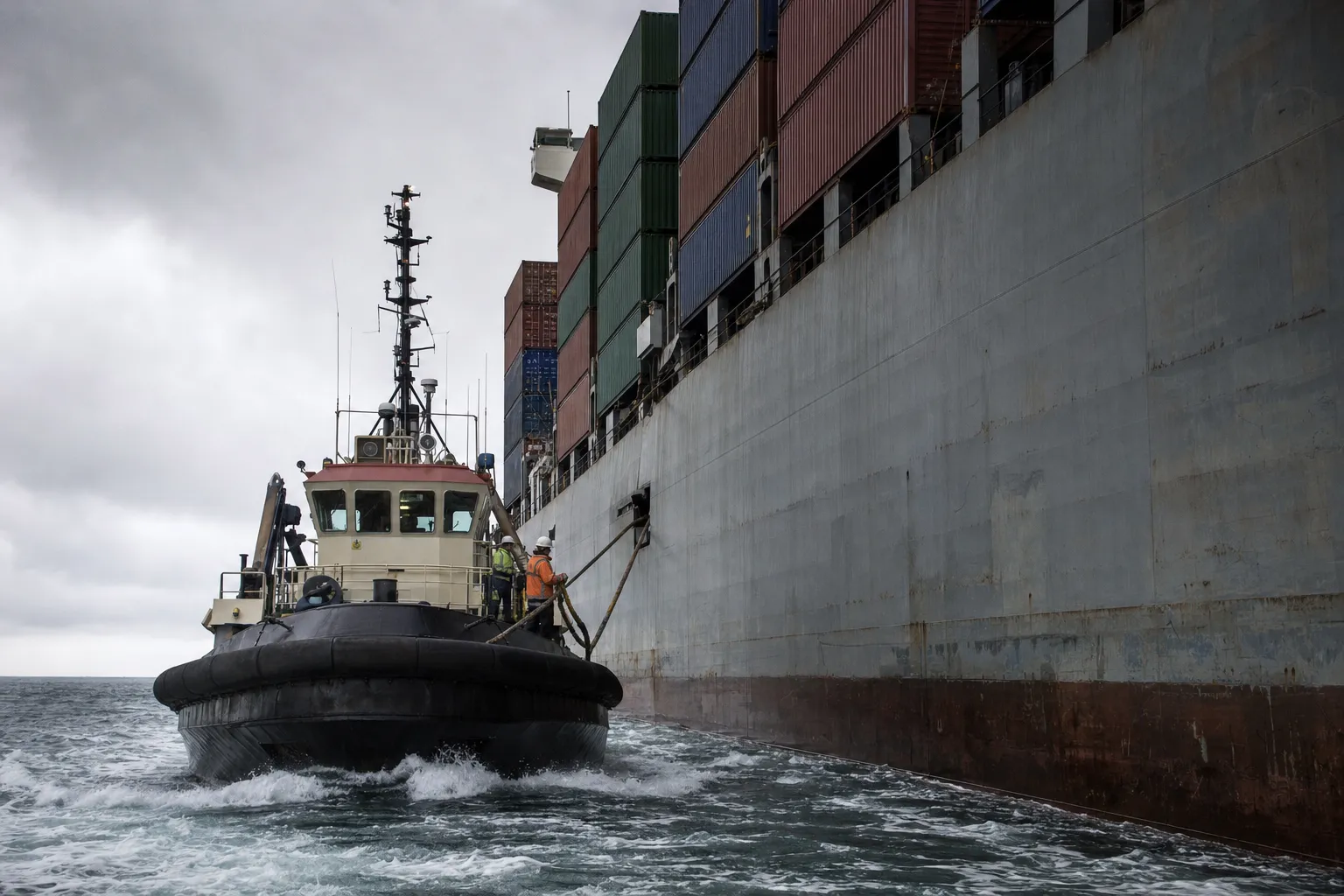
This is the clearest answer to the sentence that started this page. "The carrier is insured" may be true, and it may mean the ship's own contribution is covered. It does not mean yours is.
Who is insured is settled at contract, not at the port
Most buyers discover the Incoterms insurance rules after a loss, which is the wrong order. Risk transfer and the duty to insure are two separate things, and only two of the eleven Incoterms rules impose a duty to insure at all.
Rule | Who carries the risk, from when | Duty to insure | What that duty is worth |
|---|---|---|---|
CIF | Buyer, once goods are on board at the port of shipment | Seller | Minimum cover: Institute Cargo Clauses (C) |
CIP | Buyer, once goods are handed to the first carrier | Seller | Institute Cargo Clauses (A) — raised in Incoterms 2020 |
FOB / CFR / CPT | Buyer, once goods are on board or handed over | Neither party | Buyer insures, or goes uninsured |
EXW | Buyer, at the seller's premises | Neither party | Buyer insures from collection |
CIF
Who carries the risk, from when
Buyer, once goods are on board at the port of shipment
Duty to insure
Seller
What that duty is worth
Minimum cover: Institute Cargo Clauses (C)
CIP
Who carries the risk, from when
Buyer, once goods are handed to the first carrier
Duty to insure
Seller
What that duty is worth
Institute Cargo Clauses (A) — raised in Incoterms 2020
FOB / CFR / CPT
Who carries the risk, from when
Buyer, once goods are on board or handed over
Duty to insure
Neither party
What that duty is worth
Buyer insures, or goes uninsured
EXW
Who carries the risk, from when
Buyer, at the seller's premises
Duty to insure
Neither party
What that duty is worth
Buyer insures from collection
The asymmetry in the first two rows is the one that costs money. Under CIF the seller's obligation is satisfied by the narrowest of the three standard grades of cover — a named-perils list built around major casualties such as fire, stranding, sinking, collision, jettison and general average sacrifice. Water entering a container is not on that list; it appears in the wider grade. So a buyer can hold a perfectly valid CIF insurance certificate and still find that the damage to his cargo is not covered by it. The ICC's own Incoterms 2020 pages set out the obligation, and the Institute Cargo Clauses (A) wording cited earlier shows what the widest grade promises and, in its exclusions, what even that grade will not pay for.
Two further points follow, and both are routinely missed:
- The party who must insure is not always the party who can claim. A CIF seller buys cover for the buyer's benefit; the buyer is the one with the loss. If the certificate is never endorsed across, or the claim is filed in the wrong name, the cover exists and does not respond.
- Incoterms say nothing about Indonesian import costs. Duty, tax, clearance delay and storage are not transit losses. Neither the carrier's liability nor marine cargo insurance answers them, which is why cargo held in an Indonesian customs channel is a different problem from cargo damaged at sea, with a different remedy. The full set of Incoterms obligations for Indonesia-bound shipments is worth reading next to this section rather than instead of it.
Where each one stops: a shipment to Indonesia, case by case
The framework is easier to hold when it is applied. The table below is a map of which mechanism even engages — not a prediction of any outcome, and not advice on any particular shipment.
What happened | Carrier liability | Cargo insurance |
|---|---|---|
Container dropped in the terminal, cartons crushed | Engages, within the ceiling, if no defence applies | Responds under the policy grade purchased |
Sea water through a split door gasket | Arguable — unseaworthiness or a peril of the sea, depending on the facts | Covered under the wider grades, not under the narrowest |
Shortage found at devanning | A counting argument, capped by the packages enumerated | Responds for the insured shortfall |
Theft from a yard | Depends on whose custody the yard was — inside the carrier's period of responsibility it is a claim within the ceiling; in your own yard there is no carriage claim | Covered under all risk cargo insurance, subject to exclusions |
Cargo held for customs inspection and duty | Does not engage — this is not a transit loss | Does not engage — delay and customs risk are excluded |
Delivery late, seasonal market gone | Delay is not a loss the convention compensates | Delay losses are excluded by the policy |
General average declared after a fire | Does not engage — no breach by the carrier | Responds, and provides the security that releases the cargo |
Container dropped in the terminal, cartons crushed
Carrier liability
Engages, within the ceiling, if no defence applies
Cargo insurance
Responds under the policy grade purchased
Sea water through a split door gasket
Carrier liability
Arguable — unseaworthiness or a peril of the sea, depending on the facts
Cargo insurance
Covered under the wider grades, not under the narrowest
Shortage found at devanning
Carrier liability
A counting argument, capped by the packages enumerated
Cargo insurance
Responds for the insured shortfall
Theft from a yard
Carrier liability
Depends on whose custody the yard was — inside the carrier's period of responsibility it is a claim within the ceiling; in your own yard there is no carriage claim
Cargo insurance
Covered under all risk cargo insurance, subject to exclusions
Cargo held for customs inspection and duty
Carrier liability
Does not engage — this is not a transit loss
Cargo insurance
Does not engage — delay and customs risk are excluded
Delivery late, seasonal market gone
Carrier liability
Delay is not a loss the convention compensates
Cargo insurance
Delay losses are excluded by the policy
General average declared after a fire
Carrier liability
Does not engage — no breach by the carrier
Cargo insurance
Responds, and provides the security that releases the cargo
The two rows that read "does not engage" on both sides are where a lot of Indonesian importers actually lose money: a customs hold is not a transit loss, and delay is compensated by neither mechanism. That is not a gap in the two products; it is a reminder that a cargo risk review and a customs plan are separate pieces of work.
Two different claims, filed in two different ways
Because the two promises are different, the two claims are different, and a file built for one is not automatically a file for the other.
Against the carrier, you are proving a breach inside a contract: that the goods were received in good order, that they were damaged or short on delivery, and what the loss is worth. Notice has to be given at or around delivery, in the form the regime requires — which is why a clean signature on the delivery receipt is the single most expensive mistake available. A time bar then runs from delivery, or from the date delivery should have happened, and its length is fixed by the regime rather than by the claim handler; extensions are sometimes agreed in writing, and asking is cheaper than arguing afterwards.
Against your insurer, you are proving a loss inside a policy: that the goods were insured for that value, that the cause is covered, and that you mitigated. Fault is not the question. The insurer pays, and then steps into your shoes to pursue the carrier — subrogation — which is why the carrier file still matters after the policy has responded. The evidence that decides both is collected before the container is emptied: the survey report or joint inspection, the tally and the exception written on the delivery document, and the invoice and packing list that turn a damaged consignment into a figure. The sequence is set out in how claims are handled on an Indonesian shipment.
There is a third ceiling that often gets forgotten. The forwarder or broker in the middle is not the carrier, and its own liability is capped separately — the British International Freight Association's summary of cargo claim limits is a useful reminder that "we will handle it" is not the same as "we will indemnify you for it".

Six things to settle before the container is loaded
Everything above collapses into a short list, and every item on it is answerable before the container is sealed and unanswerable afterwards.
- Get the term, and the moment risk moves, in writing. FOB and CIF both hand the risk to the buyer when the goods are on board at the port of shipment; CIP and CPT hand it over earlier, when the goods go to the first carrier. What differs between FOB and CIF is who pays the freight and who must insure.
- Name the party who buys the cover, and the grade. A CIF certificate at the minimum grade is not the same protection as all-risk wording, and the difference is printed on the certificate.
- Agree what the sum insured is measured against. Goods alone, or goods plus freight, duty and the margin you expect to make. Under-insurance is a choice, and it is usually an accidental one.
- Decide about declared value before the cut-off. A declared value inserted in the bill of lading takes the cargo outside the package limitation; it also changes the freight.
- Put the package description in the booking, not in the claim. Enumerated cartons and "one container said to contain" produce different ceilings for the same cargo.
- Fix who holds the documents and who will claim. The party with the loss, the party named on the policy and the party holding the bill of lading should be the same party, or the file needs work before the loss, not after.
The record that supports all six starts earlier than the booking. A pre-shipment review is where the condition of the cargo at handover, the packing method and the declared values are fixed, and it is the only evidence that will still exist when everyone's memory has moved on to the next shipment.
None of this makes a loss pleasant. It does make the answer to "who pays" predictable, which is the part a finance team can actually plan around: the carrier's answer is a legal answer with a ceiling and a list of defences, and the policy's answer is a contractual one with a value and a set of exclusions. Where we sit is on the coordination side of that line — we do not underwrite, we are not the carrier, and we cannot promise an outcome. What we can do is put the insurance question, the Incoterms question and the packaging question in front of you before the booking, and coordinate the survey and the documents if the worst happens — a conversation that is always cheaper before the container is sealed. You can start that conversation here, and the rest of the warehousing and delivery section covers how the cargo side of it works in practice.