
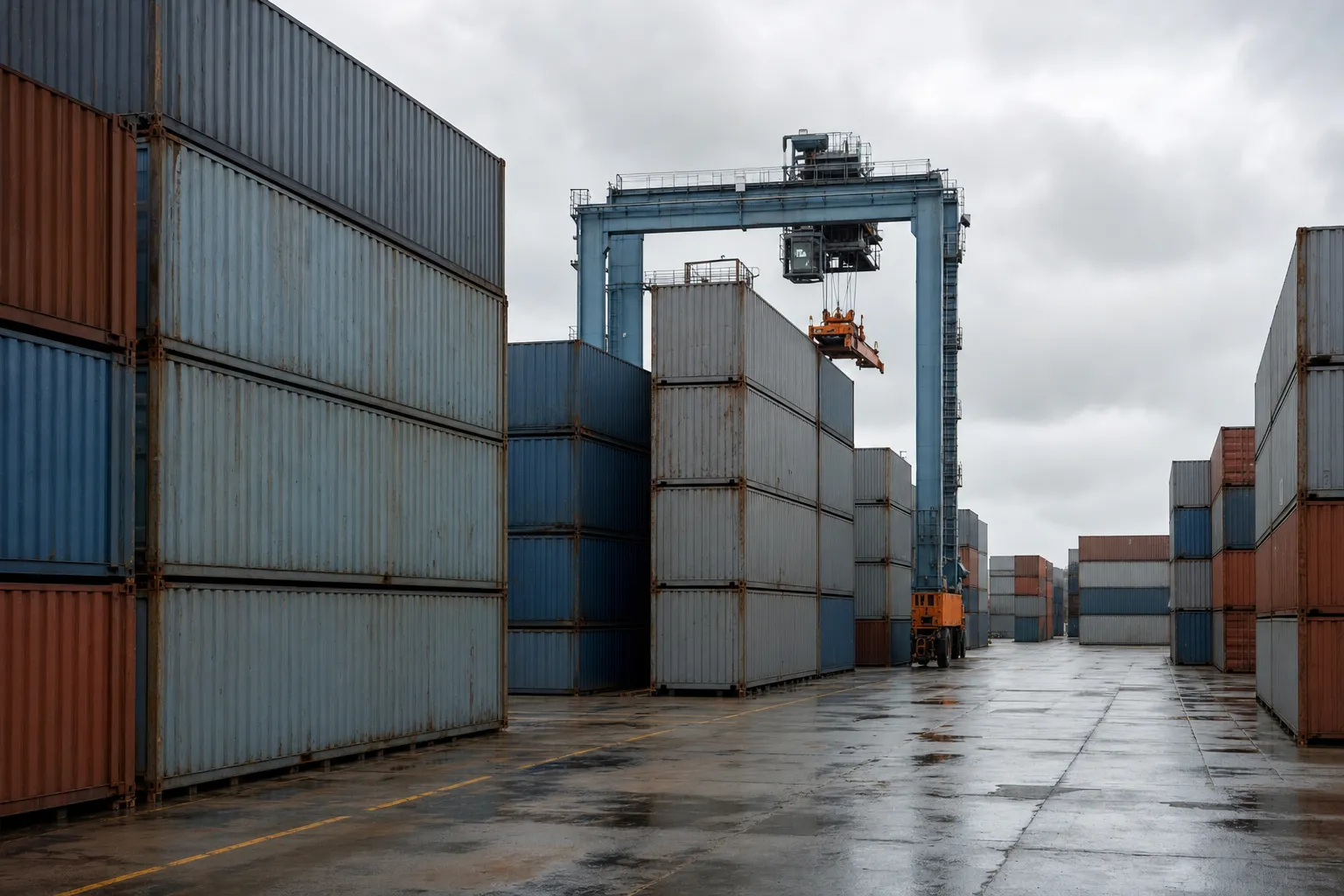
An Incoterm is a map of three things: who pays for which leg, the exact moment risk leaves the seller, and which party is named to clear import. It is not a map of who is allowed to import. On the China–Indonesia lane those two maps disagree in two places often enough to be predictable — container cargo sold FOB, and duty-paid delivery sold as if the letters alone made it work.
The rest of this guide is the exporter's version of that map: the rules as they assign work at each handover, and the questions worth settling before a quotation leaves your desk.
This article prints no freight rate, no duty or tax figure, no amount and no percentage, and it promises no clearance or delivery date. Every scenario is illustrative — not a client case and not a quotation. Nothing here is customs, tax or legal advice, and nothing here makes us the importer of record: on the Indonesian side we assist and coordinate with the licensed importer and the broker it appoints.
What Incoterms 2020 actually changed — and why an exporter should care
Most of the eleven rules did not change in 2020; four matter to a seller in China, and an older contract may still reference the 2010 set by name.
FCA gained an on-board bill of lading option. The ICC revised Free Carrier so that, where goods are sold FCA for sea carriage and a bank or buyer wants a bill of lading with an on-board notation, the parties can agree that the carrier issues it to the seller after loading, for the seller to tender — often through the banks (ICC, Incoterms 2020). That sentence is the ICC's concession that container cargo is handed over before it is on board — which is why FOB, and equally CFR and CIF, are the wrong instruments for a container: all three deliver on board, and a container is handed over at the terminal gate days earlier. The container-safe pair is FCA at origin and CPT or CIP for carriage, which is what the ICC's own container guidance recommends.
Insurance split in two. CIF keeps the minimum level, Institute Cargo Clauses (C), while CIP now requires cover compliant with Institute Cargo Clauses (A) or similar. That is the change with the most money behind it: a CIP seller promises all-risks cover by default, and a CIF seller does not.
DAT became DPU. Delivered at Terminal was renamed Delivered at Place Unloaded, and the rename carries the point: the place can be anywhere, not only a terminal, and DPU is the one rule where the seller unloads.
Costs moved into one article. Each rule now lists all of its costs at A9/B9, so the cost side can be read in one place instead of assembled from six articles.
EXW, FCA and FOB: three ways to hand over at the origin
All three end the seller's journey in China, and exporters treat them as interchangeable more often than the rules allow.
EXW is the shortest seller obligation in the set: make the goods available at your premises, and that is the end of it. The buyer loads, exports, books, insures and imports. The catch is the second item. Export clearance in China is performed by an entity established and registered there; a buyer who is not is asking you to do the work while the contract says you do not. In practice EXW on this lane usually means the seller still files the export declaration, still carries the documentary risk of doing so, and has given away the leverage that goes with it.
FCA ends when the goods are handed to the carrier the buyer nominated, at a named place, cleared for export. The named place is the whole rule: your factory, a forwarder's warehouse, a container freight station, a terminal gate. A quotation that says "FCA Shenzhen" has not said anything a forwarder can book.
FOB ends when the goods are on board the vessel at the named port of loading, and it assumes a conventional handover over the ship's rail. Container cargo does not work that way: the box is stuffed at your plant, at a CFS or in a yard, gated into a terminal, then lifted. By the time it is on board, you handed it over days earlier. Selling FOB means the rule describes a delivery event that already happened somewhere else.
That is why the ICC added the FCA on-board bill of lading option, and why the practical exporter's default is FCA with a precisely named place. FOB survives on this lane because it is familiar and because some buyers' banks still ask for it — not because it fits a container.
Whichever you choose, the booking follows the term. If you are still deciding who should book the main carriage, that belongs with the choice of partner, and our note on how to choose a freight forwarder for China–Indonesia covers what to test before you hand over a lane.
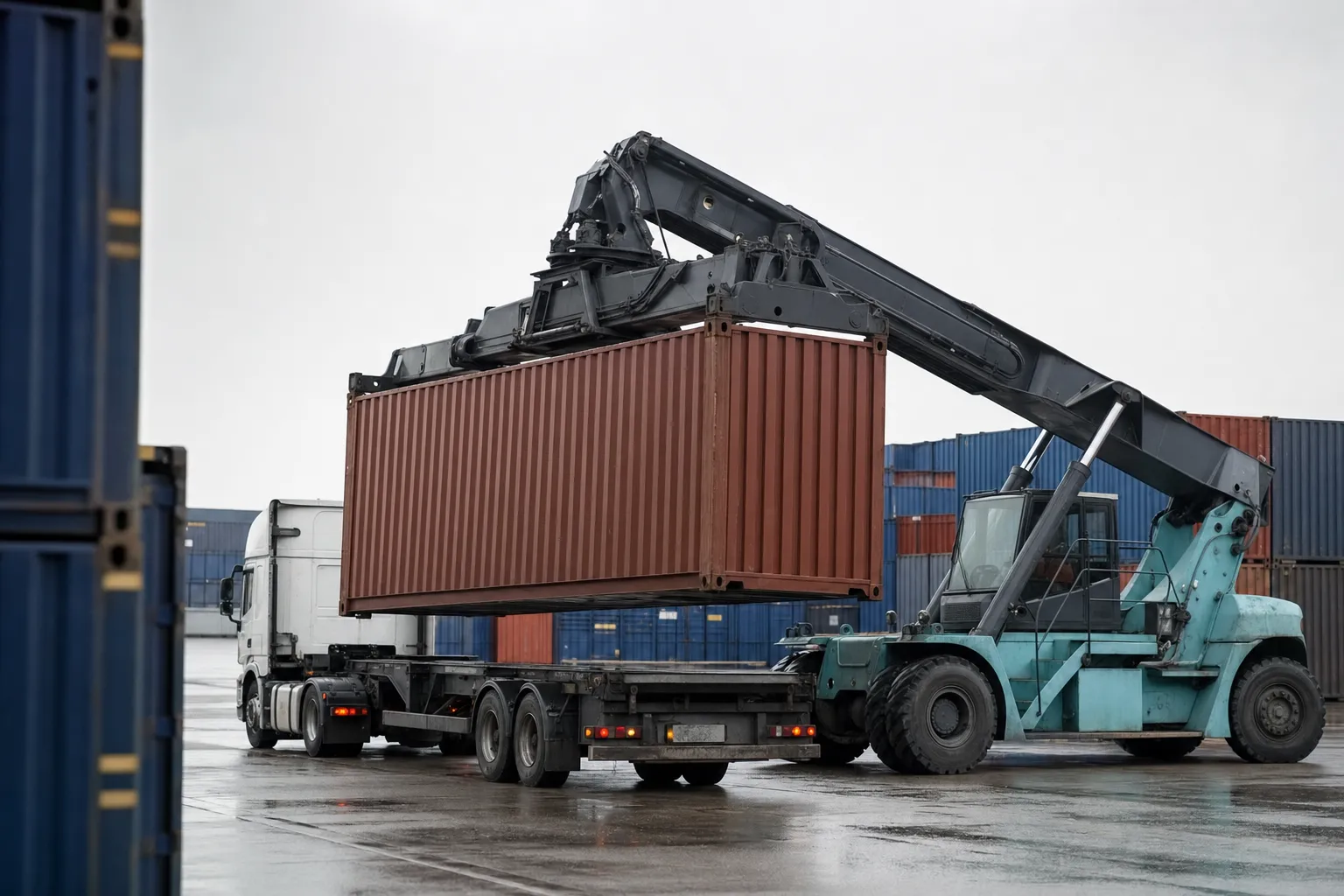
Illustrative: the handover a container actually has, in a yard rather than over a ship's rail.
CFR, CIF, CPT and CIP: when cost travels further than risk
The C and D rules are where exporters get surprised, because paying for a leg and owning the risk on that leg are two different things.
Under CFR and CIF, the seller pays freight to the named destination port, but risk passes when the goods are on board at the port of loading. Under CPT and CIP, the seller pays carriage to the named destination, and risk passes when the goods are handed to the first carrier — which may be an inland depot, before the cargo has traveled any distance. So a seller can be paying freight to Tanjung Priok while the buyer has owned the risk since a Tuesday afternoon in Guangdong. Cost and risk are allocated separately on purpose, and a claim is decided by the risk column, not the invoice.
Insurance is the other asymmetry. CIF carries minimum cover — Clauses (C), named perils with exclusions — and CIP now carries Clauses (A). Sell CIF and your buyer may assume they are covered against everything; sell CIP and you have taken on a broader obligation than many exporters realize, with the premium sitting inside a price you may have quoted as if it were CIF.
There is also a national layer the rule knows nothing about. The ICC's survey of national barriers lists Indonesia against CIP and CIF, because marine cargo insurance is compulsory for exports of coal and crude palm oil and for imports of rice and other imports for government procurement when carried by sea (ICC, National regulatory barriers to the Incoterms 2020 rules). If your buyer's import falls in one of those flows, a CIF quotation built on the rule's default cover can collide with a local requirement that has nothing to do with what you agreed — a question for the buyer and its broker, early, not a discovery at the port.
DAP, DPU and DDP: where delivery ends and the border begins
The three D rules all deliver at destination, and they differ in exactly two places: who unloads, and who clears import.
DAP ends when the goods are placed at the buyer's disposal on the arriving vehicle, ready for unloading, at the named place. The seller has paid carriage to that point; the buyer clears import and pays what the entry attracts.
DPU is the same except that the seller also unloads — the only rule in the set that puts unloading on the seller. On this lane it is rare for a practical reason: unloading at an Indonesian consignee's yard needs equipment and a site that can take it, which a seller in China is not in a position to promise. DPU suits sellers who genuinely control the last mile, not a label for "we'll get it off the truck."
DDP (Delivered Duty Paid) puts import clearance on the seller as well. Of the eleven rules it is the maximum obligation a seller can take, and the one most often sold without the capability behind it. Whether that obligation can be performed at all is a question about the destination, not the price — and on this lane a question about who is allowed to be the importer. We take that apart in DDP, DDU or single clearance: which route fits your shipment.
The decision table: who books, who clears, where risk moves
Read the column that matters. "Typical fit" is a judgment about this lane, not a rule.
Rule | Main carriage booked by | Export clearance | Import clearance | Risk passes | Typical fit |
|---|---|---|---|---|---|
EXW | Buyer | Buyer | Buyer | At the seller's premises, goods not loaded | Domestic-style sales; rarely honest on a China-origin export |
FCA | Buyer | Seller | Buyer | On handover to the buyer's carrier at the named place | The default for container cargo and LCL |
FAS | Buyer | Seller | Buyer | Alongside the vessel at the named port | Breakbulk and some bulk; almost never containers |
FOB | Buyer | Seller | Buyer | On board the vessel at the named port | Conventional cargo over the rail; a poor fit for containers |
CFR | Seller | Seller | Buyer | On board at the loading port | Seller has better freight rates and wants to keep them; like FOB, an on-board delivery point, so a poor fit for containers |
CIF | Seller | Seller | Buyer | On board at the loading port | Same as CFR, with minimum cover the seller arranges; container mismatch unchanged |
CPT | Seller | Seller | Buyer | On handover to the first carrier | Air, multimodal, and inland handovers before the sea leg |
CIP | Seller | Seller | Buyer | On handover to the first carrier | High-value manufactured goods where all-risks cover is expected |
DAP | Seller | Seller | Buyer | At the named destination, ready for unloading | Seller controls carriage to the door; buyer has an importer |
DPU | Seller | Seller | Buyer | At the named destination, after unloading | Seller controls unloading equipment at destination |
DDP | Seller | Seller | Seller | At the named destination, import cleared | Only where the seller can actually perform import clearance |
EXW
Main carriage booked by
Buyer
Export clearance
Buyer
Import clearance
Buyer
Risk passes
At the seller's premises, goods not loaded
Typical fit
Domestic-style sales; rarely honest on a China-origin export
FCA
Main carriage booked by
Buyer
Export clearance
Seller
Import clearance
Buyer
Risk passes
On handover to the buyer's carrier at the named place
Typical fit
The default for container cargo and LCL
FAS
Main carriage booked by
Buyer
Export clearance
Seller
Import clearance
Buyer
Risk passes
Alongside the vessel at the named port
Typical fit
Breakbulk and some bulk; almost never containers
FOB
Main carriage booked by
Buyer
Export clearance
Seller
Import clearance
Buyer
Risk passes
On board the vessel at the named port
Typical fit
Conventional cargo over the rail; a poor fit for containers
CFR
Main carriage booked by
Seller
Export clearance
Seller
Import clearance
Buyer
Risk passes
On board at the loading port
Typical fit
Seller has better freight rates and wants to keep them; like FOB, an on-board delivery point, so a poor fit for containers
CIF
Main carriage booked by
Seller
Export clearance
Seller
Import clearance
Buyer
Risk passes
On board at the loading port
Typical fit
Same as CFR, with minimum cover the seller arranges; container mismatch unchanged
CPT
Main carriage booked by
Seller
Export clearance
Seller
Import clearance
Buyer
Risk passes
On handover to the first carrier
Typical fit
Air, multimodal, and inland handovers before the sea leg
CIP
Main carriage booked by
Seller
Export clearance
Seller
Import clearance
Buyer
Risk passes
On handover to the first carrier
Typical fit
High-value manufactured goods where all-risks cover is expected
DAP
Main carriage booked by
Seller
Export clearance
Seller
Import clearance
Buyer
Risk passes
At the named destination, ready for unloading
Typical fit
Seller controls carriage to the door; buyer has an importer
DPU
Main carriage booked by
Seller
Export clearance
Seller
Import clearance
Buyer
Risk passes
At the named destination, after unloading
Typical fit
Seller controls unloading equipment at destination
DDP
Main carriage booked by
Seller
Export clearance
Seller
Import clearance
Seller
Risk passes
At the named destination, import cleared
Typical fit
Only where the seller can actually perform import clearance
Two readings matter. The import-clearance column says "buyer" ten times out of eleven, which is the lane's working default. And booking and risk only align in the F and D groups; in the C group they deliberately split. If the roles behind that column are fuzzy, broker, forwarder, NVOCC and carrier sets out which of them contracts to carry.
Why DDP into Indonesia is a licence question, not a price
An Incoterm allocates work between seller and buyer. It cannot create a legal person in the destination country, and Indonesian import declarations are filed by an importer registered there — with the business registration and the import identification that go with it, which is the subject of who is the importer of record in Indonesia.
So when a Chinese exporter quotes DDP, one of three things is true. Either the buyer will be the importer and the term is being used loosely to mean "we will arrange everything and bill you for it"; or the seller has an Indonesian entity or related company that can stand as importer; or a third party's registration is borrowed for the entry. Only the second is the seller performing DDP as the rule describes it. The third substitutes someone else's name on the declaration, with its own exposure.
The term does not move the customs liability either. The party named on the declaration is the party the border deals with, whatever the invoice says. A DDP invoice is a promise between buyer and seller; it is not a filing.
The everyday vocabulary then misleads. In Chinese export practice "DDP" is often shorthand for a door-to-door service with duties included, performed through whatever importer structure is available at destination. The service may be legitimate, but it is a service; the rule allocates obligations between two named parties, and quoting one as the other is how cargo arrives with a promise attached and nobody able to declare it. The eligibility question itself is covered in who can legally import into Indonesia.
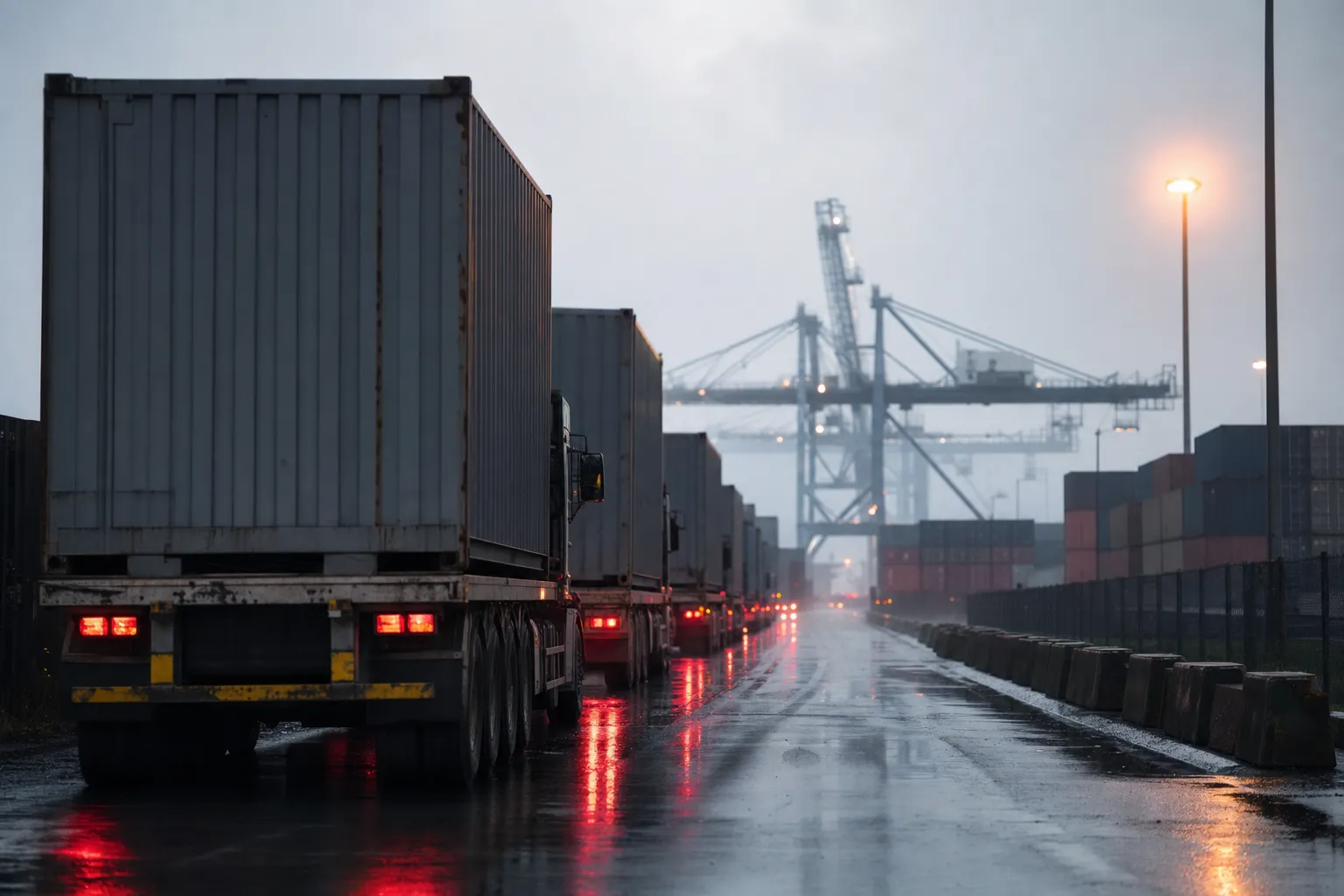
Illustrative: arrival and the right to import are separate events, and the gap between them is where costs accumulate.
What an Incoterm does not do
Worth stating plainly, because quotations are often asked to carry more than the rules can:
- It does not transfer title, and it does not set payment terms. Both sit outside the rules: when ownership passes is a matter for the contract and its governing law, and the method and timing of payment are not addressed at all (trade.gov, GOV.UK).
- It does not make your product importable. Registration, standards and restricted-goods questions sit with the importer and the product, not with the three letters.
- It does not cap what you owe if something goes wrong. Delay, demurrage, storage and the consequences of a documentary error are governed by the contract and the carrier's terms.
- It does not fix insurance beyond the minimum. Only CIF and CIP oblige the seller to insure at all, and only at the level the rule names.
The practical consequence is that a term is one clause of a quotation, not the quotation. Two offers that both say CIF usually differ in what each silently excludes — scope, validity, who handles a rework at destination — which is the method in how to compare freight quotes.
Ten questions to settle with your forwarder before you quote
These are the ones that change a number or a liability, so ask them before the quotation goes out rather than after the booking is confirmed.
- Which rule and which named place will appear on the invoice — the full string, not the three letters?
- Under this rule, who files the export declaration in China, and whose name is on it?
- Who books the main carriage, and whose contract of carriage will the bill of lading evidence?
- If the cargo is containerized, are we describing the handover that actually happens, or the one the rule assumes?
- What insurance level does this rule require, and what does our own policy cover that the rule's minimum does not?
- At destination, who is the importer of record, and does that entity hold the registration and import identification the entry needs?
- Is any part of this flow subject to a compulsory insurance or pre-shipment requirement on the Indonesian side?
- If import clearance fails or is delayed, who bears storage and what does the contract say about it?
- How will the commercial invoice, packing list and bill of lading describe the same goods, so the three do not contradict each other?
- If several suppliers feed this shipment, at how many points does custody change, and who owns the risk at each? The count rises with every supplier added, which is why consolidating cargo from multiple suppliers treats the handover count as a planning variable.
Where we sit
We do not declare, and we are not the importer of record on your shipment. What we do on this lane is reconcile the term with how the cargo will actually move: reading a quotation against the rule it names, checking that invoice and transport document describe the same goods, and sequencing your Indonesian importer and the broker it appoints into one plan. If your term is DAP or DDP and the destination side is unsettled, that conversation comes first.