
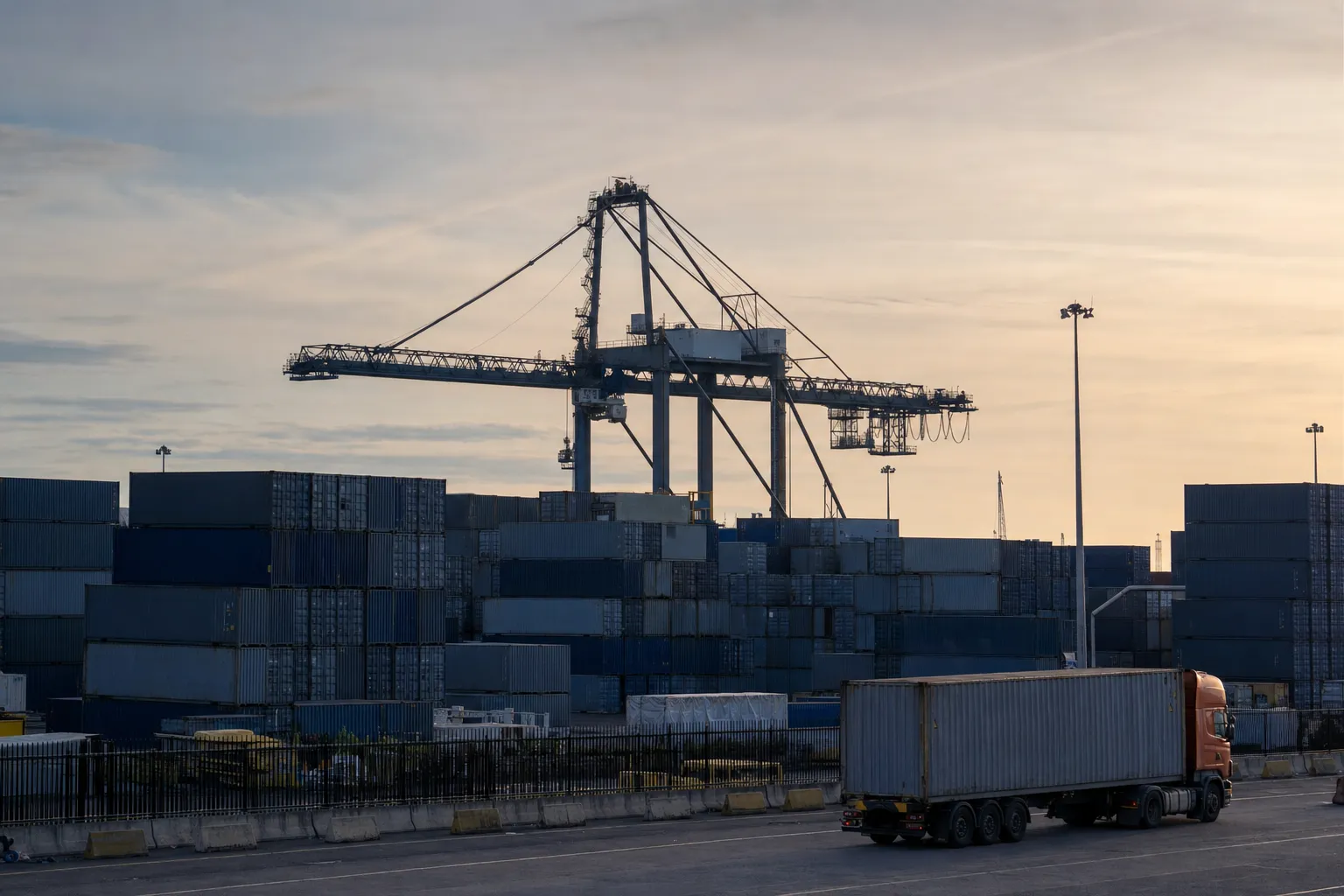
A forwarder shortlist takes an afternoon. The decision takes a week of asking for things you can check — because the company that can move your cargo and the company that can get it through the Indonesian border are not always the same company, and only one of them is on the quotation.
Most advice on choosing a freight forwarder was written for a shipper moving goods between two mature markets, where the customs side is a line item and the sea leg is the variable. On a China–Indonesia move that is inverted. The ocean leg is the part everybody can quote; the Indonesian entry is the part that decides whether your cargo ever leaves the port, and it is the part almost no selection checklist asks about. Search the phrase and you will find a page of near-identical lists of tips, none of which mention Indonesia at all.
So this is not another list. It is an order of checks — running from the one that is hardest to undo to the one that is easiest to renegotiate — with the evidence to demand at each step, and an honest answer to the question buyers actually ask: if a forwarder owns no ships and no warehouses, what makes it reliable?
This article prints no freight rate, no duty figure, no tax amount and no percentage, and promises no clearance or delivery date. Every scenario in it is illustrative — not a client case and not a quotation. Nothing here is customs, tax or legal advice, and nothing here makes us the importer of record: on the Indonesian side we assist and coordinate with the licensed importer and the broker it appoints.
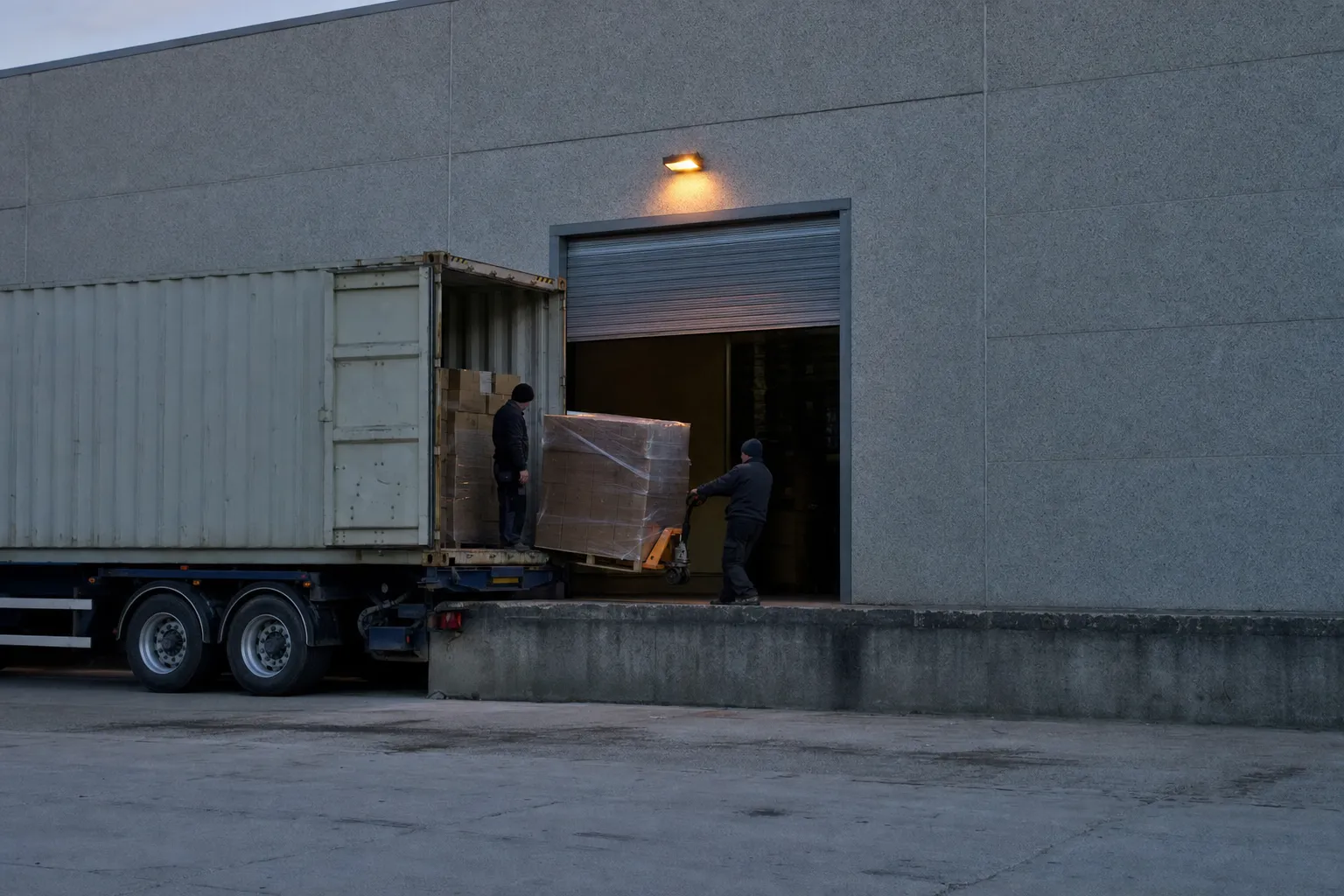
Illustrative: the first handover happens at your supplier's gate, before any quotation matters.
What you are buying is coordination, and the paperwork says so
The United States International Trade Administration describes international freight forwarders plainly: they are agents for exporters who can move cargo from dock to door, arranging and tracking freight, inland transport, consolidation and documentation. An agent, not a carrier. That single word explains most of what follows, including why a forwarder without a fleet is not an anomaly.
Four roles get confused in the same conversation, and the confusion costs buyers real money because each role answers a different question.
The role | What it is | Who it answers to | The question it can answer for you |
|---|---|---|---|
Freight forwarder | An agent that arranges carriage, documents and related services in your interest | You, the shipper | "How does this shipment get organised end to end?" |
Carrier | The party that physically operates the vessel or aircraft | Its own schedule and its own contract of carriage | "When does this box sail, and on what terms?" |
NVOCC | A common carrier that issues its own house bill of lading and does not operate the vessels | Regulated as a carrier in the trades it serves | "Who is the carrier on the paper, if not the shipowner?" |
Customs broker | The licensed party that lodges the entry with the importing country's customs authority | The customs authority in that country | "Who signs the declaration, and in whose name?" |
Freight forwarder
What it is
An agent that arranges carriage, documents and related services in your interest
Who it answers to
You, the shipper
The question it can answer for you
"How does this shipment get organised end to end?"
Carrier
What it is
The party that physically operates the vessel or aircraft
Who it answers to
Its own schedule and its own contract of carriage
The question it can answer for you
"When does this box sail, and on what terms?"
NVOCC
What it is
A common carrier that issues its own house bill of lading and does not operate the vessels
Who it answers to
Regulated as a carrier in the trades it serves
The question it can answer for you
"Who is the carrier on the paper, if not the shipowner?"
Customs broker
What it is
The licensed party that lodges the entry with the importing country's customs authority
Who it answers to
The customs authority in that country
The question it can answer for you
"Who signs the declaration, and in whose name?"
The NVOCC row is the one worth pausing on, because it settles the asset question before it is asked. The US Federal Maritime Commission defines an NVOCC as a common carrier that issues its own house bill of lading and does not operate the vessels by which the ocean transportation is provided. The licensing regime itself contemplates a carrier that owns no ships. So the answer to "can a freight forwarder be a carrier?" is yes — and it does not require a hull.
That does not make every asset-light operator competent. It relocates the question. The axis that matters is not how much equipment a forwarder owns; it is how many of the steps below have a named party, in writing, who is accountable when the step fails. An operator with three warehouses and no named broker at the destination is less useful than an operator with none and a broker it can name.
The import side is the first filter, not the last
Start where a mistake cannot be undone. On this lane, that is the Indonesian entry.
The International Trade Administration's country guide to Indonesian import requirements is blunt about the shape of it: documentation is submitted electronically through the Indonesia National Single Window in standard interchange formats, typically before the cargo arrives; importers must hold a valid import identification number and the appropriate licence; and exporters are advised to work with local brokers who know the current formats and systems. Read that as a list of things a freight forwarder cannot improvise at the quay.
Three consequences follow for your shortlist, and each of them is a question you can ask on the first call.
Whose name is on the entry? Not the forwarder's, unless it is also the importer — which is a different and much larger commitment, with its own tax and licensing consequences. In most structures the entry is lodged under the importer's registration, by a broker the importer appoints. If a candidate cannot explain who the importer of record is in your structure, it has not understood your shipment.
Which registration does the entry sit under? The importer's identification and licence are not paperwork the forwarder can lend you, and the registration an entry is lodged under determines what you are allowed to import at all. A forwarder that has never asked about yours is quoting into a vacuum.
What happens when the entry is queried? Indonesia's customs directorate, Direktorat Jenderal Bea dan Cukai, is where the declaration becomes an entry, and a query, a request for a correction or a physical examination is a process with steps and deadlines that someone has to own. "We will handle it" is not an answer; "our broker in Jakarta lodges the correction, you sign the amended declaration, and here is who calls you" is.
This is the filter that removes most candidates, and it removes them for the right reason. A forwarder that is excellent at booking space and silent about the entry has sold you half a service. Our own position on this side is deliberately narrow: we coordinate with the licensed importer and the broker it appoints, we do not declare in your name, and we do not become the importer of record.
Then the lane, and then the part in between
Only after the import side makes sense is route experience worth discussing — and on this lane it is specific rather than general. Chinese origin ports behave differently from each other in sailing frequency, feeder connections and how quickly a container can be gated in; the Indonesian destination changes the inland leg entirely.
Ask which ports the candidate actually runs, not which it can serve. A working answer sounds like a short list: Shanghai, Ningbo, Shenzhen, Guangzhou, Xiamen, Qingdao or Tianjin at origin, and Jakarta, Semarang, Surabaya, Belawan, Makassar or Batam at destination. A candidate that claims all of them weekly is either very large or reciting a map. Choosing the Chinese origin port is a decision with its own logic — factory location, cut-off times, whether the box can be railed — and a forwarder worth hiring will have an opinion about it rather than asking you to pick.
The part in between matters just as much. Not every China–Indonesia service sails direct; some route through a transhipment hub, which means the cargo changes vessel and the responsibility for the connection changes hands. Ask three things: is this direct or transhipment, who handles the connecting leg, and who tells me if the connection is missed. The answer separates a forwarder that controls its connections from one that discovers them at the same time you do.
On transit time, insist on the shape of the promise rather than a number. A usable statement names the start point, the end point, the mode, and what is excluded — port-to-port is not door-to-door, and a range that quietly excludes customs examination is not a range, it is a hope. Conditional ranges are the only honest form here, and a candidate that gives you a single flat figure without conditions is telling you it has not read your cargo.
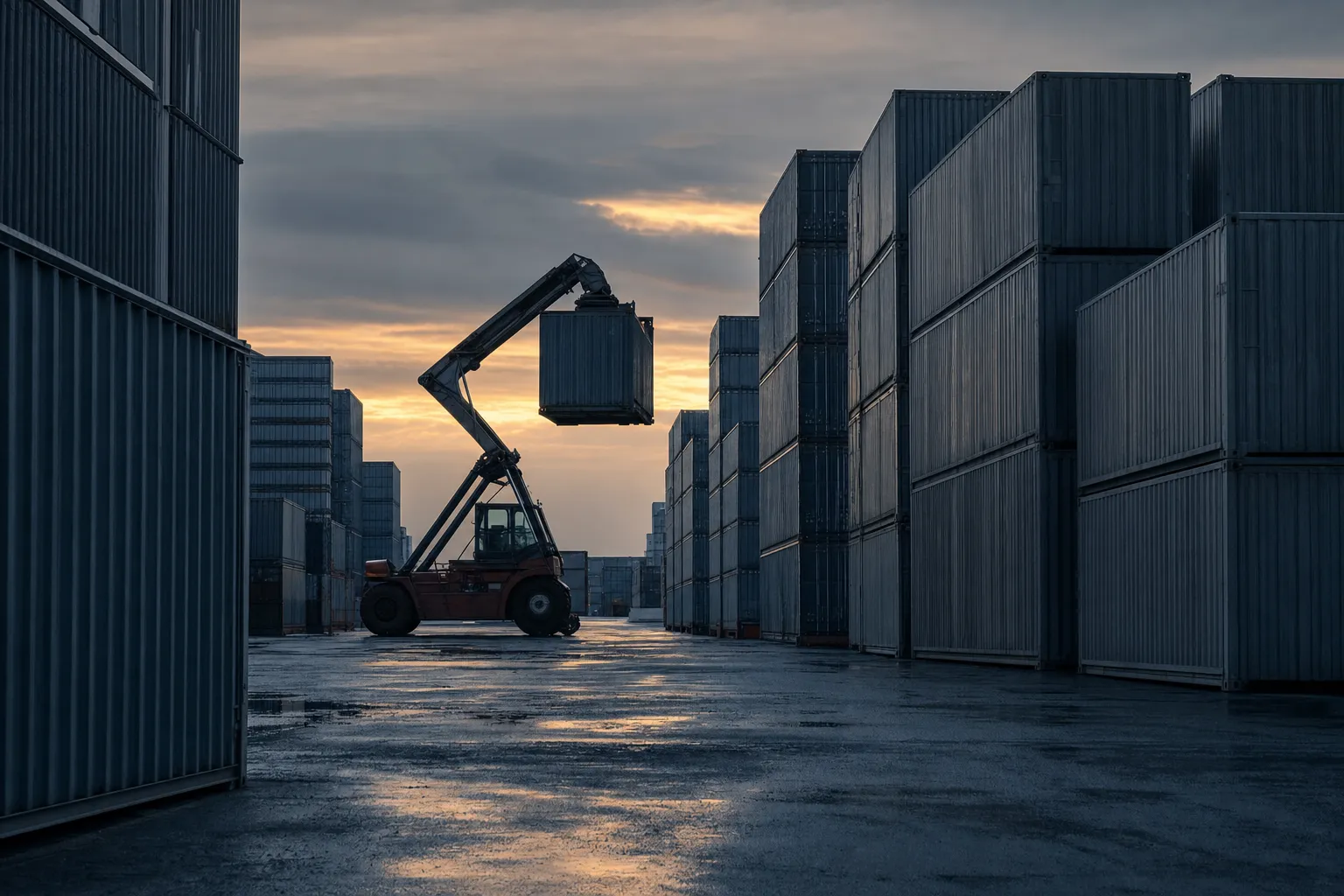
Illustrative: a connection is a handover, and every handover needs a name attached to it.
Scope is where two quotations stop being comparable
Two quotes for the same shipment are rarely quotes for the same shipment. One includes pickup and export declaration; one starts at the container yard. One includes destination handling; one leaves it to be invoiced on arrival. Comparing the totals before comparing the scopes is how buyers end up choosing the option that was cheaper because it was smaller.
The scope question is not a pricing question, and you can settle it without discussing money at all. Ask the candidate to list, in writing, which of the following sits inside its quotation and which is billed by someone else: origin handling and trucking, export declaration, ocean or air freight, destination terminal charges, Indonesian entry and clearance, delivery to site, cargo insurance, and the costs that appear only when something goes wrong — storage, demurrage, examination, rework.
That last group is the one that decides the real comparison, and it is the group most quotations omit. Whoever bears those costs is a term of the deal, and it should be written down before the first booking rather than discovered on the second.
Cargo insurance belongs on the same list, and it is usually assumed rather than checked. Ask whether cover is the forwarder's own policy, a declared-value arrangement made on your behalf, or nothing at all, and who files the claim when a crate arrives crushed. The answer changes what you are buying far more than the line it appears on.
Two structural choices sit above this list and change who is responsible for what: whether the shipment moves on DDP, DDU or single clearance, and which Incoterm the sale is written on, since the ICC's Incoterms rules are what allocate carriage, insurance and clearance between you and your supplier in the first place. A forwarder that will not discuss either is quoting a shipment it has not understood.
Five pieces of evidence worth more than an assurance
References are useful and easy to fake in conversation. The difference between a good shortlist and a bad one is usually that somebody asked for an artefact instead of an assurance. Five of them do most of the work.
The claim you will hear | The artefact to ask for | What it proves | What it does not prove |
|---|---|---|---|
"We are licensed" | The legal entity name and licence or registration number, plus the public register where it can be checked | That the entity exists in that capacity, in that jurisdiction | Anything about service quality, capacity or pricing |
"We handle Indonesia" | The name of the Indonesian entity or partner that will lodge the entry, and its role in your shipment | That the import side has a named owner | That the entry will be quick, or that the classification is right |
"We run this lane" | The last three comparable shipments, described by cargo structure and routing rather than client name | Familiarity with your cargo type and the ports involved | That space will be available in a tight market |
"We handle problems" | A written escalation path: who is called, in what order, at what hour, and who decides | That accountability exists on paper before the first crisis | That the outcome will be the one you want |
"The quote covers everything" | An itemised scope with exclusions written next to inclusions | Comparability with the other quotes | That the total will hold if the shipment changes |
"We are licensed"
The artefact to ask for
The legal entity name and licence or registration number, plus the public register where it can be checked
What it proves
That the entity exists in that capacity, in that jurisdiction
What it does not prove
Anything about service quality, capacity or pricing
"We handle Indonesia"
The artefact to ask for
The name of the Indonesian entity or partner that will lodge the entry, and its role in your shipment
What it proves
That the import side has a named owner
What it does not prove
That the entry will be quick, or that the classification is right
"We run this lane"
The artefact to ask for
The last three comparable shipments, described by cargo structure and routing rather than client name
What it proves
Familiarity with your cargo type and the ports involved
What it does not prove
That space will be available in a tight market
"We handle problems"
The artefact to ask for
A written escalation path: who is called, in what order, at what hour, and who decides
What it proves
That accountability exists on paper before the first crisis
What it does not prove
That the outcome will be the one you want
"The quote covers everything"
The artefact to ask for
An itemised scope with exclusions written next to inclusions
What it proves
Comparability with the other quotes
What it does not prove
That the total will hold if the shipment changes
The second row is the one that changes decisions. Almost any forwarder can name a partner; very few will put in writing which entity files the PIB, Indonesia's import declaration, and in whose name. If that sentence cannot be produced, the rest of the proposal is decoration.
The fourth row is the cheapest to test and the most often skipped. Ask what happens at two in the morning when a vessel is omitted and your production line starts on Monday. The answer tells you whether you are buying a relationship or a phone number.
Two more artefacts are worth asking for, and buyers usually forget them. A reference is only useful when it comes from a shipper with your cargo profile on this lane: ask for two, and ask what went wrong in each. Visibility works the same way — a portal login is not an update. Ask to see the message you would actually receive at each milestone, and who sends it.
Why an asset-light forwarder can be the more reliable choice
Now the question the search results avoid. If a forwarder owns no vessels, no trucks and no warehouse, what exactly are you paying for, and why should that be more reliable than a company with assets?
Four things, and each one has a test you can apply in the first meeting.
Professional assessment. The value is not in agreeing with you; it is in what the forwarder refuses, flags or re-routes before you book. A candidate that has never told a customer "this cargo will not clear as described" is not assessing, it is accepting. Test: ask what would make them decline this shipment, and listen for a specific answer about documents, classification or admission — not about price.
Resource integration. Few operators own every link on this lane, so the question is how many independent options sit behind the quotation. A forwarder tied to one carrier has one schedule; one with several has a recovery plan. Test: ask which carriers it can book this lane on, and what it does when the first one slips.
Process coordination. The work that decides outcomes is the handoffs — between the factory and the port, between the export declaration and the vessel, between the arrival notice and the entry, between clearance and the truck. Coordination is a job with a sequence and a memory, and it is measurable in how quickly a candidate can describe your shipment's critical path. Test: ask them to walk the shipment from factory gate to site, naming who acts at each step.
A single window that is accountable. One named person who knows the file beats a department that knows the account number. Test: ask who specifically will handle your shipments after onboarding, what their backup is, and how you reach them when they are on leave. Vague answers here predict the experience you will have in month three.
Where asset-light is genuinely weaker, and it is worth saying plainly: capacity in a tight market is not guaranteed without a contract behind it; a forwarder without its own terminal has no influence over a terminal's decisions; and no forwarder of any size can absorb a customs determination or make a query disappear. Those are real exposures. They are managed with written service commitments, named carriers, a named destination partner and a scope that prices the risk explicitly — which is the same list you would need from an asset-heavy operator, because an owned ship does not clear your entry either.
What has to be agreed before that first booking — the cargo description, the split, the documents, the site sequence — is a separate exercise, covered in what has to be agreed before the first booking. Choosing the partner and briefing the partner are two different weeks.
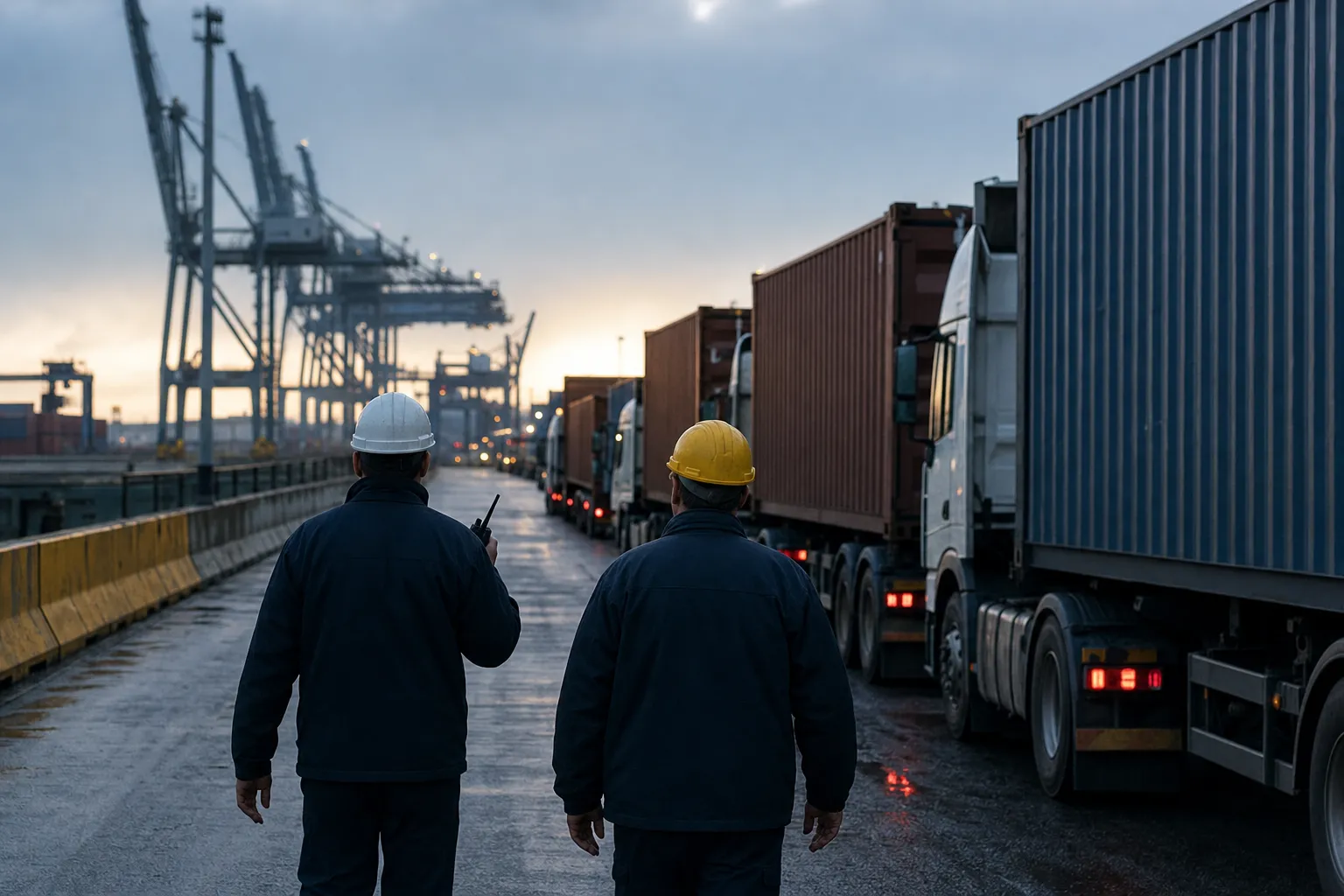
Illustrative: the job is the handoffs, not the hardware.
Red flags that are specific to this lane
Generic warnings about cheap quotes and slow email apply everywhere, and most published advice on how to choose a freight forwarder stops there. These are the ones that matter when the destination is Indonesia.
- "We clear everything." A forwarder that answers the clearance question without asking about your importer registration, your licence or your product has answered a different question. Clearance is not a service anyone can promise in the abstract on this lane.
- No named Indonesian entity. If the answer to "who lodges the entry" is "our partner", ask for the name, the role and the address. A partner that cannot be named is a hope.
- A classification answer before a product answer. Anyone who tells you the duty treatment of your goods before asking what the goods are, in what state, and in what configuration, is guessing. On equipment and regulated goods that guess travels into the permit file.
- One number, no scope. A quotation that is a total without inclusions and exclusions cannot be compared, and usually cannot be defended when the first extra charge arrives.
- No answer on who bears storage, demurrage or examination costs. These are the costs that turn a good quarter into a bad one, and silence about them is a choice.
- A promise of a fixed transit time with no conditions. Modes, ports, cut-offs and examinations change the number; a promise without conditions is marketing.
- Assets claimed but not addressable. "Our warehouse" without a location, or "our fleet" without a registration, is a claim you cannot verify and should not price.
- Pressure to book before documents are ready. Urgency is sometimes real, but a forwarder that pushes a booking ahead of the documents is transferring its schedule risk to your entry.
Eight questions to send before you shortlist
Send these in one email to three candidates and compare the replies side by side. The value is less in the answers than in which ones arrive written, specific and unprompted.
- Which Chinese origin ports and which Indonesian destination ports do you run regularly, and is this routing direct or transhipment?
- In my structure, who is the importer of record, and which entity lodges the entry — yours, mine, or a broker's?
- Which documents do you need from me before you will confirm a booking, and which of them do you produce?
- What is included in your scope and what is billed separately, including storage, demurrage and examination costs?
- What is your transit statement for this lane, with its start point, end point and exclusions?
- Who handles my file after onboarding, who is the backup, and how do I reach them outside office hours?
- What would make you decline this shipment?
- What have you done in the last year when a vessel was omitted or an entry was queried?
Question seven is the one that separates assessors from order-takers, and question eight is the one that cannot be answered from a brochure.
Two shortlists, one shipment: an invented comparison
A manufacturer in Guangdong is moving a production line to a site outside Surabaya, in three lots, with the importer registration already in its Indonesian subsidiary's name. Nothing below is a client case and nothing below is a quotation; it is a constructed illustration of how the evidence order changes a decision.
Shortlist A is the international brand. The proposal is polished: a single figure, a transit line, a service brochure with a global network map. Asked who lodges the entry, the account manager says the local team handles it. Asked what happens if the classification is queried, the answer is that their broker will deal with it. Asked which entity that broker is, the answer will follow.
Shortlist B is a smaller, asset-light coordination firm. The proposal is less handsome: an itemised scope with three exclusions named, a transit statement with its start and end points, the name of the Jakarta entity that will lodge the entry, and a paragraph saying that two of the machine sections should probably travel as separate declarations — with a question about the control cabinet attached.
On the criteria most buyers use, A wins: bigger, cheaper-looking, faster-sounding. On the criteria that decide whether the line starts on time, B is ahead, because it has already found the argument that will otherwise surface at the border. That is not an argument for small firms. A small firm without a named destination partner is worse than a large one with a named partner. It is an argument for judging the file, not the logo — and for asking the importer-side questions before the commercial ones, while there is still time to walk away.
Where we sit
We are Yanchao, an asset-light coordinator on this lane, and we describe that plainly because it is the honest description: we do not own vessels, terminals or warehouses. What we do is assessment before booking, integration of the carriers and the Indonesian-side partners the shipment needs, coordination across the customs, inspection, tax, foreign-exchange and logistics steps, and one accountable window for the file. On the Indonesian import side we assist and coordinate with the licensed importer and the broker it appoints; we do not declare in your name and we are not the importer of record.
If you are at the shortlist stage, the useful thing to send is not "please quote". It is the shipment profile: what the goods are and in what state, how many pieces and their dimensions, the origin and destination, which documents exist and which do not, and who the importer will be. That is enough to tell you whether the route is straightforward and where it is not — and it is the same information any candidate worth shortlisting will ask for. The rest of the project cargo articles in this section cover what happens after the partner is chosen.