

Lithium battery shipping is governed twice: by the rulebook that gets the box onto an aircraft or a vessel, and by the one that lets the goods be imported and sold in Indonesia. A consignment can satisfy the first completely and still be unusable at destination, because the two are read by different people, on different clocks, against different evidence.
So "what documents do I need for batteries?" has no single answer. Any page that hands you one is selling a checklist that fails on the first consignment that does not match its assumptions.
This article prints no freight rate, no tax figure, no duty percentage and no currency amount, and promises no transit time for any mode. No example is a client case and no figure is a quotation. Nothing here is legal or regulatory advice. Whether a particular consignment may fly, may sail, or may be imported is determined per shipment by the carrier, the terminal and the Indonesian authorities.
Two files, not one
The transport file is read by an airline's dangerous goods desk, a forwarder, a container terminal. Its currency is the UN number, the packing instruction, the watt-hour rating and a signed declaration. The admission file is read by an Indonesian importer, a broker and whichever technical regulator owns the product family. Its currency is an import licence, a product certificate and a labelling artwork.
Neither discharges the other. A shipper can hold a flawless air waybill and still have goods that cannot be distributed in Indonesia; an importer can hold every certificate the product needs and still fail to book space, because the battery inside the device was never declared as a battery. The useful unit of work is a screen: a repeatable review against both files before anyone books — the discipline in pre-shipment cargo review, applied to the cargo family where the two questions diverge most.
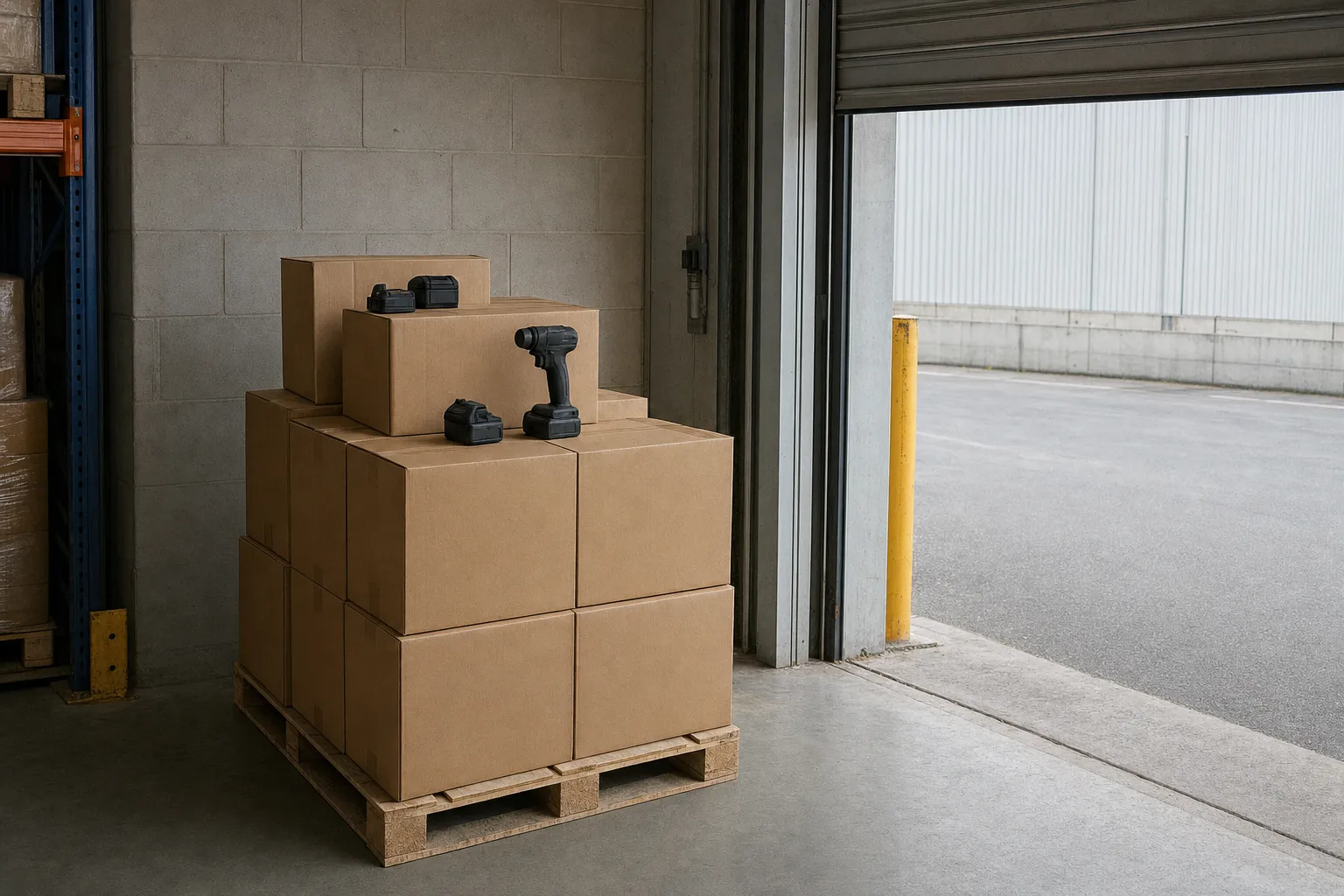
What actually changes between air and sea
Most exporters pick the mode on cost and speed, then hand compliance to whoever answers the phone — backwards. Air and sea do not differ in the amount of paperwork; they differ in which document is operative, which packing standard applies, and what condition the battery must be in at handover.
What changes | By air | By sea |
|---|---|---|
Governing rules | ICAO Technical Instructions, in practice via the IATA Dangerous Goods Regulations | The IMDG Code, mandatory under SOLAS chapter VII |
Operative document | Shipper's declaration for dangerous goods | Dangerous goods declaration, commonly the IMDG multimodal form — fully regulated entries only |
Who certifies the packed unit | No container certificate — the shipper's declaration covers the packages | The container packing certificate, signed by whoever packed it — fully regulated entries only |
Packing standard | UN specification packaging where the section requires it, plus the matching packing instruction | IMDG packing instruction, marking and labelling, stowage and segregation |
State of charge | Capped — and since January 2026 also for lithium-ion batteries packed with equipment above 2.7 Wh | No equivalent cap |
Aircraft restriction | Batteries shipped alone are forbidden on passenger aircraft (State exemption only) | No passenger/cargo split; the equivalent is segregation on board |
Governing rules
By air
ICAO Technical Instructions, in practice via the IATA Dangerous Goods Regulations
By sea
The IMDG Code, mandatory under SOLAS chapter VII
Operative document
By air
Shipper's declaration for dangerous goods
By sea
Dangerous goods declaration, commonly the IMDG multimodal form — fully regulated entries only
Who certifies the packed unit
By air
No container certificate — the shipper's declaration covers the packages
By sea
The container packing certificate, signed by whoever packed it — fully regulated entries only
Packing standard
By air
UN specification packaging where the section requires it, plus the matching packing instruction
By sea
IMDG packing instruction, marking and labelling, stowage and segregation
State of charge
By air
Capped — and since January 2026 also for lithium-ion batteries packed with equipment above 2.7 Wh
By sea
No equivalent cap
Aircraft restriction
By air
Batteries shipped alone are forbidden on passenger aircraft (State exemption only)
By sea
No passenger/cargo split; the equivalent is segregation on board
Three matter most. The state-of-charge cap is an air rule, extended from January 2026 to lithium-ion batteries packed with equipment above 2.7 Wh — so cells filled for a sea booking may not be flyable later. The aircraft restriction can make a planned air consignment unbookable on its UN number alone. And at sea, compliance moves to the packed container, signed by whoever packed it — often not the party that signed the invoice. If the mode is still open, the trade-offs are in sea freight or air freight to Indonesia; choose it before the documents are prepared, or they get prepared twice.
The documents a forwarder will ask for
The request usually arrives as one line: "send MSDS and UN38.3." That line compresses six or seven documents from four parties, only some of them transport documents. The practical question is which of it you can produce this week.
Document | What it establishes | Who issues it | Air | Sea |
|---|---|---|---|---|
UN 38.3 test summary | The cell or battery design type passed the UN Manual of Tests and Criteria | Manufacturer or later distributor | Must be made available | Must be made available |
Safety data sheet (SDS/MSDS) | Product hazards for handling and emergency response | Manufacturer | Not a transport document | Not a transport document |
Shipper's declaration | The consignment is prepared to the air rules | Shipper, signed by trained staff | Operative | — |
Dangerous goods declaration | The same attestation for the maritime mode | Shipper | — | Operative — fully regulated entries only |
Container packing certificate | The container was packed, secured and segregated to the rules | Whoever packed the container | — | Operative — fully regulated entries only |
Invoice and packing list | What the goods are, with UN number, Wh rating or lithium content per package | Shipper | Required | Required |
Battery specification sheet | Chemistry, configuration, Wh rating or lithium content, model numbers | Manufacturer | Required in practice | Required in practice |
Carrier DG acceptance | This operator will carry this consignment | Airline or shipping line | Required | Required |
UN 38.3 test summary
What it establishes
The cell or battery design type passed the UN Manual of Tests and Criteria
Who issues it
Manufacturer or later distributor
Air
Must be made available
Sea
Must be made available
Safety data sheet (SDS/MSDS)
What it establishes
Product hazards for handling and emergency response
Who issues it
Manufacturer
Air
Not a transport document
Sea
Not a transport document
Shipper's declaration
What it establishes
The consignment is prepared to the air rules
Who issues it
Shipper, signed by trained staff
Air
Operative
Sea
—
Dangerous goods declaration
What it establishes
The same attestation for the maritime mode
Who issues it
Shipper
Air
—
Sea
Operative — fully regulated entries only
Container packing certificate
What it establishes
The container was packed, secured and segregated to the rules
Who issues it
Whoever packed the container
Air
—
Sea
Operative — fully regulated entries only
Invoice and packing list
What it establishes
What the goods are, with UN number, Wh rating or lithium content per package
Who issues it
Shipper
Air
Required
Sea
Required
Battery specification sheet
What it establishes
Chemistry, configuration, Wh rating or lithium content, model numbers
Who issues it
Manufacturer
Air
Required in practice
Sea
Required in practice
Carrier DG acceptance
What it establishes
This operator will carry this consignment
Who issues it
Airline or shipping line
Air
Required
Sea
Required
Read the issuer column before the document column. Three rows are yours and can be done today. Three belong to the manufacturer, and the test summary among them cannot be improvised or replaced by a supplier's compliance letter. The last two belong to whoever packs the container and to the carrier — they exist only after the work is done and the request is made. The bottleneck is rarely invoicing; it is the time needed to obtain a summary matching the exact model being shipped, not the one sales quoted six months ago.
The SDS question
The most useful correction here comes from IATA's own guidance: neither the DGR nor the regulatory requirements of other modes require a safety data sheet when batteries are offered for transport, and an SDS is not a transport document. It exists for substances and mixtures meeting the GHS classification criteria, which does not cover manufactured articles such as batteries.
Forwarders ask for it as a commercial screen — chemistry, packaging, hazards, emergency response — which it serves. What it cannot do is prove what the carrier needs. An SDS describes a product family's hazards. The test summary describes a design type — manufacturer, laboratory, a unique report number, the date, the mass and watt-hour rating, the model numbers, and pass or fail per test. A sentence about UN 38.3 inside a safety data sheet is not that summary, and a supplier who sends only an SDS has not yet answered the question.
The fix: stop sending one PDF and label two — the test summary is the transport evidence, the SDS the handling document.
UN 38.3: the test summary, not the report
The requirement attaches to the design, not the shipment. Except for button cells installed in equipment, manufacturers and later distributors must make a test summary available (PHMSA). IATA states that it need not travel with every consignment: it can sit on a website, with a QR code or URL on the battery, its packaging or the transport documents — and that IATA does not support requiring a summary with every shipment.
Not every carrier accepts that distinction; some write stricter conditions. "Made available" is the rule; "attached to every booking" is a preference imposed anyway.
Check the summary against this list before forwarding, because one missing report number or responsible person's name gets it bounced: manufacturer and laboratory contact details; a unique test report number and date; chemistry, mass, watt-hour rating or lithium content, physical description and model numbers; tests conducted with pass or fail results; any reference to assembled-battery testing requirements; the edition of the UN Manual used; and the name and title of the responsible person.
Packing, labels and state of charge
By air, the packing instruction follows the UN number and the section within it: lithium-ion batteries shipped alone are UN 3480 under PI 965, packed with equipment UN 3481 under 966, contained in equipment UN 3481 under 967. Lithium metal runs the parallel set, UN 3090 and 3091, and its threshold is lithium content — 1 g per cell, 2 g per battery — not watt-hours. The larger lithium-ion class — batteries above 100 Wh, cells above 20 Wh — concentrates the restrictions: under Section IA of PI 965, the FAA's shipper guide sets out that these are forbidden on passenger aircraft, limited to 35 kg net per package on cargo aircraft, capped at 30% state of charge, packed to UN specification at packing group II, and accompanied by a shipper's declaration with Class 9 lithium battery and cargo-aircraft-only labels. From January 2026 the charge cap also reaches lithium-ion batteries packed with equipment above 2.7 Wh; for batteries contained in equipment it remains only a recommendation.
Damaged, defective or recalled cells and batteries are forbidden by air, including devices recalled for battery reasons. And a power bank is classified as a battery, not as a battery contained in equipment — which moves it into the fully regulated instruction, charge cap included. The lithium battery mark is separate: it goes on Section II packages under PI 966 and 967, and on Section IB of PI 965 and 968 in addition to the Class 9 and cargo-aircraft-only labels; it never goes on Section IA.
For illustration only, and not a client case or a quotation: 20,000 mAh power banks quoted to a buyer as "electronics with a battery inside" are not a Section II consignment. As batteries shipped alone they are charge-capped, restricted from passenger aircraft and require a declaration.
By sea, the IMDG Code governs packing, container traffic, stowage and segregation, and compliance moves to the packed container: packages carry the marks and labels the entry requires, the container is packed and secured to the rule set, and the packing certificate is signed by whoever did the work. No charge cap, no passenger/cargo split; the decisions are stowage and segregation. Everything above describes a fully regulated entry. The small end of the same cargo family has an exit: under special provision 188 of the IMDG Code, cells up to 20 Wh and batteries up to 100 Wh — 1 g and 2 g of lithium content for the metal chemistry — travel in packages of 30 kg gross or less (unless installed in or packed with equipment) with no dangerous goods declaration and no Class 9 label, keeping the battery mark, inner packaging, short-circuit protection and a package that survives a 1.2 m drop. Air's "Section II" has no sea equivalent, so the power bank above can sail under 188 and still needs a declaration to fly.
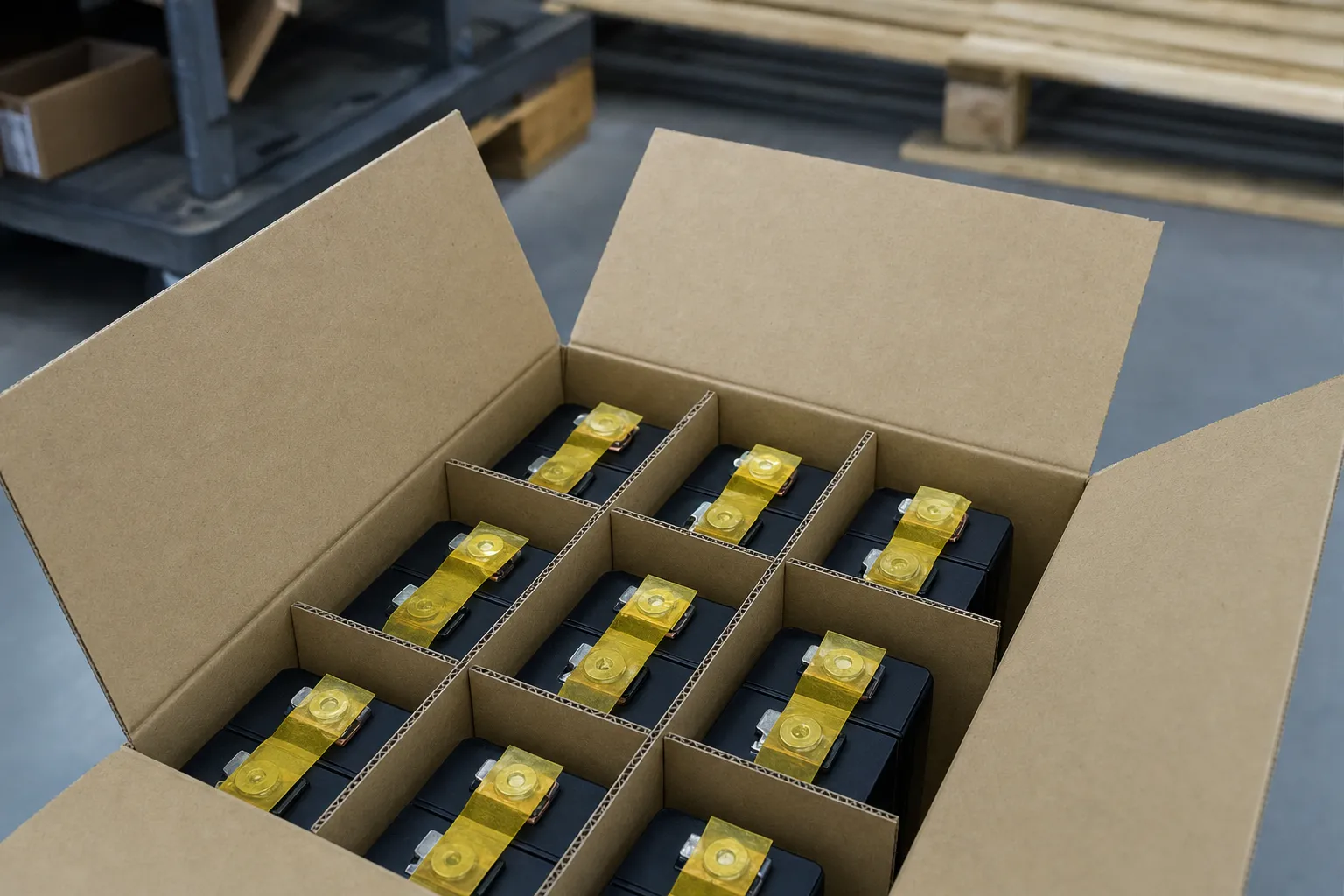
The Indonesian side runs on a different clock
Everything above gets the goods to Indonesia. None of it admits them. The admission file is built by the importer and the product's regulator, on a clock that does not run on booking cut-offs — starting it at booking is already late.
Who may import. Importers must hold a valid import identification number and the appropriate licence; sector agencies may require further permits before shipment approval, and declarations move through the national single window before arrival (US International Trade Administration). Whether your buyer holds those credentials is not something a forwarder can answer for them — see who is the importer of record.
Whether the product family needs a certificate. Two regimes matter, and they are often confused:
- Mandatory standards. Indonesia's standards body has developed several thousand SNI standards, a minority mandatory, concentrated in sectors that include electronics. Certification typically requires an Indonesian importer or local partner, technical documentation and laboratory testing — see SNI certification. Whether your product sits inside a mandatory scope is a per-product determination.
- Radio equipment. Anything that transmits — cellular, Wi-Fi, Bluetooth — needs a Certificate of Approval from the Directorate General of Digital Infrastructure, formerly SDPPI, tested at an accredited laboratory. Since the start of 2025 foreign laboratory reports are no longer accepted unless the laboratory has been re-accredited (ITA standards guide). A CE or FCC report does not substitute.
Whether the shipment is restricted. Restrictions key to the classification code, not the marketing description, so the check happens after classification and before booking — see LARTAS restricted goods and HS codes for Indonesian imports.
Whether the labelling will be accepted. Indonesian-language labelling requirements also reach electronic products — a packaging decision with its own lead time.
On this side of the water we coordinate with the importer's broker, the carrier's Indonesian agent and, where a client asks, the laboratory. We do not declare as the importer of record, we do not hold product certificates, and nothing here promises that a given product will be admitted.
A pre-booking sequence that survives screening
Ordered so the cheap checks happen first and the expensive commitments last.
- Fix the product identity. Model, chemistry, configuration, watt-hour rating or lithium content, and whether the battery ships alone, with equipment or inside it. This decides the UN number, the packing instruction and half the documents.
- Get the test summary for that exact model and check it against the element list. Longest lead time, no workaround.
- Run the admission check in parallel. Classification code, restriction status, mandatory standard, radio equipment, what the importer holds. Not on cut-offs.
- Choose the mode against the constraints, not just the rate. Batteries alone above the small-cell thresholds may be unbookable or charge-capped; a buyer's timeline is a commercial problem, not a reason to reclassify.
- Specify packaging for the stricter mode — terminal protection, inner separation, completed-package drop and stack capability, marks and labels.
- Get DG acceptance in writing before the cut-off, with UN number, packing instruction section, net quantity per package and package count. Acceptance on a verbal description is not acceptance.
- Assemble the two files separately and label them. Transport file to the forwarder, admission file to the importer and broker, invoice and packing list consistent across both.
Step 6 is where schedules break quietly: the booking is confirmed, the cargo is at the terminal, and nobody ever accepted that packing instruction section.
What to send before you ask for a rate
Six data points turn a battery enquiry into an answerable one: model and chemistry; watt-hour rating or lithium content per cell and per battery; whether the battery ships alone, with or inside equipment; package count and net battery quantity per package; the importer's status and certificates already held; and the destination beyond the port.
Lithium battery shipping is not one process with two speeds. It is two processes sharing a carton — and the exporters who handle it well stopped looking for the single checklist and started running the screen, consignment by consignment.
Yanchao runs that screen before it books: send the six points above and the reply will be the open questions, not a rate.